Yes. In the lowland Seattle–Everett area, concrete pavers can usually be installed in fall and winter, because the ground rarely stays frozen for long and a paver system is dry-laid on compacted aggregate with no concrete to cure. The real limits are a saturated subgrade, heavy rain, and freezing days, which pause the work rather than cancel the season.
Key Takeaways
- No curing required — Interlocking concrete pavers sit on a compacted aggregate base and bedding layer, so there is no wet concrete that needs warm, dry days to gain strength.
- Lowland ground seldom stays frozen — In most of King and Snohomish County, cold snaps are usually short, so frozen ground is a pause, not a season-long stop.
- Water is the real enemy — A saturated subgrade or soaked base material cannot be compacted properly; good crews schedule around rain and protect open excavations.
- Some days will be lost — Heavy rain, standing water, frost in the base, or freezing temperatures can push a schedule back, and an honest contractor tells you that up front.
- Off-season booking has real advantages — More design time, easier material selection, and an earlier spot on the spring calendar if your project does need to wait.
Why Pavers Are Different From Poured Concrete in Winter
Most of the "you can't build in winter" advice people hear comes from poured concrete. A poured slab is a chemical process: cement and water react and the concrete gains strength over days and weeks. Cold temperatures slow that reaction, and freezing water inside fresh concrete can damage it. That is why poured flatwork in cold weather needs blankets, heated enclosures, accelerators, or simply a better week.
A segmental paver patio, walkway, or driveway works differently. The pavers themselves are already cured, factory-made units. On site, the crew builds a system of layers:
- Excavation to remove organic soil and reach a stable subgrade.
- Geotextile fabric, where the soil and design call for it, to separate the subgrade from the base.
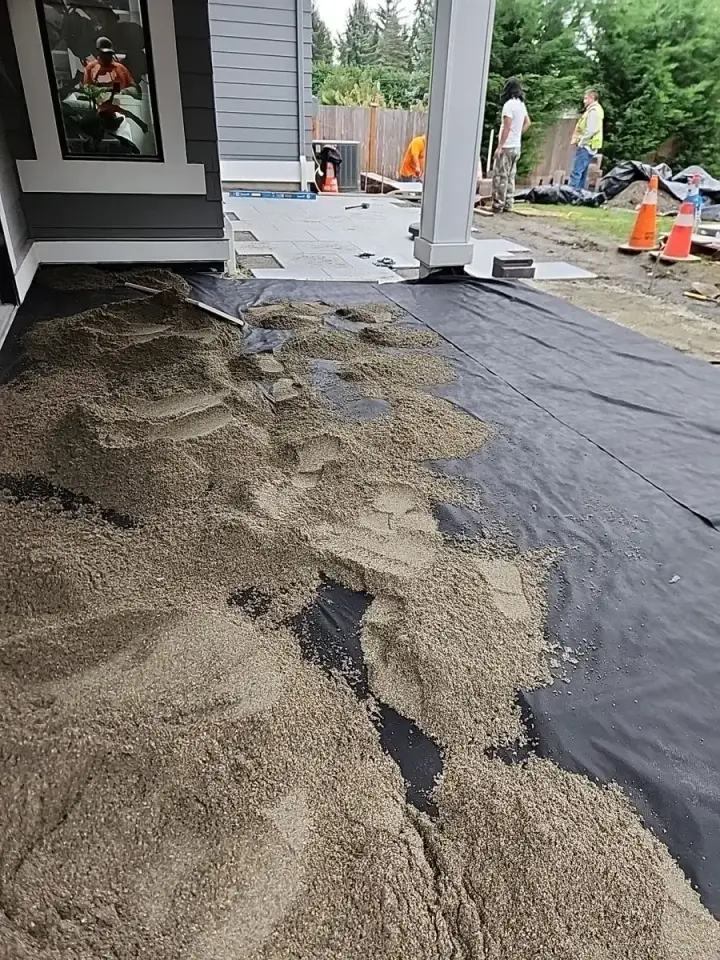
- Compacted aggregate base, placed and compacted in lifts.
- A thin bedding layer, typically screeded sand or fine aggregate.
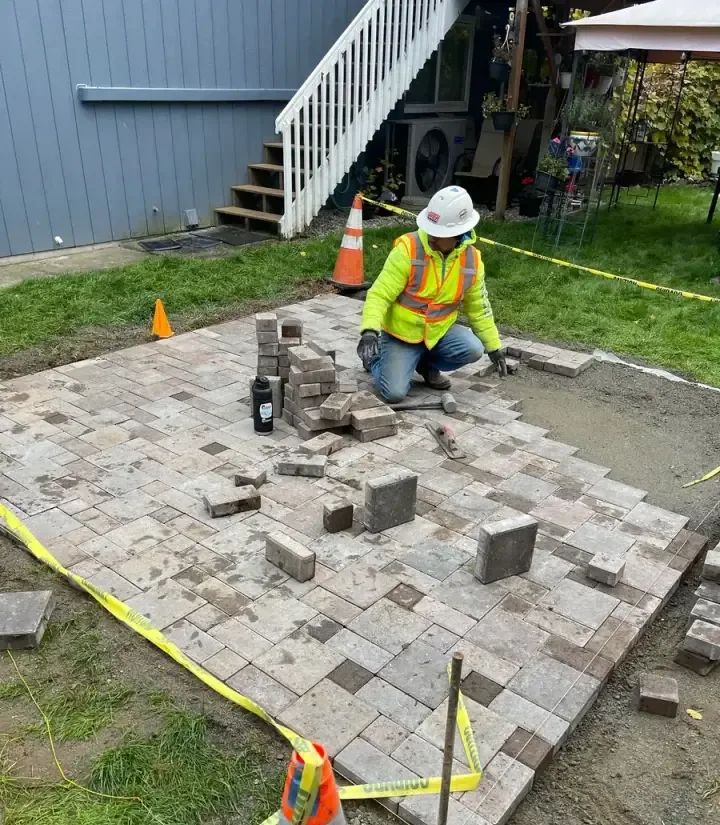
- The pavers, laid in pattern, cut to fit, and restrained at the edges.
- Joint material, swept in and compacted.
Nothing in that list needs to "cure" the way a slab does. What it does need is a base that can be compacted to the right density and drained properly. In Western Washington, that makes rain and soil moisture the main scheduling factors, not the calendar month.
If you are comparing materials for a new outdoor space, our guide to stamped concrete patio ideas in the Pacific Northwest covers how poured options behave in our climate.
What Western Washington Winters Actually Look Like for Paving Work
Lowland Western Washington has a mild, wet winter compared with much of the country. Freezing nights happen, and occasional arctic air brings snow or a multi-day freeze, but long stretches of deeply frozen ground are unusual near Puget Sound. The bigger issue is rain: fall and winter are the wettest part of the year, and many days bring steady drizzle rather than a single big storm.
For a paver crew, that translates into a few practical realities:
- Most cold mornings are workable. Light frost on the surface usually burns off, and excavation and base work can continue once conditions allow.
- A hard freeze stops base work. You should not compact base material that contains frozen lumps or place it over frozen subgrade. When the ground is frozen, the crew waits.
- Heavy rain stops most steps. Soaked soil turns to mud under equipment, and a saturated bedding layer will not screed or hold its shape.
- Light rain is often manageable. Some tasks, such as setting edge restraint or cutting pavers under cover, can continue in light drizzle. Others cannot.
Every site is different. A sunny backyard on well-drained glacial soil behaves differently from a shaded lot on clay that holds water for days after a storm.
The Honest Limits: When Winter Installation Pauses
We would rather set expectations than overpromise. Here are the conditions that will pause a winter paver project:
Saturated or Pumping Subgrade
If the native soil at the bottom of the excavation is soaked, it may "pump" or rut under a compactor instead of firming up. Building on top of that soil can lead to settling later. The fix might be waiting for drier weather, removing and replacing unsuitable soil, adding geotextile, or adjusting the base design. None of those should be skipped just to stay on schedule.
Heavy or Prolonged Rain
During a heavy rain event, open excavations collect water, base material gets washed or contaminated, and the bedding layer cannot be leveled accurately. Crews will typically stop, cover what they can, and resume once water drains.
Freezing Temperatures and Frost in the Base
Base aggregate that contains ice will not compact correctly, and compacting over frozen ground gives a false sense of firmness that disappears when it thaws. On freezing days, base work stops until the material and subgrade thaw.
Polymeric Joint Sand Limits
Many polymeric joint sands have manufacturer-specified temperature and dry-weather requirements for installation and activation. If those conditions are not available, a crew may install the pavers and finish the joints when a suitable dry window arrives, or use a different joint material that fits the conditions. Always follow the specific product's instructions.
How Professional Crews Work Around Fall and Winter Weather
A well-run fall or winter paver project is mostly about sequencing and protection.
- Watching the forecast closely. Excavation is timed so the hole is open for the shortest time possible and the base can go in during a drier stretch.
- Covering and protecting open work. Tarps and plastic sheeting help keep base material and bedding from becoming saturated overnight.
- Managing water from day one. Temporary drainage, sloping the excavation, and keeping downspouts from dumping onto the work area all help. Planning permanent drainage is just as important; see our overview of drainage solutions for paved surfaces.
- Compacting in lifts. The aggregate base is placed and compacted layer by layer rather than all at once, which matters even more when moisture is variable.
- Staging materials under cover. Keeping pallets of bedding sand and joint sand dry saves time on install day.
- Being willing to stop. The most important cold-weather skill is knowing when to pack up and come back tomorrow.
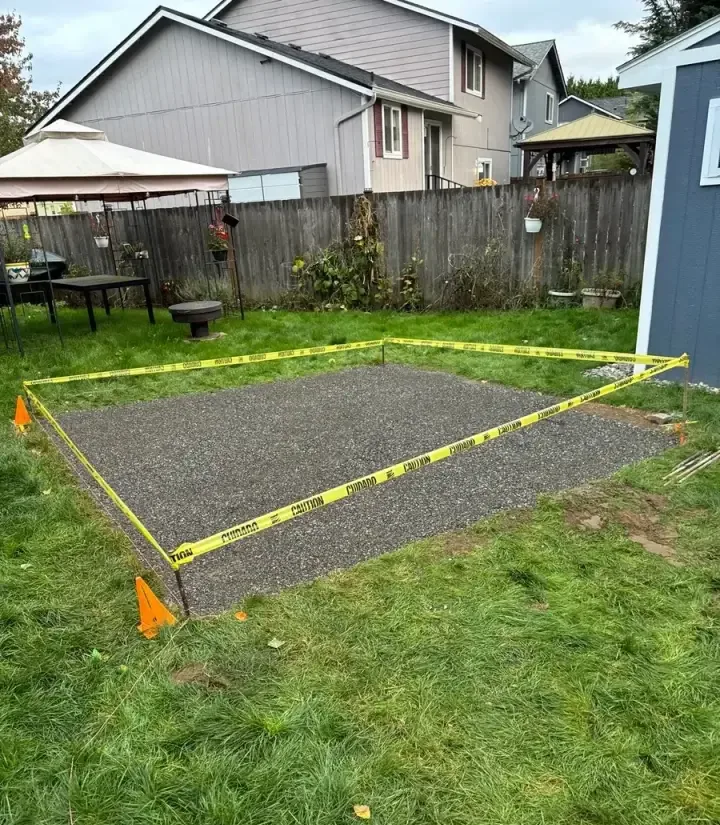
The photo above is from a Jireh paver patio project in late October: the excavation has been completed and the aggregate base is compacted and roped off, ready for the bedding layer and pavers.
Benefits of Booking a Paver Project in the Off-Season
Even when weather causes a few delays, there are real reasons homeowners and property managers start paver projects in fall and winter.
More Time for Design and Decisions
Spring is when everyone calls at once. In the off-season, there is usually more room to walk the site, talk through layout options, compare paver colors and textures, and think about lighting, seating walls, or future additions without rushing.
Easier Coordination With Other Work
Fall is often when homeowners are planning other outdoor projects, such as drainage fixes, retaining walls, or landscape renovations. Coordinating those pieces together in the off-season can reduce rework and keep the full design consistent.
An Earlier Spot on the Spring Calendar
If your site turns out to be too wet for a winter install, a design and proposal finished in the off-season puts you ahead of the spring rush. You are ready to go as soon as the weather opens up, instead of starting the design conversation when crews are already booked.
Ready Before Outdoor Season
A patio installed during a dry winter window or in early spring is ready for the first warm weekends. Waiting until May to start the conversation often means not using the space until summer.
What You Can Do to Prepare a Site for a Winter Paver Installation
A few owner-side steps make a cold-season project smoother:
- Clear the work area. Move furniture, planters, and stored items, and plan where equipment and material deliveries will go.
- Think about access. Wet lawns rut quickly under equipment. Discuss access routes and lawn protection with your contractor.
- Point out drainage problems. If you know an area ponds after rain or a downspout drains toward the patio location, mention it during the site visit.
- Locate utilities. Washington requires calling 811 before digging; your contractor typically handles the locate request, but share anything you know about irrigation lines, lighting, or private utilities.
- Be flexible on dates. A schedule built with a little buffer is far less stressful than one that assumes every day will be dry.
Our general guide to preparing your property for paving covers many of the same access and site-prep points.
Which Paver Projects Fit Best in Winter?
Some projects are better winter candidates than others:
- Smaller patios and walkways with good access are often the easiest to complete during a dry stretch.
- Projects on well-drained soil handle rain better than sites on heavy clay.
- Covered or partly covered areas, such as a patio under a roof extension, give crews more working days.
- Large driveways or complex multi-level hardscapes may still be possible, but they need longer weather windows and more contingency in the schedule.
Your contractor should tell you plainly if they think your specific site would be better scheduled for spring.
Frequently Asked Questions
Can pavers be installed when it is raining?
Light rain does not always stop paver work, but heavy or prolonged rain does. Excavation and base compaction need soil and aggregate that are not saturated, and the bedding layer cannot be leveled accurately when it is soaked. Most crews pause during heavy rain, cover open work, and resume when water has drained.
Will cold weather damage new pavers?
Concrete pavers are already cured when they arrive, so cold weather does not affect them the way it affects fresh poured concrete. The concern is the base: it should never be compacted when frozen or placed over frozen soil. If the base is built correctly, the finished paver surface is designed to handle normal Western Washington freeze-thaw conditions.
How long does a winter paver installation take compared with summer?
The actual installation work takes about the same number of working days in any season. The difference is that winter projects usually include some weather days when work pauses, so the overall calendar time can be longer. Building that buffer into the schedule from the start keeps expectations realistic.
Is polymeric sand a problem in winter?
It can be. Many polymeric joint sands require specific temperatures and dry conditions to install and activate, so a winter project may need to wait for a suitable dry window to finish the joints or use a joint material suited to the conditions. Follow the joint sand manufacturer's instructions for your specific product.
Should I wait until spring to start planning a paver patio?
No. Even if the installation ends up in spring, starting design and proposal work in fall or winter gives you more time for decisions and an earlier place on the schedule. If conditions allow, the project may be finished well before outdoor season begins.
Plan Your Paver Project This Season
Jireh designs and installs paver patios, walkways, and driveways across King and Snohomish County, and we will give you a straight answer about whether your site is a good winter candidate or a better spring project. Learn more about our paver installation services, then get a free estimate to start planning now.