If you're looking to upgrade your outdoor living space, stamped concrete is one of the most versatile and durable options available to Pacific Northwest homeowners. It gives you the look of natural stone, brick, or slate at a fraction of the weight and maintenance — and it handles our rainy climate like a champ.
At Jireh Asphalt & Concrete, we've installed stamped concrete patios across Everett, King County, and Snohomish County for years. Here's what you need to know about the most popular designs and how they perform in our region.
Key Takeaways
- Ashlar slate is the most popular pattern — Its natural stone look complements Craftsman, modern, and transitional PNW home styles in gray and charcoal tones
- Stamped concrete outlasts real wood — Wood plank stamps give the deck aesthetic without rot, warping, or constant maintenance in our wet climate
- Color combinations create depth — Integral color paired with an antiquing release coat produces realistic stone and slate appearances that flat-colored concrete can't match
- Reseal every 2-3 years — Pacific Northwest moisture demands more frequent sealing than drier climates to protect color and prevent surface damage
- Contractor skill matters enormously — Stamped concrete has a narrow finishing window; experienced crews make the difference between natural-looking stone and obvious concrete
Why Stamped Concrete Works in Washington State
The Pacific Northwest throws a lot at outdoor surfaces: heavy rain, freeze-thaw cycles, moss growth, and months of overcast dampness. Stamped concrete handles all of this when properly installed and sealed.
Key advantages for our climate include:
- Slip resistance — Textured stamp patterns provide better traction than smooth concrete or natural stone, especially when wet
- Drainage flexibility — Patios can be graded and sloped to direct water away from your foundation
- Low maintenance — Unlike pavers, there are no joints for weeds or moss to creep through
- Durability — A well-poured stamped patio can last 25+ years with periodic resealing
The secret is in the preparation. Proper base compaction and drainage planning are critical in our soil conditions, which tend to retain moisture more than drier climates.
Popular Stamp Patterns for PNW Homes
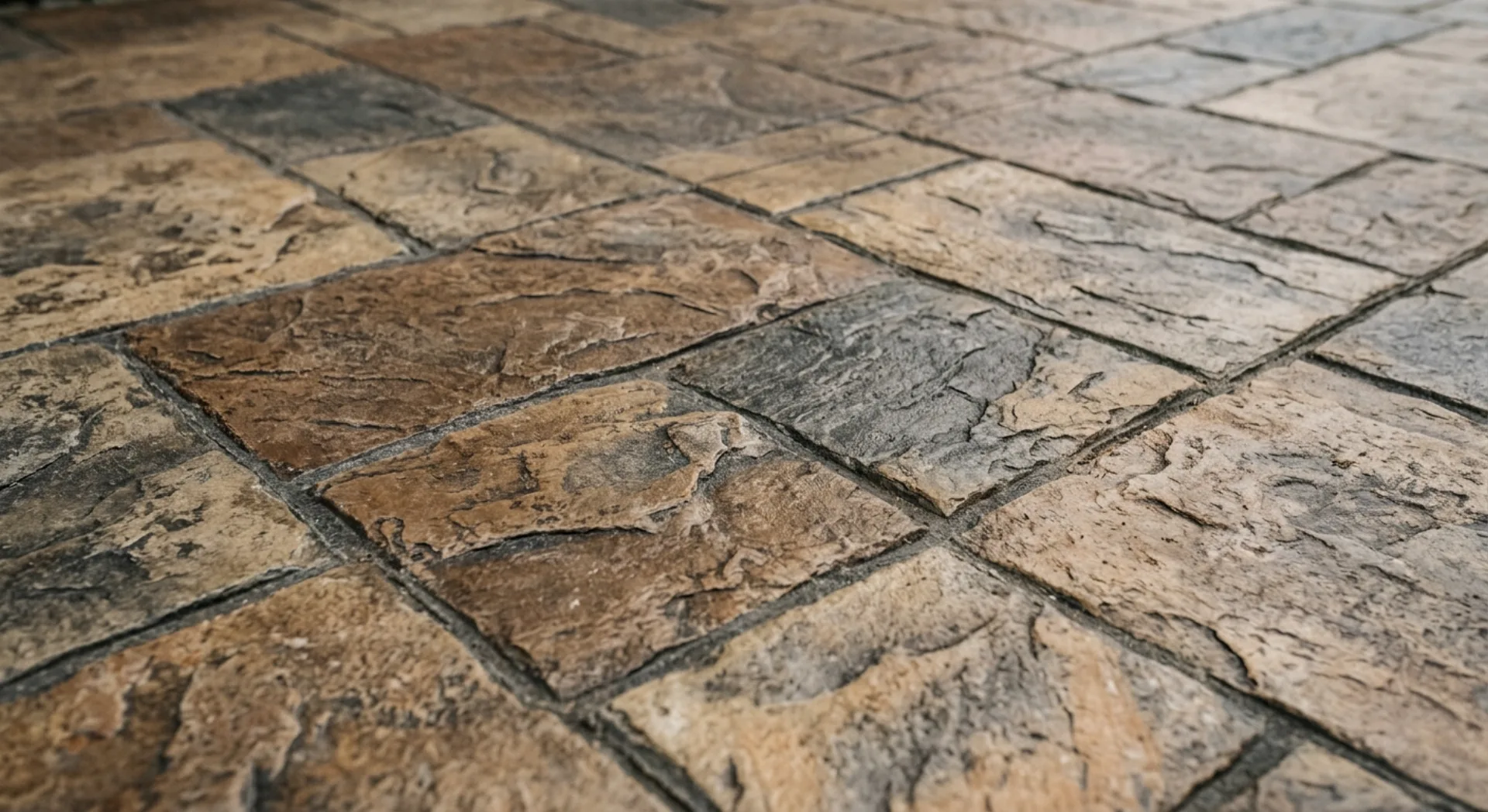
Not all stamp patterns suit every home style. Here are the designs we see the most demand for in the Everett and greater Seattle area:
Ashlar Slate
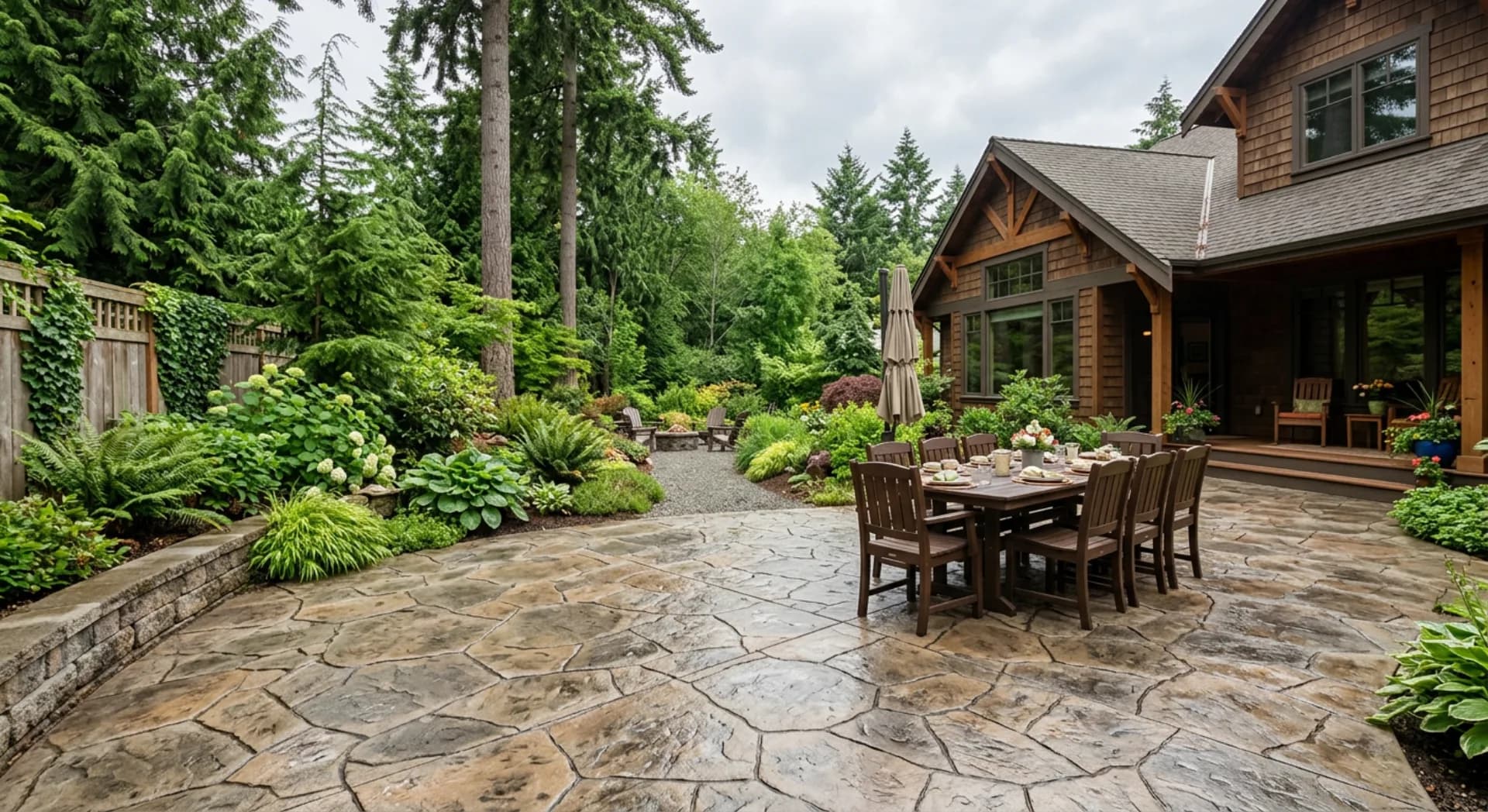
The most popular pattern in our region, and for good reason. Ashlar slate mimics the look of cut stone with a natural texture that complements Craftsman, modern, and transitional home styles. It looks especially sharp in gray and charcoal tones that blend with the PNW landscape.
Cobblestone
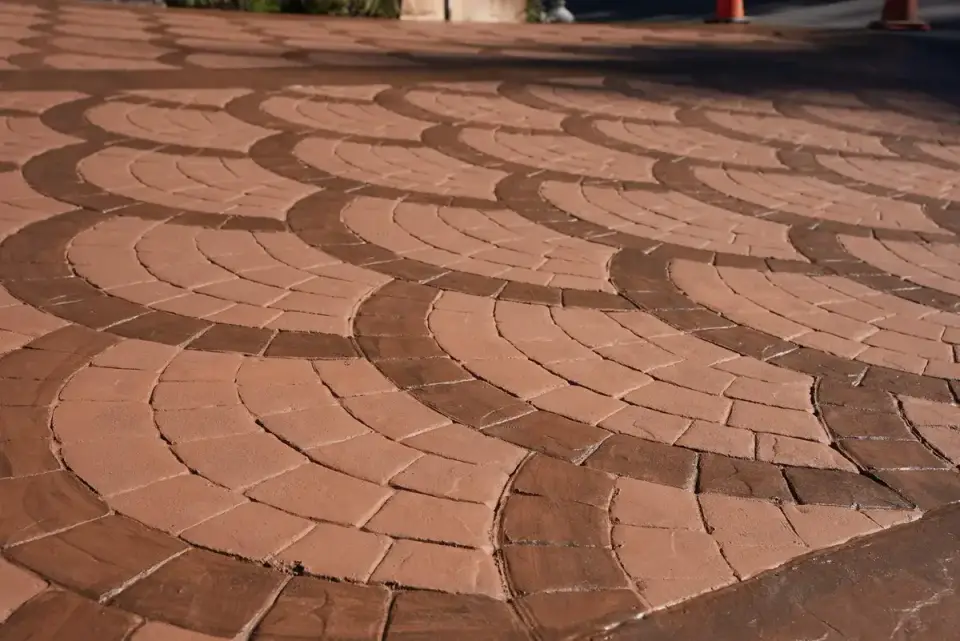
A classic choice for homeowners going for old-world charm. Cobblestone patterns work beautifully for smaller patios, walkways, and borders. They pair well with the cottage and Tudor-style homes found throughout older Everett and Seattle neighborhoods.
Wood Plank
Yes, you can make concrete look like wood. Wood plank stamps create the appearance of a deck without the rot, warping, and constant maintenance that real wood demands in our wet climate. This pattern has surged in popularity over the last few years.
Random Stone / Fieldstone
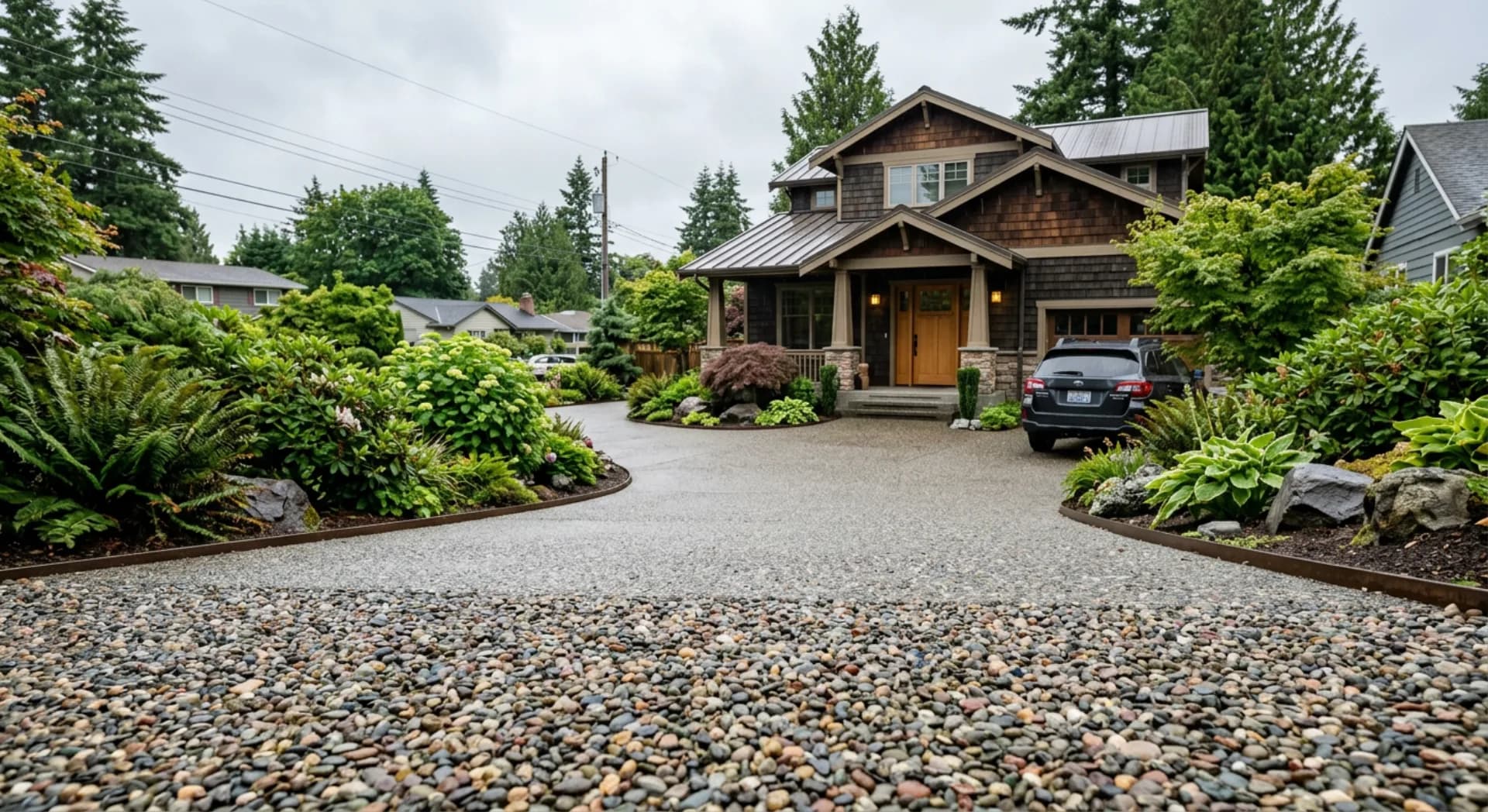
For a more organic, natural feel, random stone patterns avoid the rigid geometry of ashlar layouts. They're ideal for patios that wrap around landscaping features or blend into garden pathways. If you prefer a natural stone look without the stamp patterns, exposed aggregate concrete is another popular PNW choice.
Design Ideas That Elevate Your Patio
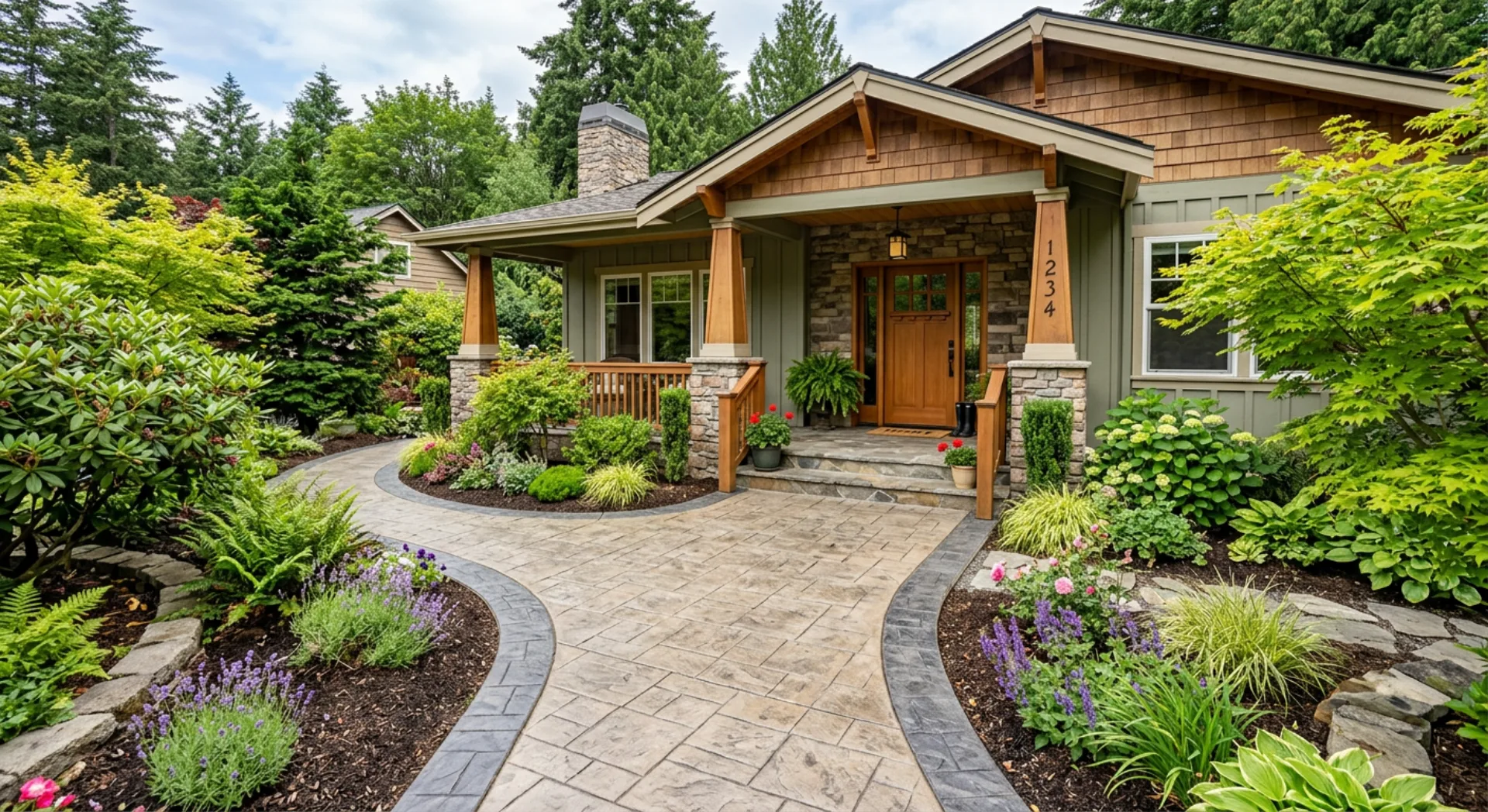
A great stamped concrete patio goes beyond just the stamp pattern. Here are design elements that take the project from good to outstanding:
Contrasting Borders
Adding a border in a different pattern or color creates a finished, intentional look. A common approach is a cobblestone or brick border around an ashlar slate field. This small detail makes a huge visual impact.
Integral Color + Antiquing
Integral color is mixed into the concrete itself, while antiquing (or release) color is applied on top to highlight the texture. Using a combination — say, a warm tan base with a dark walnut antique — creates depth and realism that flat-colored concrete can't match.
Multi-Level Patios with Steps
If your yard has any slope (and in Western Washington, it probably does), a multi-level patio with stamped concrete steps turns a grading challenge into a design feature. Retaining walls in matching stamped concrete tie the whole space together.
Built-In Features
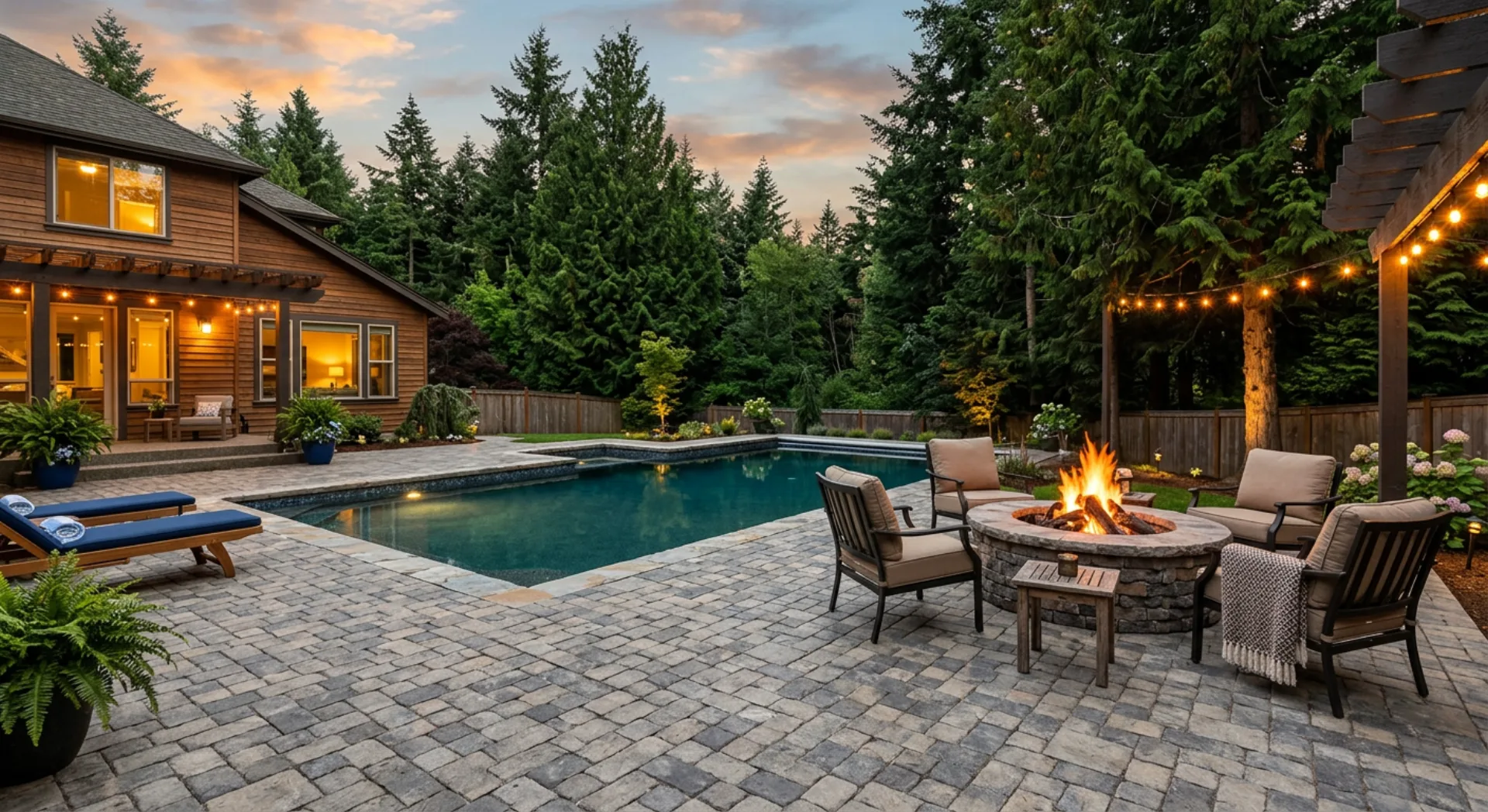
Some of the best patios we've built include integrated features like:
- Fire pit pads — A dedicated stamped area around a fire pit creates a natural gathering zone
- Outdoor kitchen foundations — Stamped concrete provides a solid, level base for built-in grills and counters
- Seat walls — Low concrete walls with a stamped face double as extra seating and space dividers
Maintenance Tips for PNW Stamped Concrete
Our climate requires a bit more attention to sealing and cleaning than drier regions. Here's what we recommend:
- Reseal every 2–3 years — A quality acrylic sealer protects the color and surface from UV, moisture, and moss. In our climate, every 2 years is better than 3
- Power wash annually — Keep moss and algae from taking hold, especially in shaded areas. Use a fan tip, not a turbo nozzle, to protect the sealer
- Address cracks early — Small cracks are normal and easy to repair. Ignoring them through a freeze-thaw cycle turns small problems into big ones
- Avoid deicing salts — Use sand for traction in winter instead. Chemical deicers can damage sealed concrete surfaces
Maintenance and Sealing
Stamped concrete in the Pacific Northwest requires a more deliberate maintenance approach than in drier regions. Our persistent moisture, moss-friendly conditions, and occasional freeze-thaw cycles all put extra demands on the sealer and surface. Here's how to protect your investment.
Sealing Schedule
A high-quality acrylic sealer is the first line of defense for stamped concrete. It protects the integral color from UV fading, prevents moisture from penetrating the surface, and maintains the sheen that makes stamped concrete look like natural stone. In Western Washington, plan to reseal every 2 years rather than the 3-year cycle recommended for drier climates. The constant exposure to rain and humidity breaks down sealer faster here.
Before resealing, the surface needs a thorough cleaning. Remove all moss, algae, dirt, and debris with a pressure washer (using a fan tip at moderate pressure to avoid damaging the existing sealer). Let the surface dry completely — ideally 48 hours of dry weather — before applying the new coat.
Moss and Algae Prevention
Shaded patios in the Pacific Northwest are magnets for moss and algae growth. Left unchecked, biological growth traps moisture against the surface and can actually degrade the sealer and stain the concrete. Pressure wash at least once a year, preferably in early spring before growth establishes. For persistent problem areas, a diluted moss-killing solution applied after pressure washing provides additional protection.
Crack Repair
Hairline cracks in stamped concrete are normal — concrete naturally shrinks as it cures. Control joints placed at proper intervals help direct cracking into planned locations. If cracks do appear in the decorative field, repair them promptly with a color-matched concrete caulk before the next freeze cycle. Water trapped in cracks expands when it freezes, widening the damage quickly in our winter temperatures.
Avoid Deicing Chemicals
Salt-based deicers and chemical ice-melting products can damage sealed concrete surfaces by accelerating freeze-thaw cycling within the slab and breaking down the protective sealer. For winter traction, use clean sand instead. The dark-colored surface of most stamped patios absorbs enough solar heat to melt light frost naturally on sunny winter days.
Joint Maintenance
If your stamped patio includes expansion or control joints, inspect them annually. The flexible sealant in these joints degrades over time and needs periodic replacement to prevent water infiltration. A professional can re-caulk joints as part of your regular maintenance cycle.
Frequently Asked Questions
How much does a stamped concrete patio cost in the Seattle area?
Stamped concrete patios in King and Snohomish County typically cost $12 to $20 per square foot installed, depending on the pattern complexity, color scheme, and site preparation required. A standard 300-square-foot patio runs approximately $3,600 to $6,000. Multi-level designs with built-in features like seat walls or fire pit pads cost more.
How long does stamped concrete last?
A properly installed and maintained stamped concrete patio lasts 25 years or more. The concrete itself is permanent — what requires attention over time is the sealer and color treatment. Regular resealing every 2 to 3 years maintains the appearance and protects against moisture damage in the Pacific Northwest climate.
Is stamped concrete slippery when wet?
Stamped concrete has a textured surface that provides better traction than smooth concrete, but some patterns are grippier than others. Slate and stone patterns with deeper textures perform best in wet conditions. Adding a non-slip additive to the sealer coat provides additional traction for patios that receive heavy rainfall or are near pool areas.
Can stamped concrete be repaired if it cracks?
Yes. Minor cracks can be filled with color-matched repair products that blend into the pattern. For more significant damage, individual sections can be cut out and repoured. However, matching the existing color and pattern perfectly can be challenging, which is why preventive maintenance — proper drainage, timely crack sealing, and regular resealing — is always preferable.
What's the best time of year to pour stamped concrete in Washington?
The ideal window is May through September, when temperatures stay above 50°F and rain is less frequent. Stamped concrete requires warm, dry conditions because the finishing process — stamping, coloring, and detailing — must happen within a limited window before the concrete sets. Cool or damp conditions shorten this window and can compromise the final result.
Choosing the Right Contractor
Stamped concrete is one of those trades where skill matters enormously. The concrete doesn't wait — once it's poured, the crew has a limited window to stamp, color, and finish before it sets. An experienced team makes the difference between a patio that looks like natural stone and one that looks like… stamped concrete.
When evaluating contractors, ask about:
- Their experience with stamped work specifically (not just flatwork)
- Whether they handle their own forming, pouring, and finishing
- How they approach drainage and base preparation for your specific site
- Examples of past projects in similar conditions
At Jireh Asphalt & Concrete, we handle every phase of the job in-house — from site prep and grading to the final seal coat. We know how Pacific Northwest conditions affect the pour and plan accordingly. Explore more options in our complete concrete flatwork design guide.
Ready to Transform Your Outdoor Space?
Whether you're envisioning a simple patio extension or a full outdoor living area with fire pit, seat walls, and custom patterns, stamped concrete gives you design flexibility that's hard to beat.
If you're in Everett, King County, or Snohomish County and want to explore stamped concrete for your property, reach out to the Jireh team for a free consultation. We'll walk your site, discuss design options, and help you plan a patio that performs as well as it looks — rain or shine.