A commercial snow and ice plan for a King or Snohomish County property should be finished before the first freeze and should spell out exactly what gets cleared, when service starts, which services are used, who can be reached at 3 a.m., and how each visit is documented. In lowland Western Washington, the plan matters as much for ice as for snow, because freezing rain, black ice, and refreezing slush cause many of the region's hazardous mornings.
Key Takeaways
- Map the site first — Mark entrances, walkways, ADA routes, fire lanes, loading zones, and where snow may and may not be piled.
- Choose a clear trigger — Decide what accumulation or condition starts service, and put it in writing before the season.
- Match the service to the hazard — Plowing, sanding, granular ice control, and walkway clearing solve different problems; most sites need a combination.
- Settle contacts and access windows — Name decision-makers, after-hours contacts, gate codes, and the hours when crews can and cannot work.
- Document every event — Dated service records, photos, and weather notes protect owners, tenants, and contractors alike.
Why Western Washington Properties Need an Ice-First Plan
Puget Sound lowlands do not see snow every winter, and many seasons pass with only a few events. That can lull property owners into skipping a plan. The problem is that when a winter storm does arrive, it often brings ice: rain that falls onto frozen pavement, wet snow that melts by day and refreezes overnight, or an arctic air mass that turns damp parking lots slick in a few hours. Those conditions are hard to see and hard to walk on.
This season's outlook adds context but not certainty. On October 8, 2026, NOAA's Climate Prediction Center issued an El Niño Advisory and said a strong-to-very strong El Niño is likely through January–March 2027. Historically, the Office of the Washington State Climatologist has noted that El Niño winters tend to be warmer and drier than normal in Washington, with less total lowland snow and fewer snow days at western Washington stations. That is a tendency, not a guarantee: the same analysis notes the relationship does not hold for every event, and a single cold snap or freezing rain storm can still shut down a parking lot. Plan for ice either way.
Step-by-Step Snow and Ice Plan Checklist
Use this checklist with your snow contractor during the fall site walk. Write the answers down; a plan that lives only in someone's head fails the first time that person is unreachable.
1. Map Every Area That Needs Service
Start with an aerial printout or a simple site sketch and mark:
- Main entrances and exits for vehicles, including secondary driveways.
- Pedestrian walkways and building entrances, including side doors used by staff.
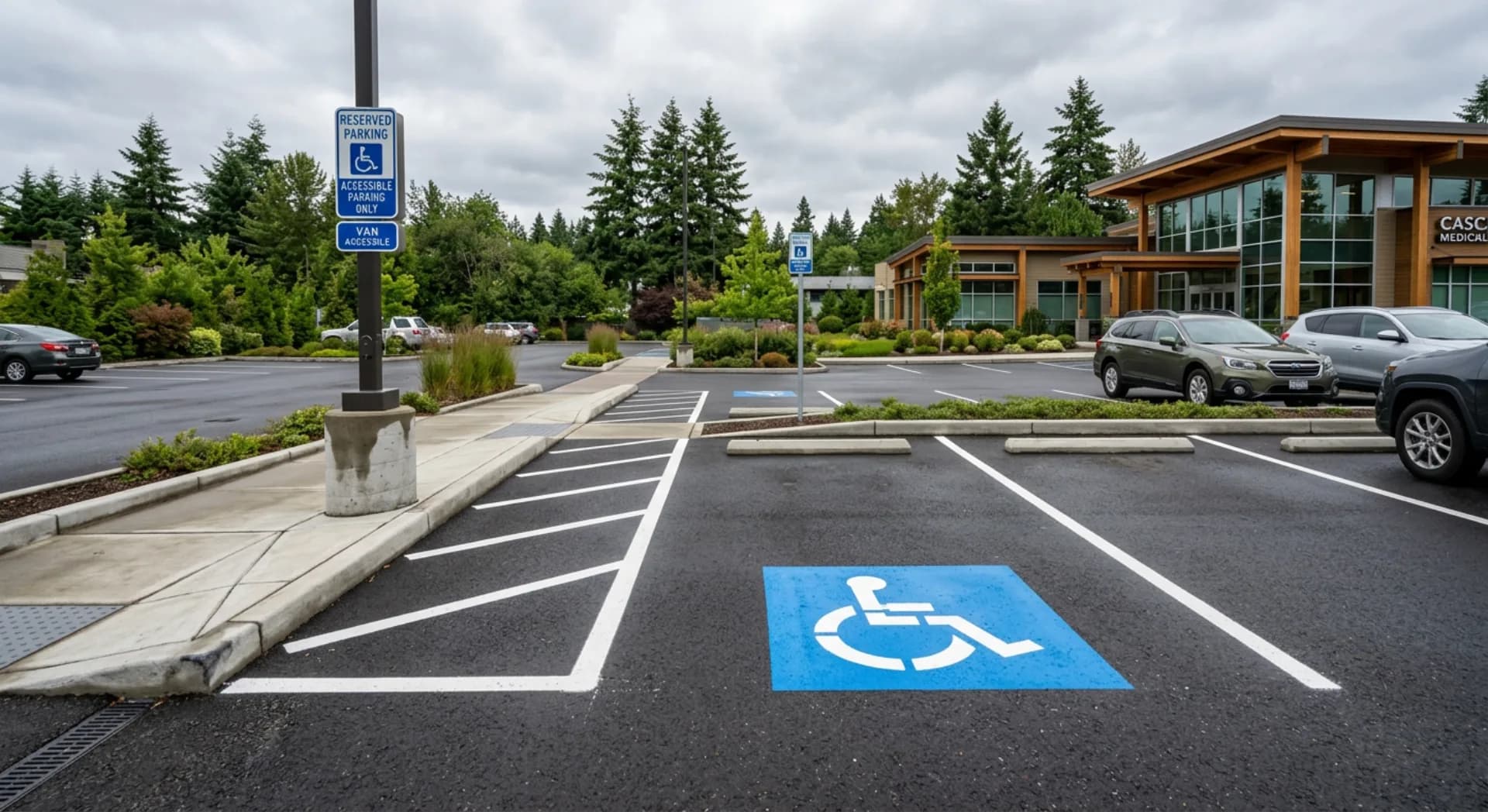
- ADA parking stalls and accessible routes from parking to entrances. Our guide to ADA compliance for parking lots and sidewalks covers why those routes matter year-round.
- Fire lanes and hydrants, which must stay accessible.
- Loading docks, dumpster enclosures, and delivery areas.
- Ramps, slopes, and shaded areas that ice first and thaw last.
- Speed bumps, curbs, wheel stops, islands, and drains that a plow operator needs to avoid, marked with stakes before snow arrives.
2. Mark Snow Storage and No-Pile Zones
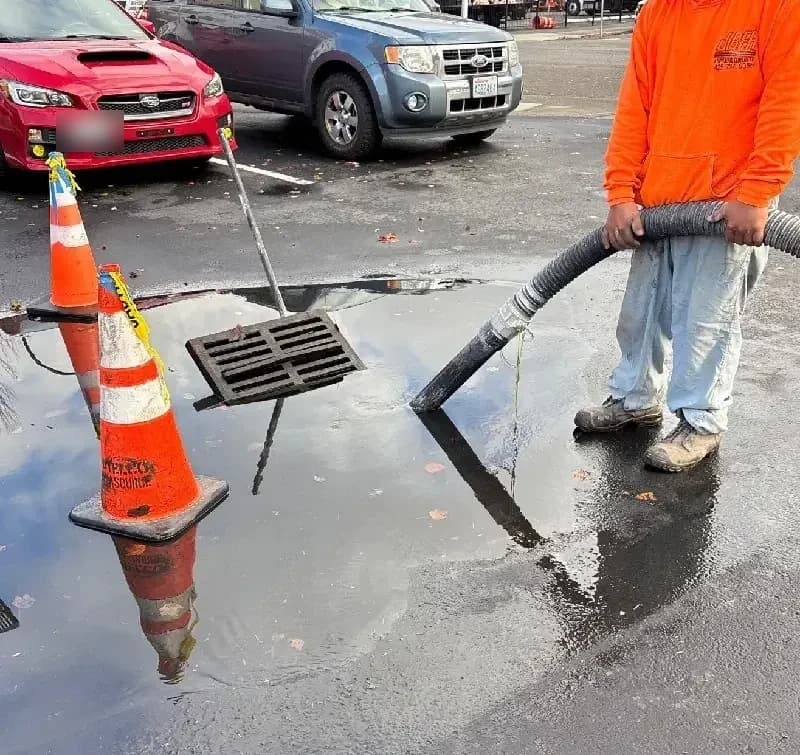
Decide where plowed snow goes. Good storage areas are low-traffic, away from building entrances, and downhill of walkways so meltwater does not run across them and refreeze. Mark no-pile zones too: fire lanes, ADA stalls, landscaped beds, sight-line corners at driveway exits, and the tops of catch basins. Piles sitting on storm drains block melt and create ponds that freeze overnight.
3. Choose an Accumulation Trigger
The trigger is the condition that starts a dispatch. Common choices are a set snow depth, such as one inch, one and a half inches, or two inches, or a custom threshold for sites with special needs. Ask yourself:
- How sensitive is the site? Medical offices, senior housing, and 24-hour facilities usually need a lower trigger than a weekday-only office.
- Does ice trigger service on its own? Many Western Washington events produce ice with little or no accumulation, so specify whether freezing conditions alone call for sanding or ice control.
- Who can request extra service? Name the person who can call for an additional visit outside the standard trigger.
4. Decide Which Services the Site Needs
Different services address different hazards. Most properties need more than one.
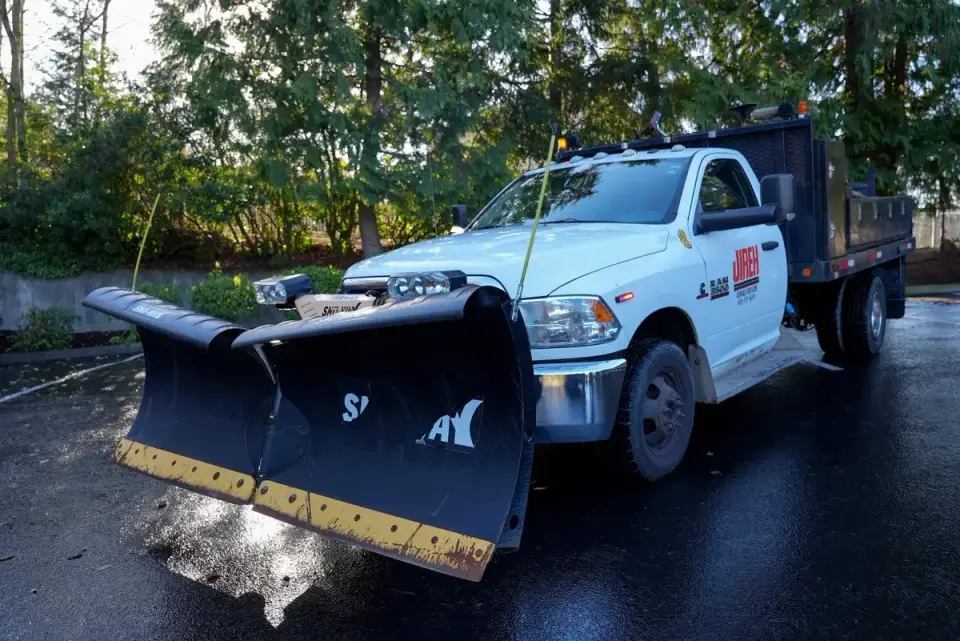
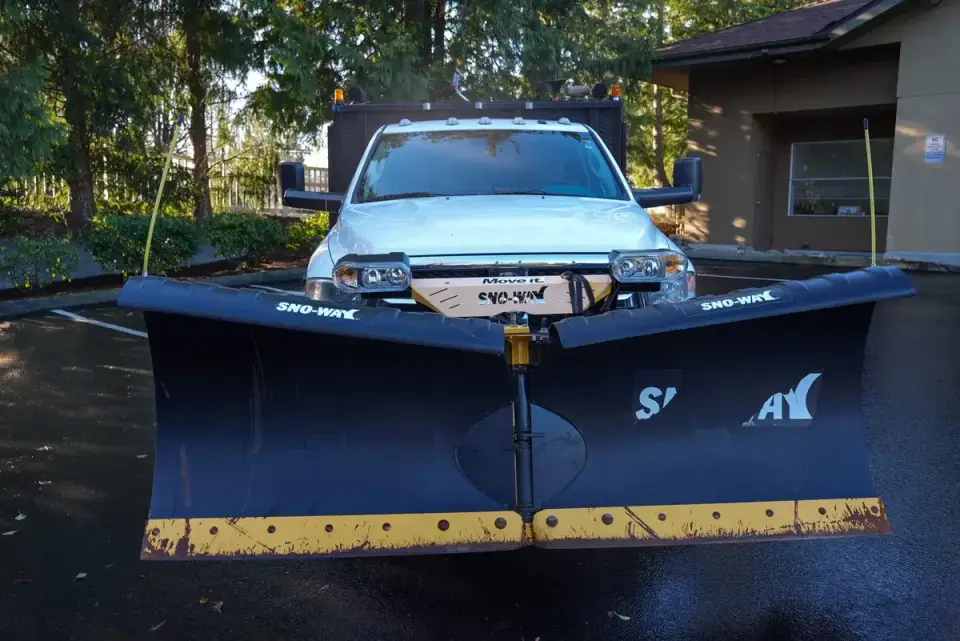
- Plowing removes accumulated snow from drive lanes and parking areas. It is the foundation once snow depth reaches the trigger.
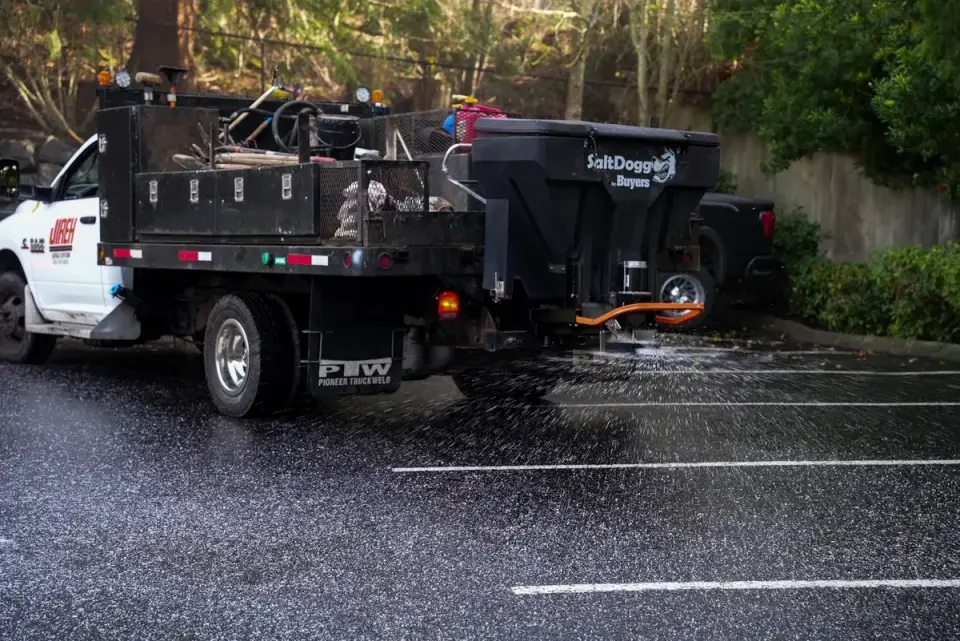
- Sanding spreads abrasive material for traction. It does not melt ice, but it gives tires and shoes grip right away and works when temperatures are too cold for some melting products to act quickly.
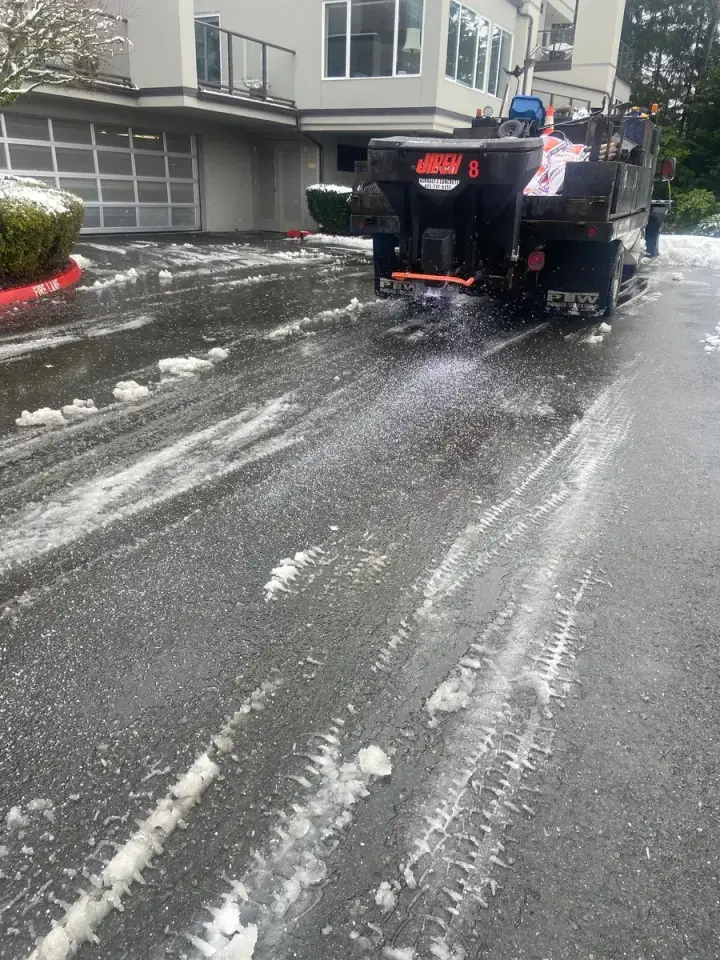
- Granular ice control uses granular melting material to break the bond between ice and pavement. It is commonly applied on drive lanes, entrances, and ramps, either before a freeze or after plowing to deal with the thin layer left behind.
- Walkway clearing covers sidewalks, entrances, stairs, and accessible routes, usually by hand crews with shovels, blowers, and hand spreaders.
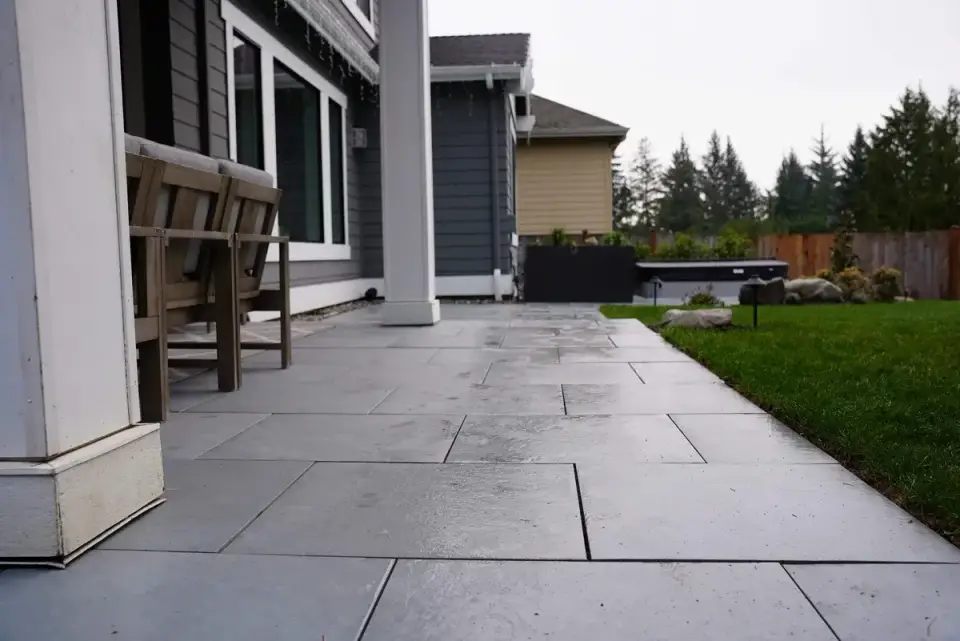
Discuss surfaces with your contractor as well. Some pavers and decorative concrete have manufacturer restrictions on de-icers; see our guide on protecting pavers from ice and de-icers.
5. Set Priority Order and Operating Hours
List what gets cleared first. A typical order is fire lanes and main entrances, then ADA routes and walkways, then drive aisles, then outer parking rows. Note when the property opens, when staff arrive, and when the lot is emptiest for plowing. A medical clinic opening at 7 a.m. needs a different service window than a retail center opening at 10 a.m.
6. Confirm Contacts and Access
Your plan should include:
- Primary and backup contacts on the owner or management side, with cell numbers that are answered after hours.
- The contractor's dispatch contact and how to reach them during an event.
- Gate codes, key fobs, and lock boxes, and who updates them if they change mid-season.
- Tenant notices asking for vehicles to be moved from certain areas during events, if needed.
- Restricted hours, such as residential noise limits or school drop-off times.
7. Agree on How Service Is Documented
Records matter for budgeting, for answering tenant questions, and for slip-and-fall claims. Ask your contractor what each visit record will include. Useful items are:
- Date, arrival time, and departure time.
- Services performed at each area, such as plowing, sanding, granular application, or walkway clearing.
- Approximate material quantities applied.
- Conditions on arrival, such as snow depth, ice, or freezing rain.
- Photos of key areas before and after service when included in the scope.
Owners should keep their own log too: when they called for service, tenant reports, and weather notes.
8. Review Pavement and Drainage Before Winter
Potholes, broken curbs, and raised utility lids catch plow blades. Clogged catch basins create ponds that become ice sheets overnight. Fall is the time to fix both. Our article on extending the life of a commercial parking lot explains how routine repairs reduce winter damage, and our guide to catch basin maintenance in Snohomish County covers drainage inspection.
Special Considerations by Property Type
HOAs and Multifamily Communities
Clarify where the HOA's responsibility ends and the homeowner's begins, such as private driveways, mailbox clusters, and individual walkways. Publish that boundary to residents before winter so expectations are clear.
Medical and Senior Care Facilities
These sites often need lower triggers, earlier service windows, and extra attention to entrances, drop-off canopies, and accessible routes. Consider pre-treatment ahead of forecast freezes when the scope allows.
Retail and Mixed-Use Centers
Coordinate with tenants on opening hours and delivery schedules. Main entrances and storefront walkways usually come first, followed by customer parking closest to doors.
Industrial and Logistics Sites
Truck courts and loading docks need room for snow storage that does not block trailer movements. Mark dock approaches and fire access clearly.
How Jireh Structures Commercial Winter Routes
Jireh's snow and ice services for the 2026–27 season cover snow plowing, sanding, granular ice control, and walkway clearing across King and Snohomish County. Each property gets a written scope that records the selected services, trigger, access details, and site notes. Route plans are billed per dispatch under a published base rate schedule, and route placement depends on location, scope, access, and available capacity, so it is confirmed in writing after Jireh reviews the property.
Sources
- NOAA Climate Prediction Center: ENSO Diagnostic Discussion
- Office of the Washington State Climatologist: Lowland Snow and ENSO Relationship
Frequently Asked Questions
When should a commercial property set up snow removal service?
Set up service in early fall, before the first freeze. Contractors plan routes and capacity ahead of the season, and a site walk in October or November leaves time to mark obstacles, agree on triggers, and fix pavement or drainage problems before winter weather arrives.
What is a snow removal trigger?
A trigger is the condition that starts a service dispatch, usually a set snow accumulation such as one, one and a half, or two inches, or a custom threshold. In Western Washington, the plan should also state whether icy conditions without much snow call for sanding or granular ice control.
What is the difference between sanding and granular ice control?
Sanding spreads abrasive material that adds traction right away but does not melt ice. Granular ice control uses melting material that breaks the bond between ice and pavement. Many properties use both, depending on temperature, surface type, and the area being treated.
Do El Niño winters mean no snow in Seattle?
No. El Niño winters tend to bring less lowland snow and fewer snow days in western Washington, but that pattern does not hold every year, and cold snaps and freezing rain can still happen. A property should keep its snow and ice plan in place regardless of the seasonal outlook.
What records should a snow contractor provide?
Ask for dated visit records showing arrival and departure times, services performed in each area, approximate materials applied, and conditions on arrival. Photos of key areas are helpful when included in the scope. Keep these with your own log of calls, tenant reports, and weather notes.
Reserve Your Winter Route Review
Winter routes fill before the first storm. Send Jireh your property details to start a route review for the 2026–27 season, or get a free estimate for snow plowing, sanding, granular ice control, and walkway clearing in King and Snohomish County.