A well-maintained commercial parking lot is one of the first things customers and tenants notice about your property. In the Pacific Northwest, where months of steady rain, freeze-thaw cycles, and moss growth are the norm, asphalt surfaces take a beating that properties in drier climates simply don't experience. The good news is that with a proactive maintenance plan, you can dramatically extend the life of your parking lot and avoid the disruption of a full replacement far longer than you might expect.
Why Pacific Northwest Parking Lots Deteriorate Faster
Western Washington's climate creates a unique combination of challenges for asphalt surfaces. Persistent moisture seeps into micro-cracks and, during winter cold snaps, expands as it freezes — widening those cracks with every cycle. Add in the organic debris from surrounding evergreen trees, moss and algae growth that traps moisture, and the constant weight of commercial traffic, and it's easy to see why neglected lots can deteriorate in just a few years.
Understanding these regional factors is the first step toward building a maintenance strategy that actually works.
Key Takeaways
- Crack sealing is the highest-ROI maintenance step — Addressing cracks before fall rains arrive prevents the water intrusion that causes base failure and potholes
- Sealcoat every 2-3 years — Sealcoating protects asphalt from UV degradation and moisture, extending pavement life by years for a fraction of replacement cost
- Drainage determines lifespan — Standing water accelerates every form of asphalt deterioration; maintain catch basins, trench drains, and grading quarterly
- A seasonal calendar prevents emergencies — Scheduled spring inspections, summer repairs, fall prep, and winter monitoring keep small problems from becoming expensive failures
- Know when to stop patching — Widespread alligator cracking and base failure signal that maintenance alone won't save the lot; an overlay or full replacement becomes the smarter investment
Crack Sealing: Your First Line of Defense
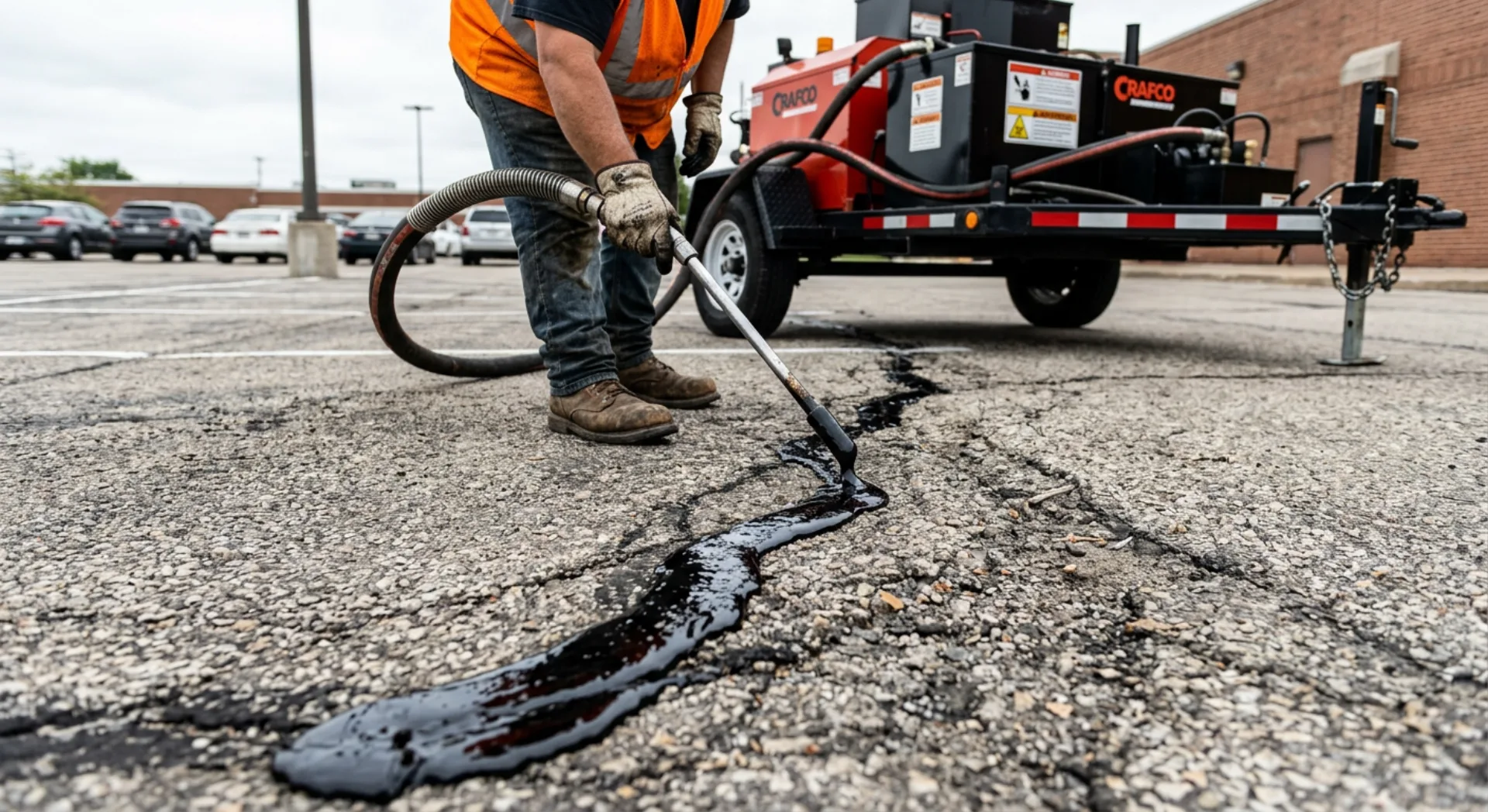
Small cracks may seem harmless, but in our climate they're an open invitation for water intrusion. Once moisture penetrates below the surface, it erodes the base layer and leads to potholes, alligator cracking, and eventually structural failure.
When to act: Address cracks as soon as they appear — ideally during the drier months between June and September. Routing and sealing cracks before fall rains arrive prevents the majority of water-related damage.
What to look for:
- Linear cracks wider than a quarter inch
- Networks of interconnected cracks (alligator pattern)
- Cracks near drains, curbs, or high-traffic turns
A professional crack sealing program can extend your pavement life by three to five years on its own.
Sealcoating for Long-Term Protection
Sealcoating acts as a protective barrier between your asphalt and the elements. It shields the binder from UV degradation, repels water, and restores the rich dark appearance that makes your property look well-kept.
For Pacific Northwest commercial properties, sealcoating every two to three years is the recommended cycle. Timing matters — the surface needs at least 48 hours of dry weather above 50°F to cure properly, which typically means scheduling between mid-June and early September.
Pro tip: Combine sealcoating with crack sealing in the same service visit. Sealing cracks first ensures the sealcoat creates a truly continuous barrier across the entire surface. Not sure if your lot is ready? Check our guide on the 5 signs your parking lot needs sealcoating.
Proper Drainage Is Everything
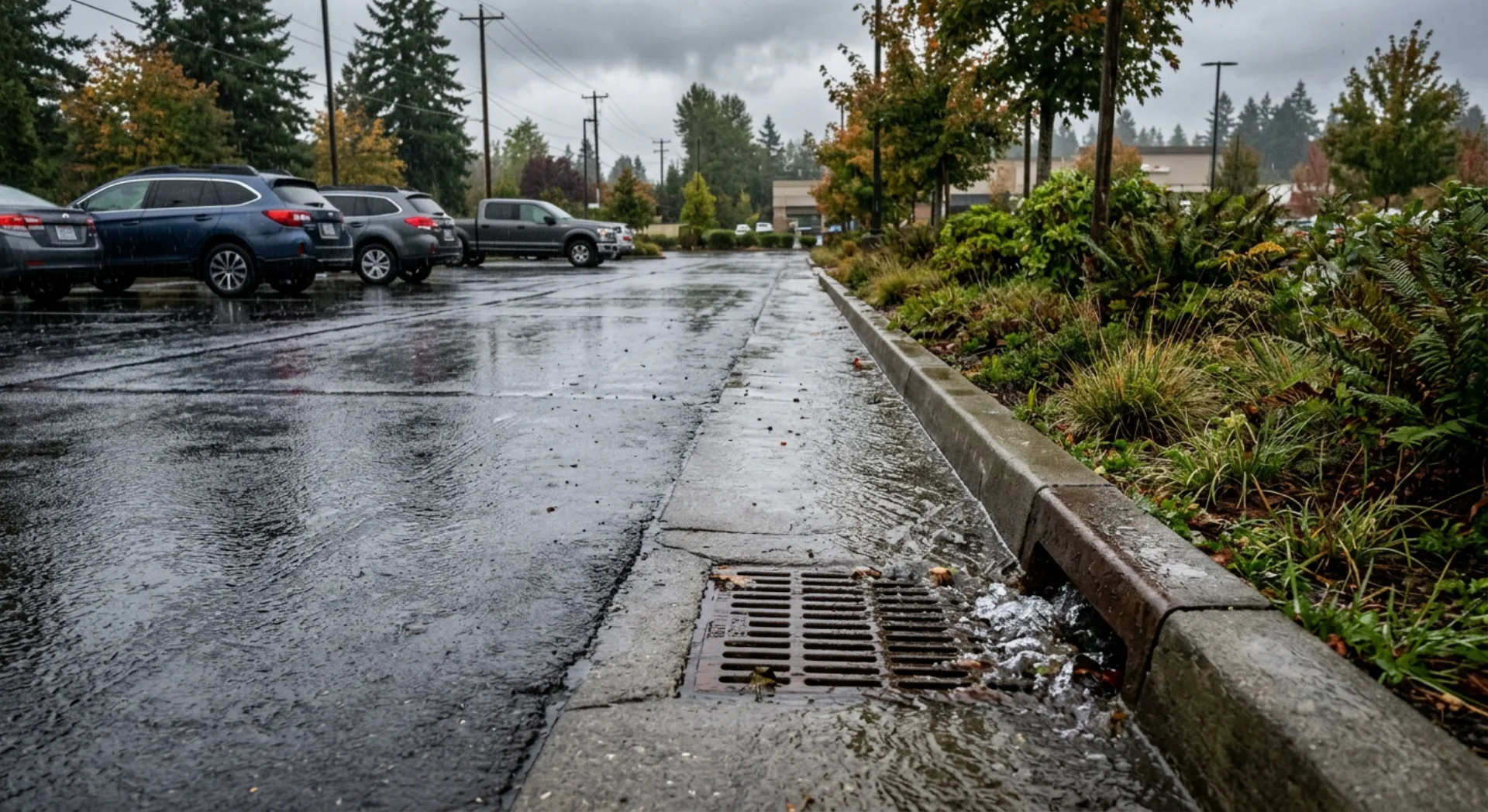
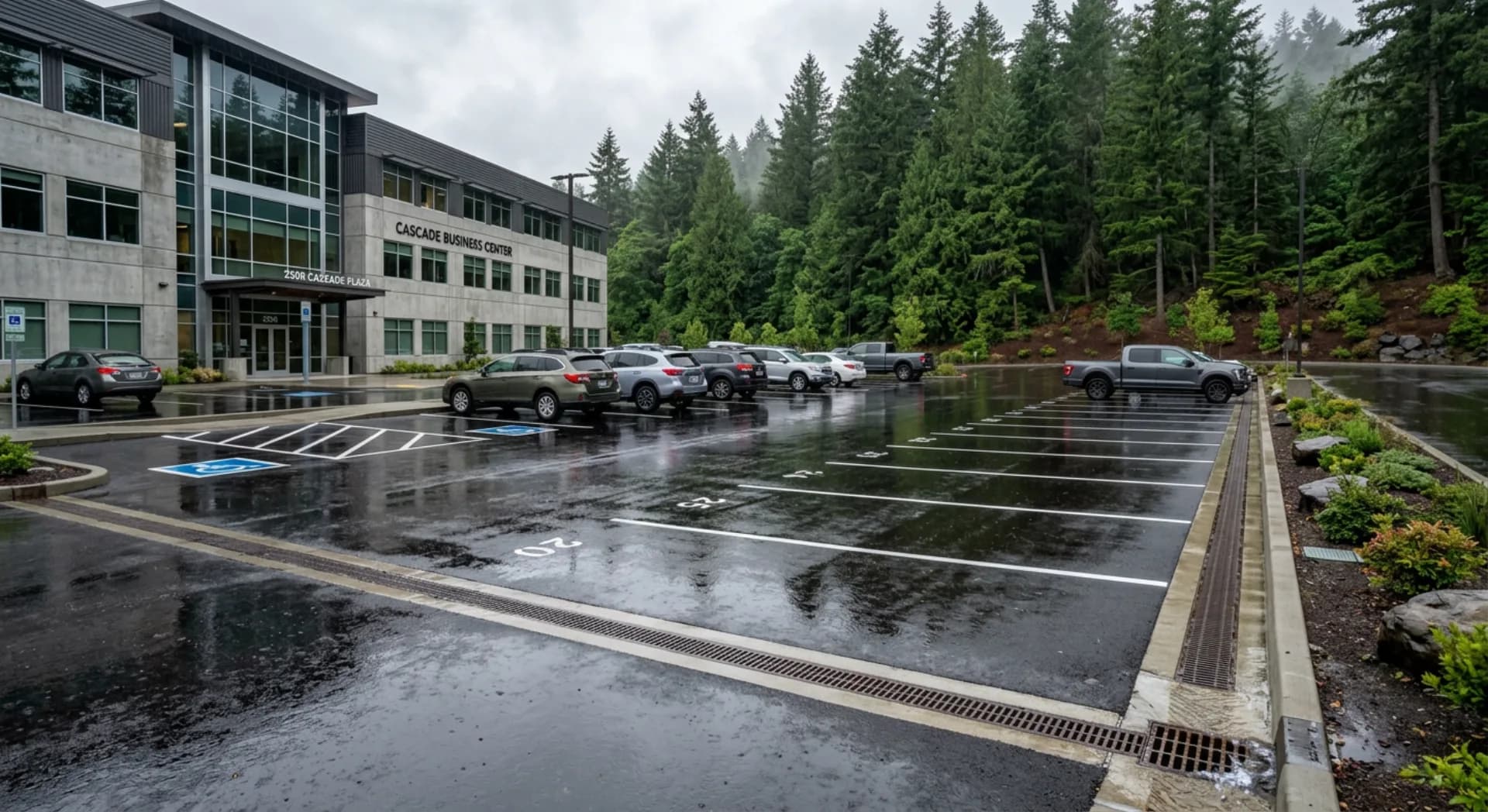
In a region that gets 35–50 inches of rain annually, drainage isn't optional — it's the single most important factor in parking lot longevity. Standing water accelerates every form of asphalt deterioration.
Key drainage elements to maintain:
- Catch basins and storm drains — Clear debris at least quarterly, and after major storms
- Trench drains — Inspect for sediment buildup that reduces flow capacity
- Grading and slope — Watch for settling that creates low spots where water pools
- Curb and gutter systems — Repair any sections where water bypasses the intended flow path
If you notice puddles that persist more than 24 hours after rain stops, that's a sign your drainage needs professional attention. Read our full guide on drainage solutions for paved surfaces to learn your options.
Striping and Traffic Management
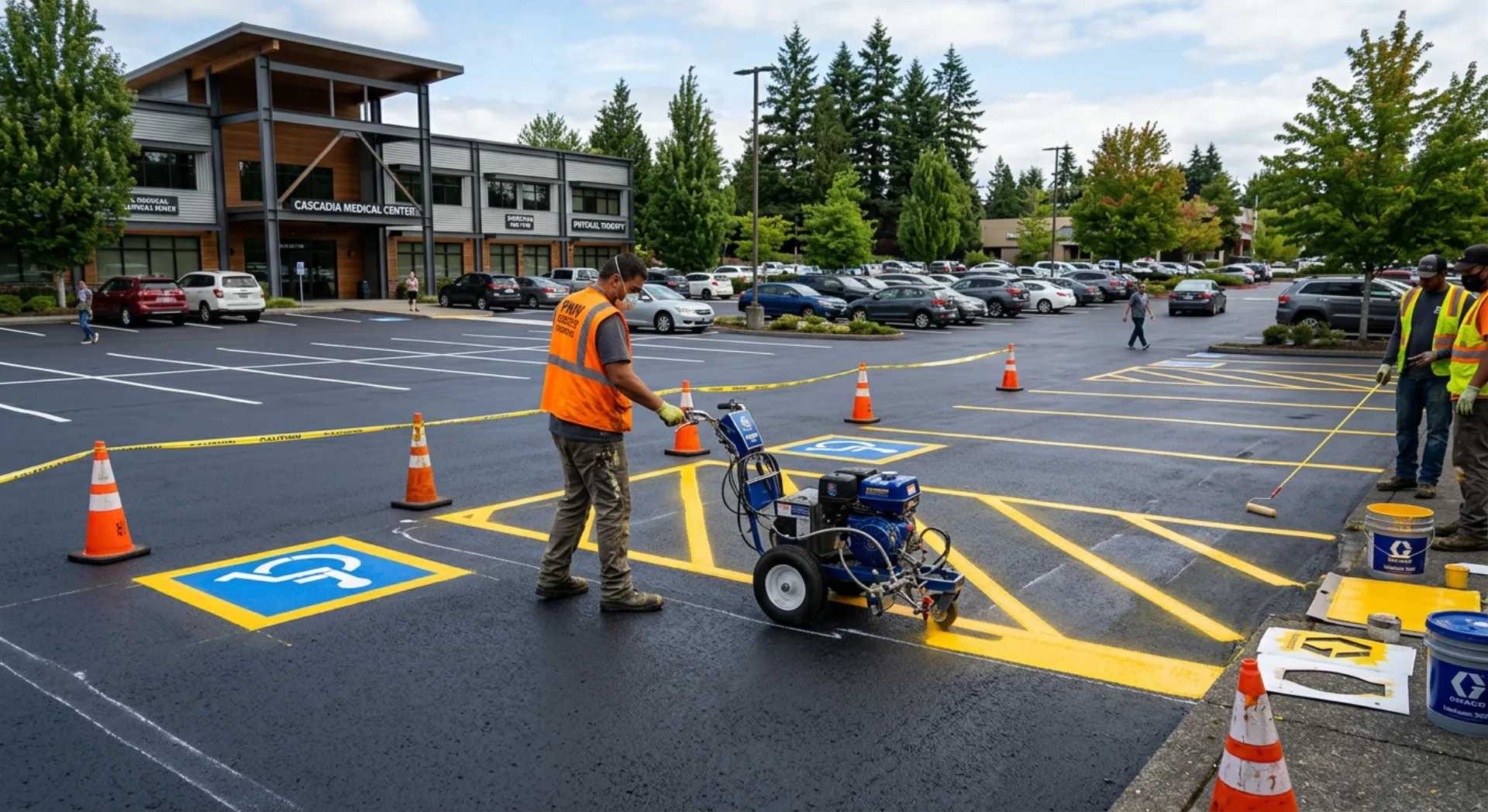
Clear striping does more than keep your lot organized — it protects your pavement by directing traffic flow and preventing vehicles from cutting across undesigned paths. When drivers create their own shortcuts, they concentrate wear in areas that weren't engineered to handle it.
Maintenance schedule:
- Re-stripe every 12–18 months in high-traffic lots
- Refresh directional arrows and stop bars annually
- Repaint ADA-accessible spaces and access aisles as soon as they show significant fading
Well-maintained striping also reduces your liability exposure and ensures ADA compliance — both critical for commercial properties. Our parking lot striping guide covers everything from paint types to ADA requirements.
Building a Year-Round Maintenance Calendar
The most effective approach is a seasonal maintenance calendar tailored to Pacific Northwest conditions:
Spring (March–May)
- Full lot inspection after winter
- Pothole patching and crack assessment
- Drainage system cleaning
- Sweep debris and remove moss
Summer (June–September)
- Crack sealing and sealcoating (dry weather window)
- Re-striping and pavement markings
- Base repairs for any structural issues
Fall (October–November)
- Final debris clearing before heavy rains
- Drain and catch basin inspection
- Address any new cracks before winter
Winter (December–February)
- Monitor for standing water and drainage issues
- Prompt pothole repair to prevent expansion
- Keep drains clear of leaf debris
Seasonal Maintenance Calendar
A structured monthly approach takes the guesswork out of parking lot care. Here's a detailed calendar tailored to Pacific Northwest commercial properties:
January–February: Monitor for ice damage and potholes after cold snaps. Perform emergency pothole patching to prevent vehicle damage and liability claims. Keep storm drains clear of winter debris. Document any new cracking or settling for spring repairs.
March: Conduct a comprehensive lot inspection. Photograph all damage for comparison against previous years. Schedule crack sealing and patching work for the dry season. Get bids for any major work needed.
April–May: Complete spring sweeping and power washing to remove accumulated grit and organic debris. Address any moss or algae growth before it establishes. Clean and inspect all catch basins and drainage infrastructure. Begin scheduling summer maintenance projects.
June–July: Execute crack sealing while conditions are dry and warm. This is your best window for sealant adhesion and curing. Repair any structural damage identified during spring inspection. Start sealcoating projects.
August–September: Complete sealcoating work before fall rains return. Schedule restriping immediately after sealcoating cures. Perform any base repairs or overlay work during this final dry window. This is also the ideal time for ADA compliance upgrades.
October–November: Final fall cleanup — clear all drains, gutters, and catch basins before the heavy rain season. Address any cracks that developed over summer before water can infiltrate during winter. Trim overhanging vegetation that drops leaves onto the lot.
December: Minimal active maintenance, but monitor drainage performance during storms. Keep de-icing materials on hand if your property requires snow and ice management. Document any areas where water pools for spring correction.
When Maintenance Isn't Enough
Even the best maintenance program has limits. If your lot shows widespread alligator cracking, significant base failure, or drainage problems that can't be corrected with surface work, it may be time for an overlay or full-depth replacement. A professional assessment can help you determine whether continued maintenance is cost-effective or whether a larger investment will save you more in the long run.
Frequently Asked Questions
How long should a commercial parking lot last in the Pacific Northwest?
A well-constructed asphalt parking lot with regular maintenance typically lasts 20 to 30 years in Western Washington. Without maintenance, the same lot may deteriorate significantly within 7 to 10 years due to moisture infiltration, freeze-thaw damage, and UV degradation.
How much does parking lot maintenance cost per year?
Annual maintenance for a commercial parking lot in King and Snohomish County typically runs $0.10 to $0.30 per square foot, depending on lot condition and the scope of work needed. This includes crack sealing, occasional patching, and a sealcoat cycle every 2-3 years. Compare that to full replacement at $5 to $12 per square foot — maintenance pays for itself many times over.
Can you sealcoat a parking lot in the rain?
No. Sealcoating requires at least 48 hours of dry weather at temperatures above 50°F for proper curing. Applying sealcoat in damp or cold conditions leads to poor adhesion, premature wear, and wasted money. This is why scheduling sealcoating between June and September is critical in the Pacific Northwest.
What's the difference between crack sealing and crack filling?
Crack sealing uses heated rubberized sealant applied to routed (widened) cracks, creating a flexible, waterproof bond that moves with the pavement. Crack filling uses cold-pour material for non-working cracks. Sealing is more durable and effective for active cracks, while filling is appropriate for dormant cracks in stable areas.
How do I know if my parking lot needs an overlay or full replacement?
If damage is limited to the surface layer — oxidation, minor cracking, shallow raveling — an overlay is usually sufficient. If you see widespread alligator cracking, deep structural rutting, or evidence of base failure (soft spots, significant heaving), full replacement is likely the better investment. A core sample taken by a professional contractor provides the definitive answer.
Protect Your Investment
Your commercial parking lot represents a significant investment in your property. With the right maintenance strategy — especially one designed for Pacific Northwest conditions — you can extend its useful life by decades and maintain the professional appearance your business deserves.
At Jireh Asphalt & Concrete, we help commercial property owners throughout King and Snohomish County develop and execute parking lot maintenance plans that protect their investment. From crack sealing and sealcoating to full lot reconstruction, our team has the experience to keep your pavement performing at its best.
Ready to create a maintenance plan for your commercial parking lot? Contact us today for a free on-site assessment.