A well-striped parking lot does more than look professional — it directs traffic, maximizes parking capacity, and keeps your property compliant with local and federal regulations. Yet line marking is one of the most overlooked aspects of commercial property maintenance. Here's what you need to know.
Key Takeaways
- Restripe every 18-24 months — Pacific Northwest rain and UV exposure fade paint faster than drier climates; high-traffic zones may need attention sooner
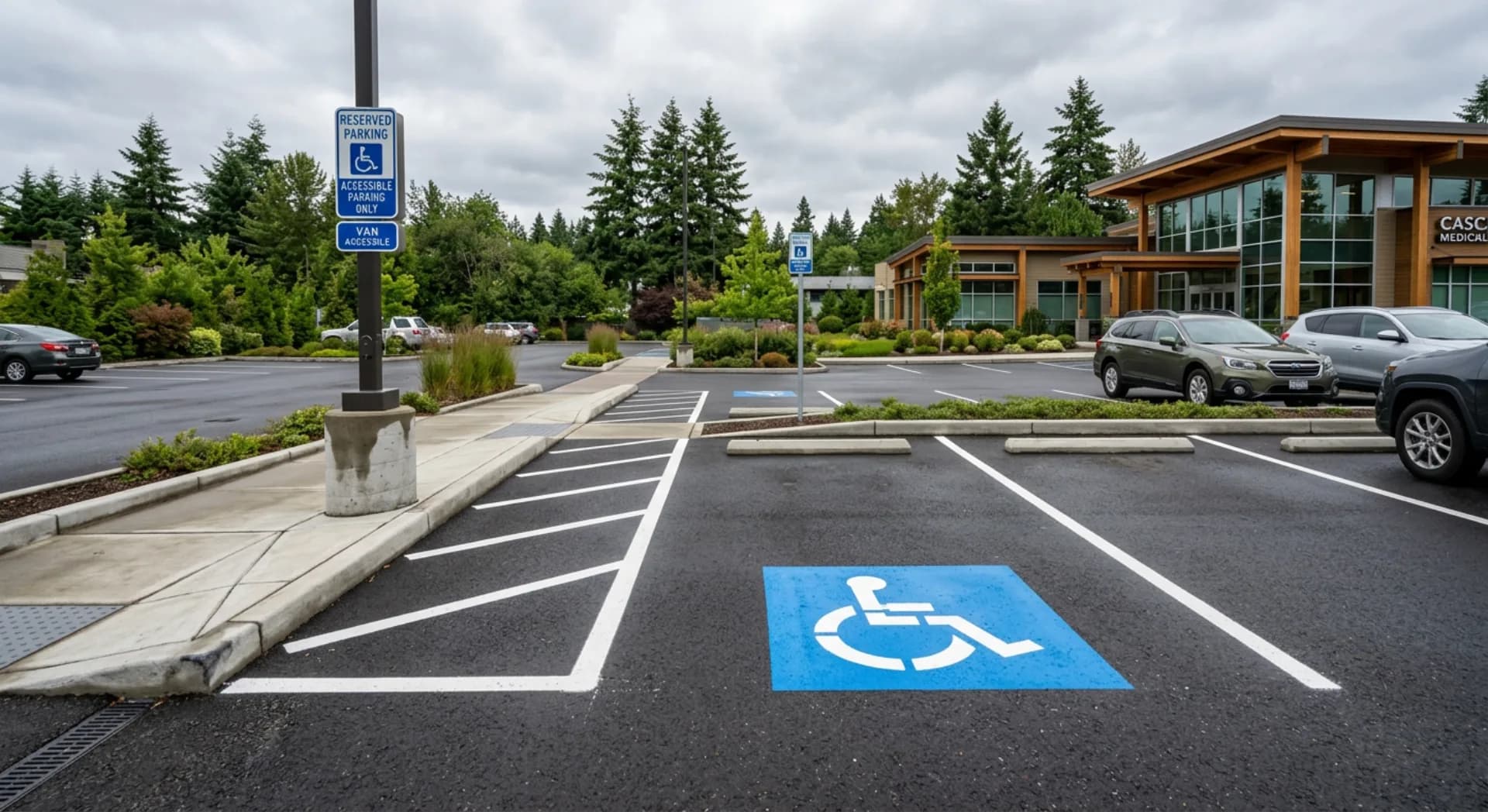
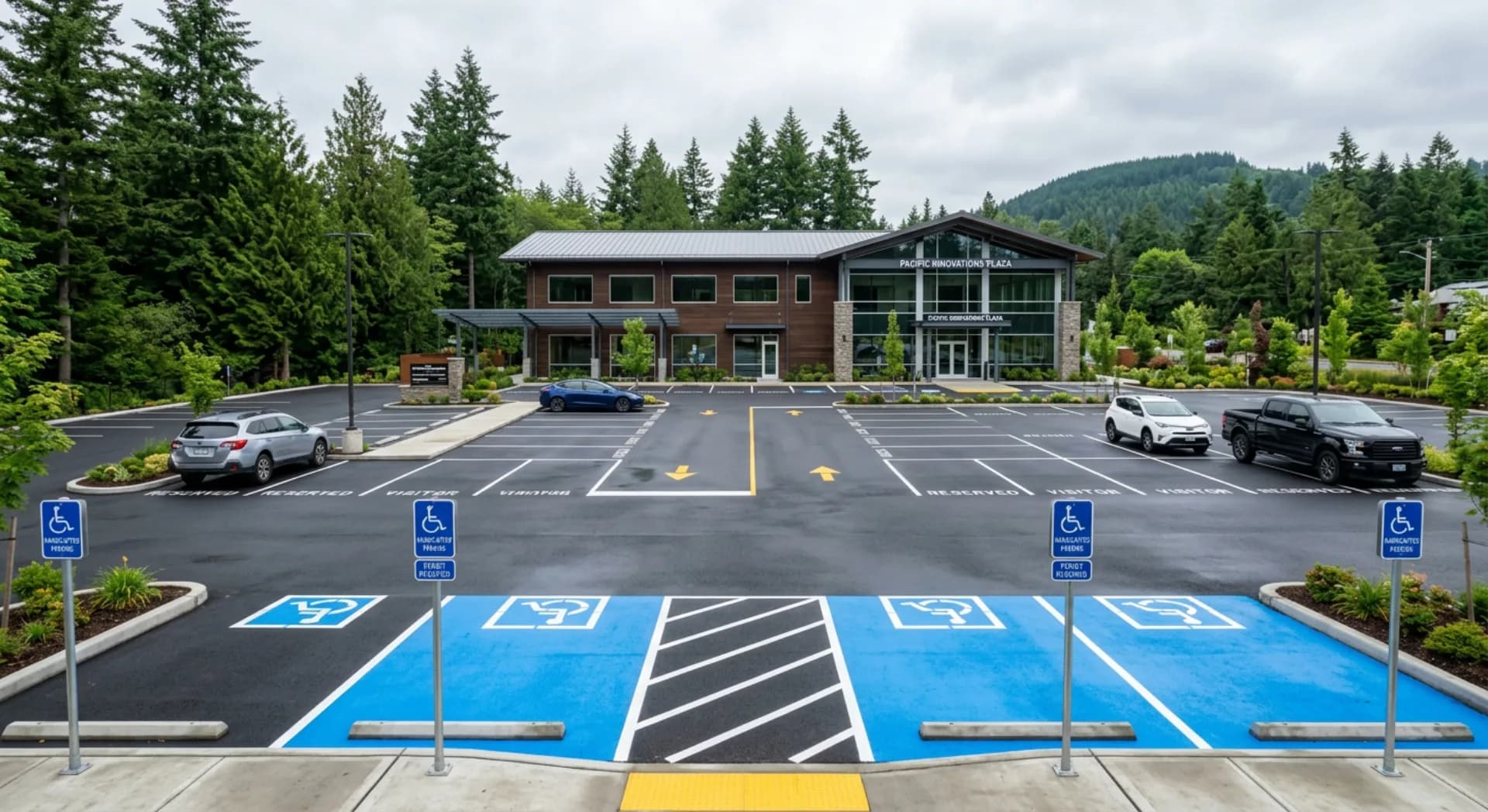
- ADA compliance is strict — Accessible spaces require specific dimensions, signage, ground markings, and access aisles; non-compliance leads to lawsuits and fines
- Paint type affects longevity — Water-based latex is standard for most lots; thermoplastic lasts 3-5 years and is ideal for high-traffic commercial applications
- Timing matters — Stripe during dry months (late spring through early fall) at temperatures above 50°F for best adhesion and durability
- Striping protects your pavement — Clear markings direct traffic flow, preventing vehicles from cutting across undesigned paths and concentrating wear in unengineered areas
Why Parking Lot Striping Matters
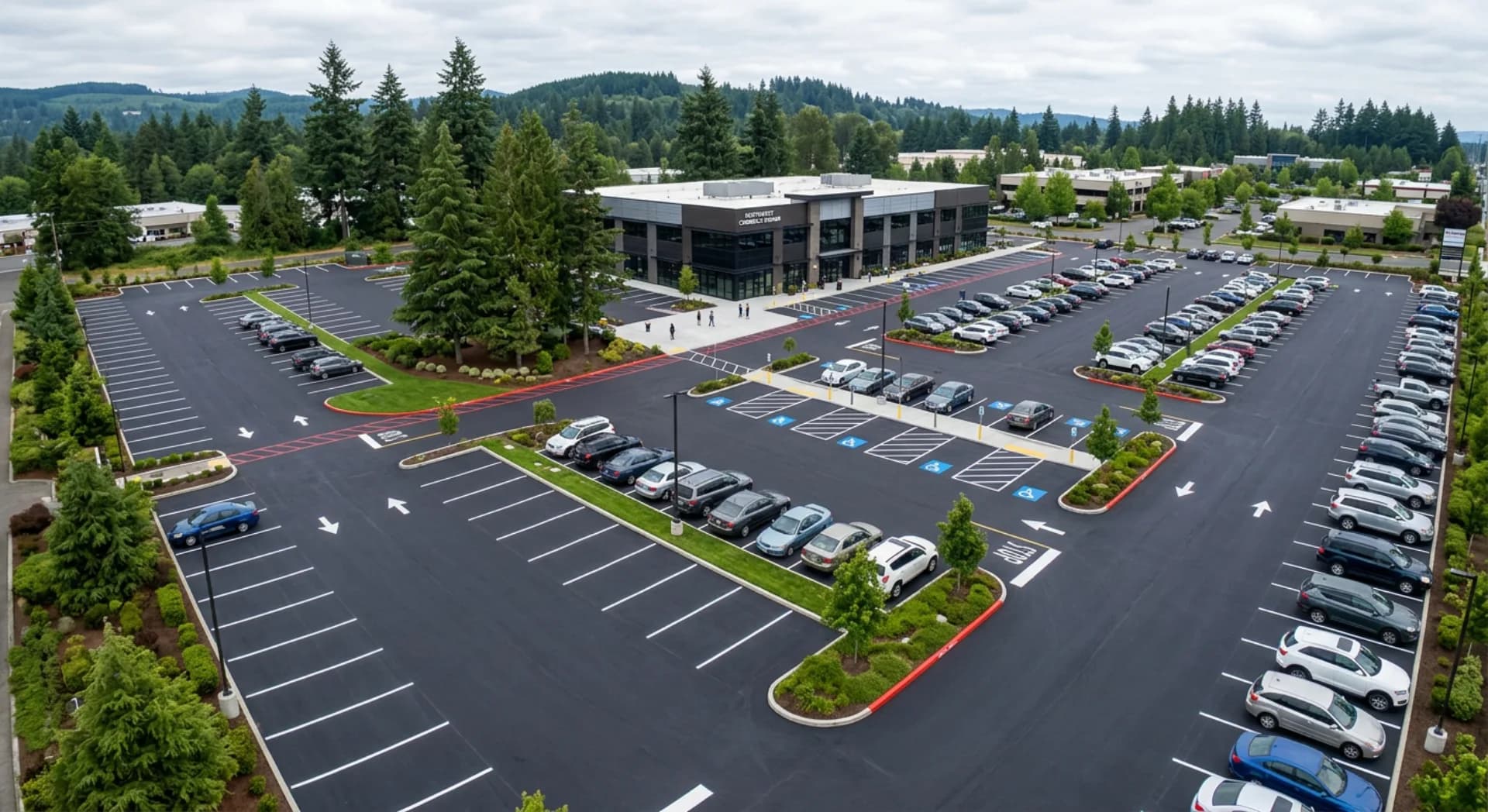
Fresh, visible lines are the first thing customers and tenants notice when they pull into your lot. Faded or missing markings create confusion, increase the risk of fender benders, and signal neglect. Beyond aesthetics, clear striping serves critical functions:
- Traffic flow — Directional arrows, lane dividers, and stop bars keep vehicles moving safely through the lot.
- Maximized capacity — Properly sized and spaced stalls ensure you're getting the most out of your square footage.
- Liability reduction — Clearly marked fire lanes, no-parking zones, and crosswalks help protect you from legal exposure.
- First impressions — A crisp, well-maintained lot tells visitors your business pays attention to detail.
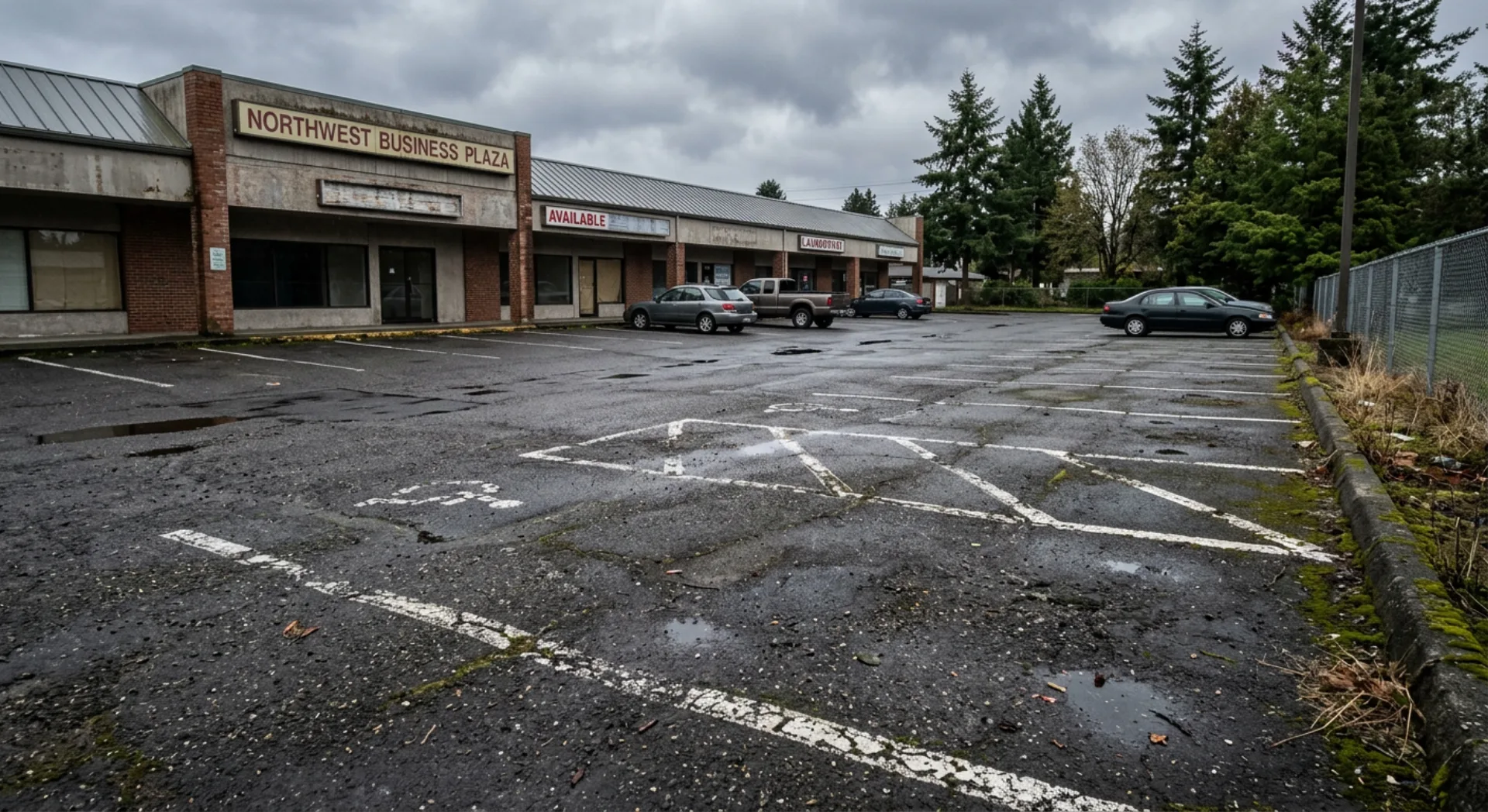
When to Restripe Your Parking Lot
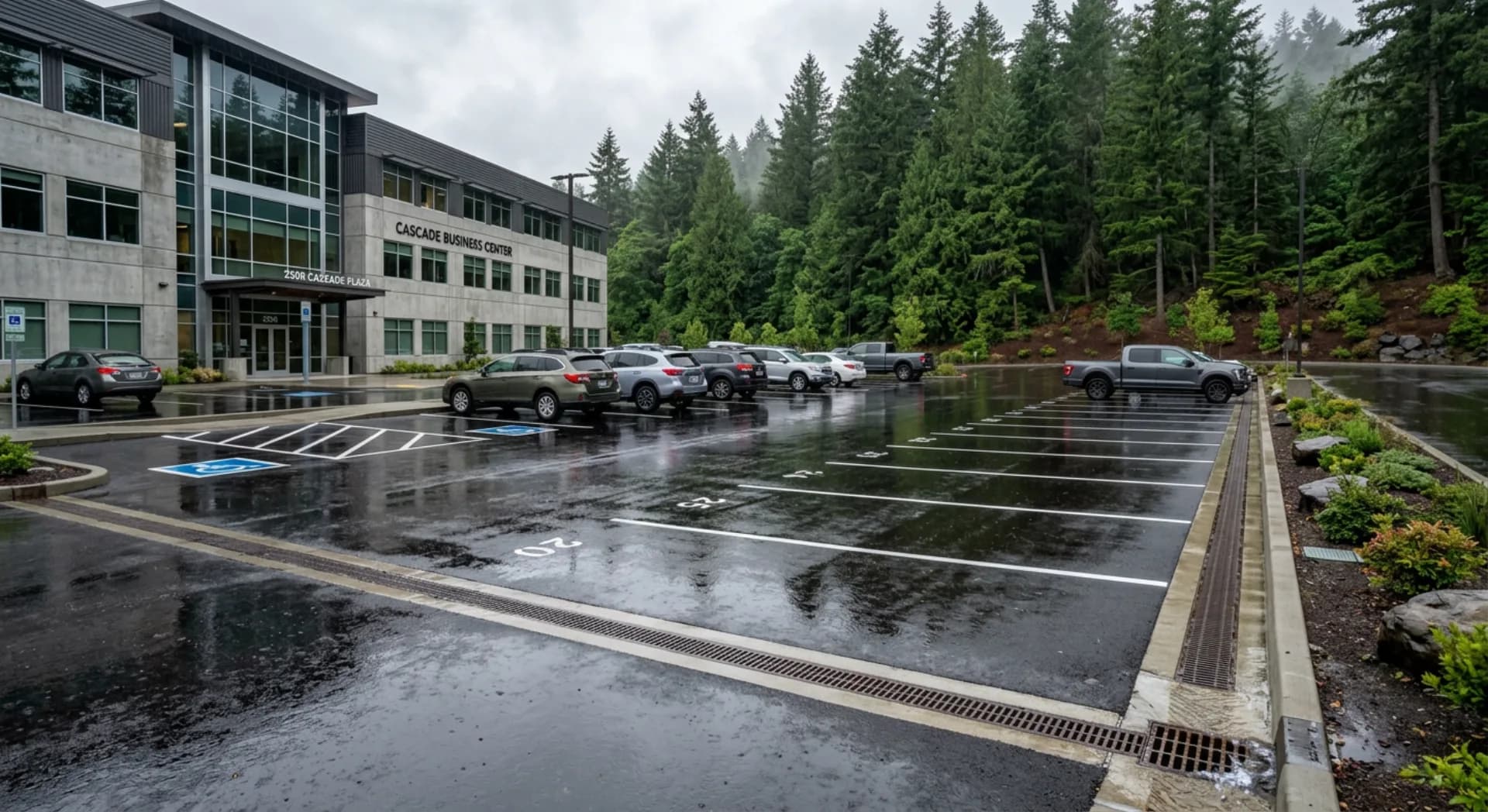
In the Pacific Northwest, rain, UV exposure, and constant traffic wear down paint faster than in drier climates. Most commercial lots in King and Snohomish County need restriping every 18 to 24 months, though high-traffic areas like drive-throughs and loading zones may need attention sooner.
Watch for these signs:
- Lines are faded to the point where they're hard to see in low light or rain
- Drivers are parking crooked or outside the lines
- You've recently completed sealcoating or resurfacing (new striping is always required afterward)
- You've received a compliance notice regarding accessible parking
ADA Compliance: More Than Just a Blue Symbol
Federal and Washington State accessibility requirements are strict — and non-compliance can result in lawsuits and significant fines. Accessible parking spaces must meet specific standards:
- Correct number of spaces based on total lot capacity
- Proper dimensions including van-accessible stalls with wider access aisles
- Signage and ground markings — the International Symbol of Accessibility must be painted on the pavement and posted on a sign
- Access aisles with diagonal hatching to prevent parking and ensure wheelchair access
- Proximity to entrances — accessible spaces must be on the shortest accessible route to the building
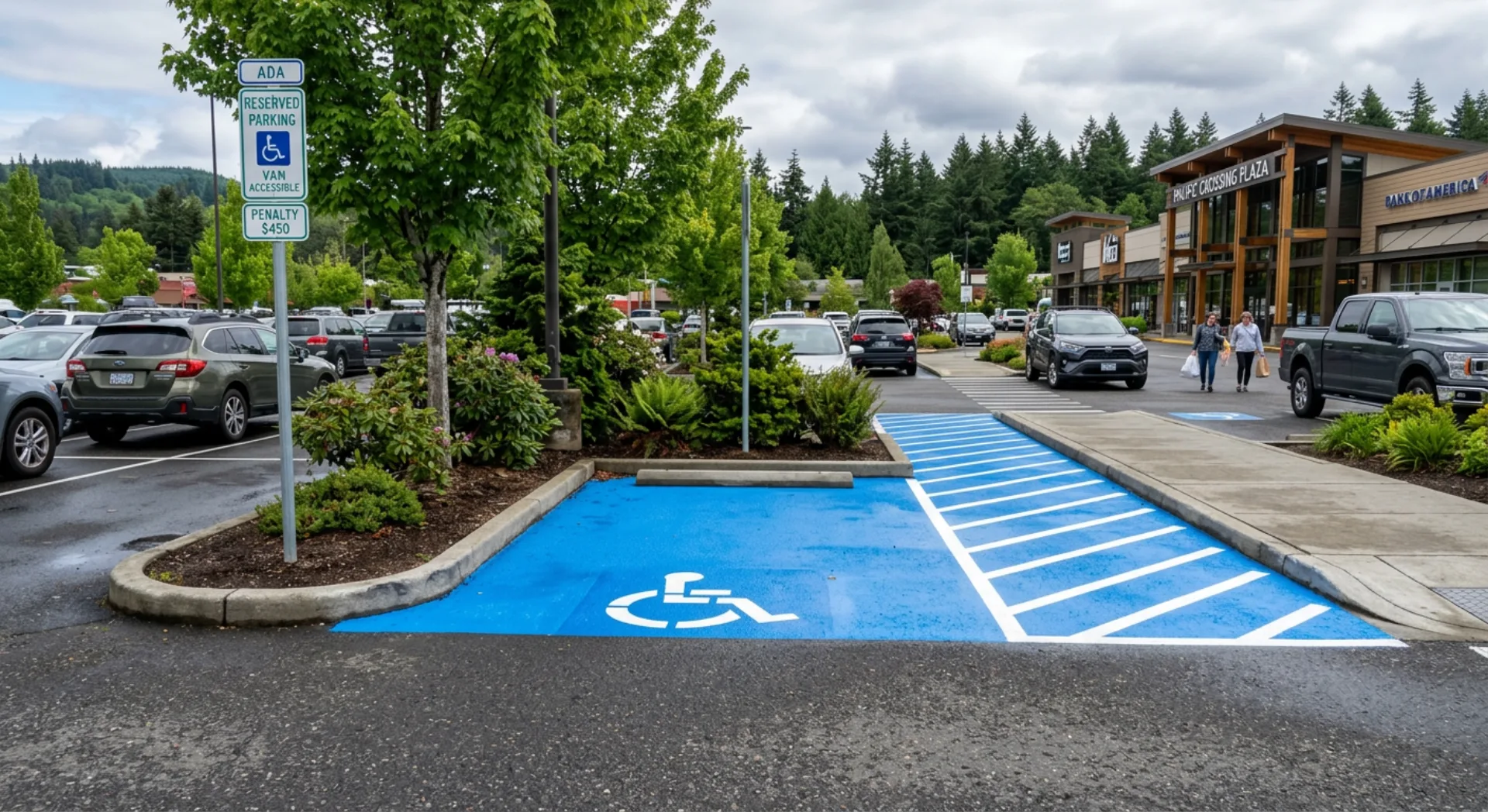
Getting ADA striping wrong is one of the most common — and most expensive — mistakes property owners make. Working with a contractor who understands the current requirements is essential. For a deep dive into accessibility standards, see our ADA compliance guide for Washington parking lots and sidewalks.
The Striping Process: What to Expect
Professional line marking isn't just someone with a paint can. Here's how a quality striping job typically works:
1. Layout and Measurement The crew surveys the lot and marks reference points. For new layouts, this includes calculating stall dimensions, drive aisle widths, and ADA requirements based on your lot's geometry.
2. Surface Preparation Old paint residue, dirt, and debris are cleaned from the surface. On freshly sealcoated lots, the surface must be fully cured before striping begins.
3. Paint Application Professional-grade traffic paint is applied using a striping machine for consistent line width and coverage. Most contractors use either water-based latex paint (fast-drying, environmentally friendly) or thermoplastic (longer-lasting, ideal for high-traffic areas).
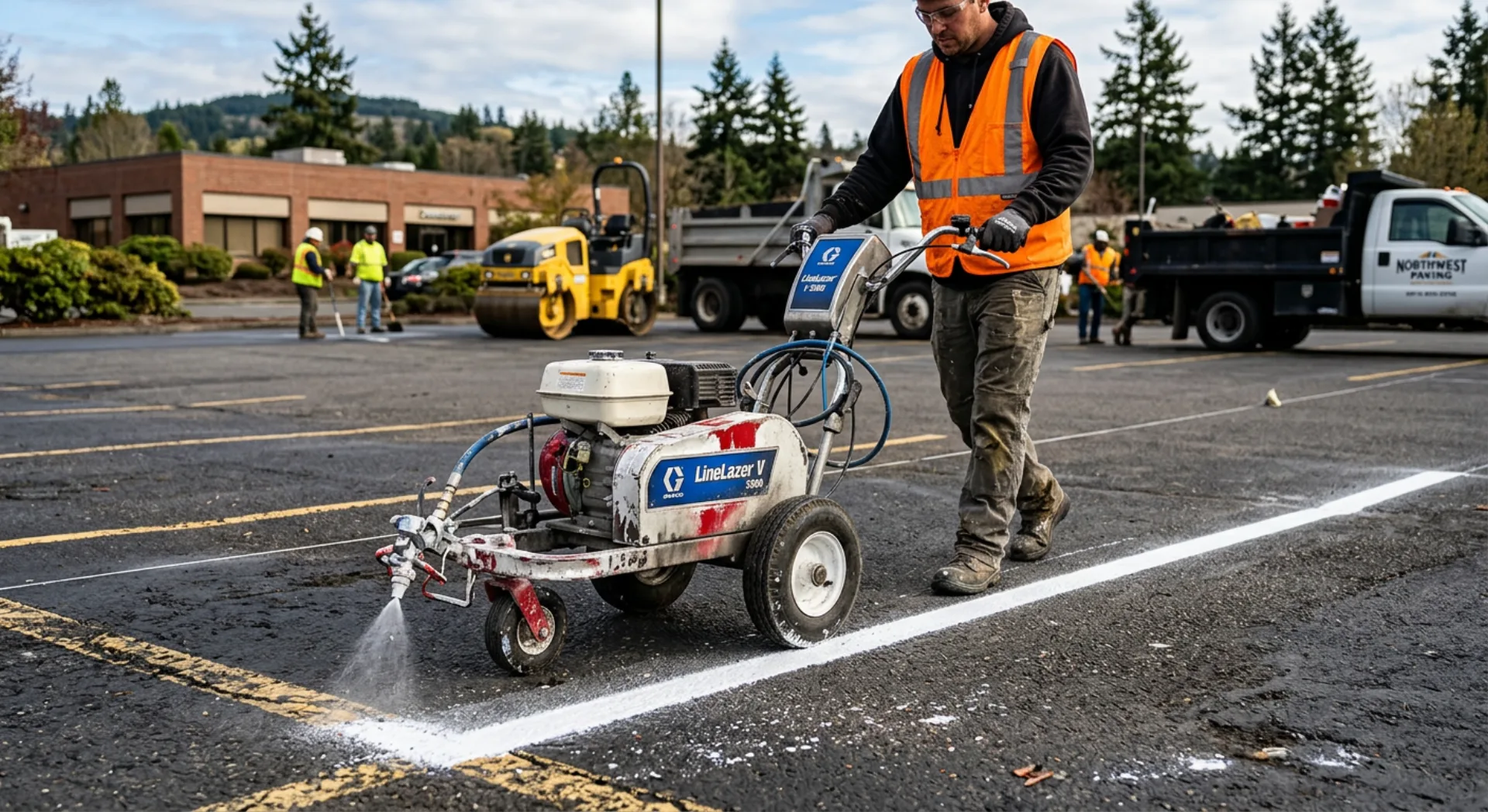
4. Cure Time Water-based paint typically dries in 30 minutes under good conditions, but full cure takes longer. Your contractor will advise on when the lot can be reopened to traffic.
Paint Types: Latex vs. Thermoplastic
Water-based latex is the most common choice for Pacific Northwest parking lots. It dries quickly, produces minimal fumes, and holds up well with regular reapplication. It's the go-to for standard restriping jobs.
Thermoplastic is heated and applied as a molten material that bonds to the asphalt. It lasts significantly longer — often 3 to 5 years — making it a strong choice for high-traffic commercial lots, fire lanes, and crosswalks. However, it requires specialized equipment and works best on asphalt surfaces.
Your contractor can recommend the right material based on your traffic volume and maintenance schedule.
Paint Types and Durability
Choosing the right paint for your parking lot directly impacts how often you'll need to restripe and how much you'll spend over the life of the lot. Here's a closer look at each option and when it makes sense.
Water-Based Latex Traffic Paint
This is the industry standard for most parking lot striping in the Pacific Northwest. Water-based latex is affordable, dries in 30 minutes under good conditions, and produces low VOC emissions that comply with Washington State environmental regulations. It applies cleanly with standard striping machines and cleans up with water.
In our climate, expect water-based latex to last 12 to 18 months in high-traffic areas and up to 24 months in lower-traffic zones. The paint wears gradually through tire abrasion and UV exposure, so fading is usually the first sign it's time for a refresh. For most commercial lots on a regular maintenance cycle, latex is the most cost-effective choice.
Thermoplastic
Thermoplastic is a premium marking material that's heated to around 400°F and applied as a molten liquid. As it cools, it bonds to the asphalt surface at a molecular level, creating a thick, durable marking that's far more resistant to traffic wear than paint.
The durability advantage is significant: thermoplastic markings typically last 3 to 5 years — sometimes longer on lower-traffic surfaces. They also maintain higher reflectivity for better nighttime visibility. The trade-off is cost — thermoplastic runs roughly two to three times more than latex per linear foot. However, when you factor in the reduced restriping frequency, thermoplastic often proves more economical over a 10-year period for high-traffic commercial lots.
Thermoplastic works best on asphalt surfaces. It can be applied to concrete, but adhesion is less reliable and the lifespan is reduced. It also requires specialized application equipment, so not every striping contractor offers it.
Epoxy Paint
Epoxy-based traffic paint falls between latex and thermoplastic in both cost and durability. It creates a hard, abrasion-resistant film that lasts 2 to 3 years under normal traffic conditions. Epoxy is particularly effective for interior garage floors, loading dock markings, and areas where chemical resistance matters.
The main drawback is application time — epoxy requires longer cure time (often 4 to 6 hours) and is sensitive to temperature and humidity during application. This makes scheduling more challenging in the Pacific Northwest compared to fast-drying latex.
Reflective Glass Beads
Regardless of paint type, adding reflective glass beads to your line markings significantly improves nighttime and wet-weather visibility. Beads are dropped onto the wet paint during application, embedding in the surface as it dries. For commercial lots in the PNW, where rain and early darkness are common for half the year, reflective markings are a worthwhile investment in safety.
Frequently Asked Questions
How much does parking lot striping cost?
Parking lot striping in King and Snohomish County typically costs $0.20 to $0.50 per linear foot for standard water-based latex paint. A complete restripe of a 50-space lot usually runs $800 to $2,000, depending on the layout complexity and whether ADA markings, arrows, and specialty symbols are included.
How long does parking lot striping take?
A standard 50-to-100-space commercial lot can typically be striped in a single day. Larger lots or projects that include new layout design, ADA upgrades, and thermoplastic applications may take two days. Most contractors can schedule the work during off-hours to minimize disruption to your business.
Can you stripe a parking lot in cold weather?
Paint adhesion drops significantly below 50°F, and most manufacturers don't recommend application below 40°F. In the Pacific Northwest, this effectively limits the striping season to April through October for outdoor lots. Indoor parking structures can be striped year-round.
Do I need to close my parking lot for striping?
A full closure isn't always necessary. Many contractors work in sections, allowing partial access throughout the day. The painted areas typically need 30 to 60 minutes of drying time before vehicle traffic can resume. Your contractor will coordinate with you to minimize impact on customers and tenants.
What's the difference between parking lot striping and parking lot painting?
The terms are often used interchangeably. "Striping" specifically refers to the line markings — stall lines, directional arrows, stop bars, and accessibility symbols. "Painting" can include striping plus larger elements like curb painting, loading zone markings, and fire lane designations. Both are typically performed by the same contractor as part of the same project.
Planning Your Striping Project
The best time to stripe in the Pacific Northwest is during the drier months — late spring through early fall — when temperatures stay above 50°F and rain isn't in the forecast. Striping right after sealcoating or repaving ensures the best adhesion and longest life.
If your lot is due for restriping — or if you're planning a sealcoating or resurfacing project and want to include fresh line marking — reach out to the Jireh team. Striping is a key part of any commercial parking lot design. We handle striping as part of our full-service asphalt and concrete work across King and Snohomish County.
Contact Jireh Asphalt & Concrete to discuss your parking lot striping needs.