The best way to protect pavers in a Pacific Northwest winter is to clear snow early, use sand for traction, apply only as much de-icer as you truly need, and choose an ice melt your paver manufacturer approves. Industry guidance is not unanimous about which de-icers are safest, so the paver manufacturer's care instructions should be your tiebreaker.
Key Takeaways
- Sand first, chemicals second — Clean sand adds traction, helps refill paver joints, and avoids most chemical concerns, though it should not be used on permeable pavers.
- Avoid magnesium chloride and CMA — The Concrete Masonry & Hardscapes Association (CMHA) says these can chemically degrade concrete and does not recommend them on pavers.
- Never use fertilizer as ice melt — Products containing ammonium nitrate or ammonium sulfate can attack concrete.
- Rock salt guidance conflicts — CMHA calls rock salt the least damaging option, while some paver manufacturers advise avoiding sodium chloride entirely. Check your paver brand's instructions.
- Use plastic blades and prep before winter — Plastic shovels, synthetic plow edges, level pavers, and full joints reduce winter damage.
Why Winter Is Hard on Pavers in Western Washington
Lowland Western Washington does not get the long, hard winters of the Midwest, but it gets something that can be just as tough on hardscape: lots of moisture combined with temperatures that swing above and below freezing. Rain soaks into paver joints and the bedding layer, then a clear night drops the temperature below freezing and that water expands. When it thaws, the cycle repeats.
On top of that, a light snow or freezing rain event often sends homeowners and property managers straight to the bag of ice melt. De-icers lower the freezing point of water, which means more freeze-thaw cycles at the surface and a salty solution that soaks into the concrete. Over time, the wrong product or simply too much product can contribute to surface scaling, discoloration, and white residue.
Quality concrete pavers are built for this. CMHA (the organization that now publishes the guidance formerly issued by the Interlocking Concrete Pavement Institute) notes that the ASTM C936 product standard for interlocking concrete pavers includes freeze-thaw durability criteria and resistance to de-icing salts. That is a strong starting point, but it does not make pavers immune to bad winter habits.
Which De-icers Are Safe for Pavers? What the Sources Say
This is where homeowners get confused, and for good reason: published guidance does not fully agree. Here is what we found from authoritative sources, stated plainly.
Industry Association Guidance (CMHA)
CMHA's operation and maintenance guide for interlocking concrete pavement says:
- Rock salt (sodium chloride) is the least damaging to concrete materials and should be used whenever possible.
- Calcium chloride can be considered, used judiciously, when a faster-acting de-icer is needed.
- Magnesium chloride and calcium magnesium acetate (CMA) are not recommended because they can chemically degrade all types of concrete.
- Use only as much as needed. De-icers should not replace snow removal; they should be reserved for melting ice.
Paver Manufacturer Guidance
Manufacturers write care instructions for their own products, and some go further than the association:
- Western Interlock, a Pacific Northwest paver manufacturer, advises using a product that does not contain sodium chloride, calcium chloride, or magnesium acetate, and recommends sodium-free ice melt to protect paving stones.
- Unilock says to always avoid magnesium-based products, says sodium chloride products can be used, and warns that excessive use of any de-icing chemical is not recommended.
Ammonium-Based Products and Fertilizer
Some people grab lawn fertilizer to melt ice. Do not do this on any concrete surface. Fertilizer is not made for pavement: products containing ammonium nitrate or ammonium sulfate can attack concrete, and they also wash nitrogen into storm drains.
How to Resolve the Conflict
When guidance conflicts, follow the instructions from the manufacturer of the pavers you actually have. Using their recommended product, or a product they explicitly approve, is the safest choice for both the surface and any product warranty. If you do not know who made your pavers, ask your installer. Across every source we reviewed, three points are consistent: avoid magnesium-based de-icers, never use fertilizer, and never over-apply.
Sand: The Underrated Winter Tool for Pavers
For most standard paver patios, walkways, and driveways, clean sand is one of the most paver-friendly winter tools available.
- It adds traction immediately, even on ice that is too cold for chemical de-icers to work quickly.
- It works its way into joints, helping keep joint sand topped up, which CMHA notes reduces preventive maintenance.
- It avoids chemical exposure for the pavers, nearby plants, and pets' paws.
Two cautions:
- Do not sand permeable pavers. Permeable interlocking concrete pavement relies on open joints filled with aggregate to drain water. Sand clogs those openings and reduces infiltration. CMHA specifically says sand should not be used on permeable systems.
- Sweep up excess sand in spring. Leftover sand on the surface can be tracked indoors and, over time, contributes to abrasion and color change. CMHA recommends removing excess sand from the pavement surface in spring.
Safer Snow and Ice Removal Habits
How you remove snow matters as much as what you put down.
Shovel Early and Often
The less snow that gets packed down by foot traffic and tires, the less ice you will need to melt. Shoveling soon after snowfall is the single best way to reduce de-icer use.
Use Plastic Shovels and Synthetic Blade Edges
Metal blades can scratch and chip paver surfaces and edges. Unilock and Western Interlock both recommend plastic shovels, and CMHA suggests plastic shovels or synthetic blade edges where appearance matters. For snow blowers and plows, rubber or synthetic edges and properly adjusted skid shoes help prevent gouges and rust marks from worn metal.
Shovel Diagonally to the Joints
CMHA notes that snow removal tends to be easier when shoveling or plowing diagonally to the joint lines, which reduces the chance of a blade catching a paver edge.
Do Not Pile Salty Snow on Pavers or Plants
Push snow off the paved surface where it can melt without pooling. Do not store snow piles or leftover salt on the pavers, and keep de-icer-laden slush away from lawns, shrubs, and metal fixtures, which most de-icers can damage.
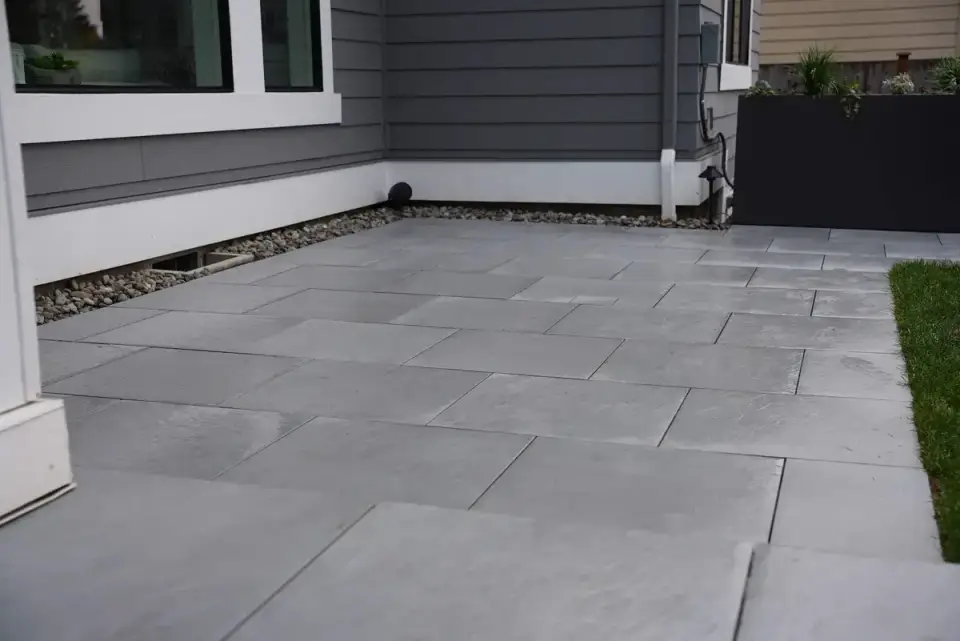
Your Pre-Winter Paver Checklist
Fall is the right time to get pavers ready. Walk the surface on a dry day and work through this list:
- Look for lifted or sunken pavers. CMHA advises fixing heaved units with noticeable lippage before winter, because raised edges catch shovels and plows.
- Top up joint sand. Low joints let water collect and invite weeds and movement. Refill joints before the wet season.
- Clean the surface. Remove leaves, moss, and dirt so they do not freeze into the surface or stain it over winter.
- Consider sealing. Western Interlock recommends cleaning and sealing pavers, noting that sealing helps protect against moisture, freeze-thaw cycles, and salt. CMHA treats sealers and joint stabilizers as optional tools that reduce water entering the joints. Sealing is not mandatory, but it can help, especially on driveways. Sealer must go on a clean, dry surface in suitable weather, so this is a fall task.
- Check drainage. Make sure downspouts and surface slopes move water off the pavers instead of letting it pond and freeze. If you have recurring puddles, read our guide to drainage solutions for paved surfaces.
- Stock the right supplies. Buy clean sand, a plastic shovel, and a manufacturer-approved ice melt before the first cold snap, when stores run low.
Pavers vs. Other Surfaces in Winter
Pavers have a few winter advantages over a single concrete slab. Because they are individual units with joints, they can flex slightly with minor ground movement, and a damaged paver can be lifted and replaced without cutting out a large section. Our spring driveway maintenance checklist covers what to check on other paved surfaces once winter ends.
Decorative poured surfaces have their own winter care needs. If you are weighing options for a new project, our post on exposed aggregate concrete in the Pacific Northwest explains how that finish holds up in our wet climate.
Sources
- CMHA Tech Note PAV-TEC-006: Operation and Maintenance Guide for Interlocking Concrete Pavement
- CMHA: Top 3 Tips to Prepare Your Interlocking Concrete Paver Patio for Winter
- Western Interlock: How to Protect Your Pavers During Winter Weather
- Western Interlock: Safe De-icing Solutions for Paving Stones
- Unilock: Winter Paver Maintenance
Frequently Asked Questions
Is rock salt safe to use on pavers?
It depends on whose guidance you follow. CMHA says rock salt is the least damaging de-icer to concrete and should be used whenever possible, but some paver manufacturers, including Western Interlock, advise avoiding sodium chloride. Check the care instructions from your paver's manufacturer, use sand first, and apply any salt sparingly.
What ice melt should I never use on pavers?
Avoid magnesium chloride and calcium magnesium acetate, which CMHA says can chemically degrade concrete, and never use fertilizer or products containing ammonium nitrate or ammonium sulfate. Also avoid any product your paver manufacturer specifically rules out.
Can I use sand on permeable pavers?
No. Permeable pavers depend on open, aggregate-filled joints to drain water, and sand clogs those openings. Use plowing, shoveling, and a manufacturer-approved de-icer used sparingly on permeable systems instead.
Should I seal my pavers before winter?
Sealing is optional, but it can help. Paver sealers and joint stabilizers reduce water entering the joints and surface, which can limit freeze-thaw and salt exposure. Sealer must be applied to a clean, dry surface in suitable weather, so plan it for early fall rather than mid-winter.
What causes white residue on pavers after winter?
White residue after winter is often de-icer residue or efflorescence, a natural mineral deposit that can appear on concrete products. Rinsing and sweeping in spring removes most de-icer residue, and efflorescence typically fades over time or can be treated with a cleaner made for concrete pavers.
Get Your Pavers Ready for Winter
Jireh installs and repairs paver patios, walkways, and driveways throughout King and Snohomish County, including releveling lifted pavers and restoring joints before the wet season. For commercial properties, our snow and ice services include sanding and granular ice control planned around your site. Learn more about our paver services, or get a free estimate for pre-winter paver repairs.