In Everett’s wet climate, sealcoat only when the pavement is dry, repaired, clean, and the product-specific application and cure window is forecast to remain dry; do not schedule by the calendar alone.
Reviewed by: Jireh Construction Services editorial team
Last updated: August 10, 2026
Sealcoating is preventive surface maintenance. It can protect suitable asphalt, but it cannot rebuild a failed base, correct drainage, or restore a settled low spot.
What is the quick readiness check?
| Site condition | Decision | Why |
|---|---|---|
| Pavement and forecast are dry for the full product-specified window | Consider scheduling | Water can interfere with application and curing |
| Surface is clean, sound, and free of loose material | Consider scheduling | The coating needs a properly prepared surface |
| Open cracks, potholes, or failed edges remain | Repair first | Sealcoat is not structural repair material |
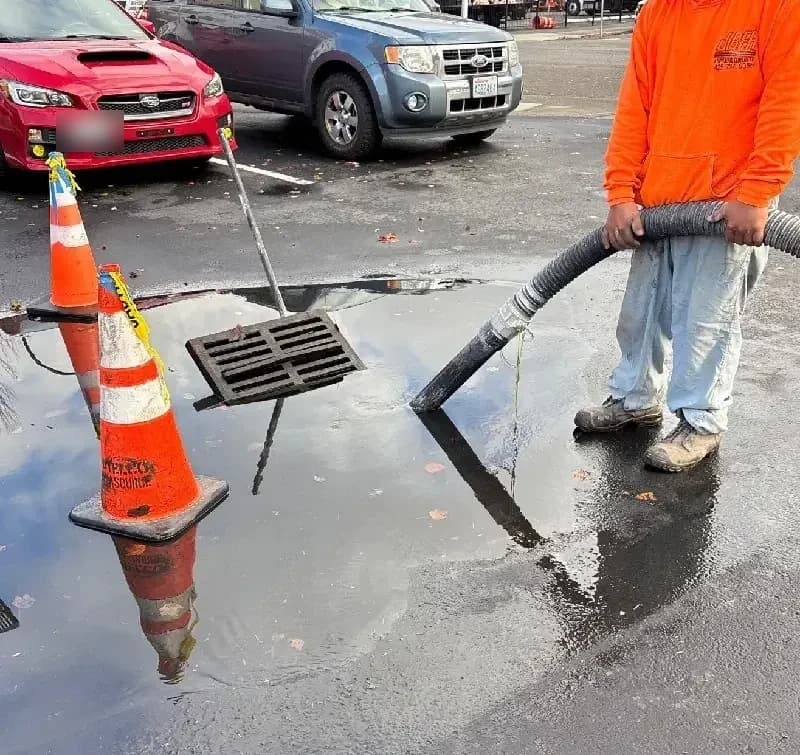
| Water ponds or drains back across the work area | Correct the water path first | Repeated moisture can undermine the treatment and pavement |
| New asphalt has not met the selected product’s readiness criteria | Wait and verify | Cure and preparation requirements vary by system |
| Rain, heavy dew, or unsuitable temperatures are expected | Postpone | The manufacturer’s limits and cure window control |
The Washington State Department of Transportation’s chip-seal guidance explains that dry, warm weather helps water leave an asphalt emulsion as it cures. A roadway chip seal is not the same system as a liquid property sealcoat, but the weather principle is relevant: water-based asphalt treatments need the specified dry curing conditions.
What does sealcoating do—and what does it not do?
Sealcoating places a protective coating on a suitable asphalt surface. Its role is surface preservation, not structural reconstruction.
It may be appropriate to evaluate when:
- The asphalt is structurally stable.
- Cracks and localized defects have been repaired as required.
- The surface can be thoroughly cleaned.
- Drainage is working and water does not remain on the pavement.
- Weather and surface conditions meet the selected product specification.
It is not a fix for:
- Fatigue or alligator cracking tied to loss of support.
- Potholes or loose, raveled material.
- Rutting, heaving, settlement, or soft pavement.
- Standing water caused by grade or blocked drainage.
- Failed pavement that needs removal and replacement.
If those conditions are present, start with an asphalt repair assessment before choosing a coating.
When is the best time to sealcoat in Everett?
The best time is a site-specific dry window that meets the selected material’s instructions before, during, and after application. In practice, Everett’s drier part of the year usually offers more opportunities, but a month on the calendar does not guarantee acceptable pavement temperature, surface moisture, overnight conditions, or cure time.
Before confirming a date, verify:
- The pavement is dry, including shaded and low areas.
- Rain and heavy moisture are not expected during the full cure window.
- Surface and air conditions meet the product data sheet.
- Repairs have cured for the period required by their materials.
- Irrigation, roof runoff, and vehicle access can be controlled.
- The site can remain closed for the required cure period.
WSDOT’s current Maintenance Manual similarly warns against starting its roadway chip-seal treatment on a wet surface or when rain threatens. Because products differ, use the selected sealcoat manufacturer’s limits—not WSDOT roadway numbers—as the application specification for a driveway or parking lot.
How does Everett’s wet climate change preparation?
Moisture exposure makes drainage and surface preparation especially important. Inspect the pavement after rain, not only on a dry afternoon, so hidden low spots and clogged inlets are visible.
Use this pre-work checklist:
- Photograph standing water and note how long it remains.
- Clear leaves, sediment, moss, dirt, and loose aggregate.
- Inspect cracks, patches, edges, drains, and utility transitions.
- Stop irrigation and redirect roof discharge away from the work area.
- Confirm shaded sections have dried.
- Plan vehicle and pedestrian closure through the cure window.
- Protect adjacent concrete, buildings, landscaping, and drainage inlets.
If water is not reaching its intended outlet, catch basin inspection and cleaning may need to happen before coating.
Should sealcoat be applied on a fixed recurring schedule?
No universal interval fits every site. Traffic, sun exposure, drainage, previous materials, surface condition, and the product system all affect timing.
An inspection-based plan is more reliable:
- Review condition after the wet season and after unusual damage.
- Track where cracks, oxidation, wear, or standing water develop.
- Preserve records of the last product and application date.
- Repair defects before they spread.
- Recoat only when the pavement and product system support it.
Applying too early adds material without solving a performance need. Applying over failed pavement can hide distress temporarily without correcting it.
Which sealcoat products are restricted in Washington?
Washington bans the sale and use of coal-tar pavement sealants. The Washington State Department of Ecology’s toxics-in-products summary links the restriction to Chapter 70A.440 RCW and identifies coal-tar sealants as a source of concern for polycyclic aromatic hydrocarbons.
Ask the applicator to identify the proposed material and provide its current product data and safety information. “Sealcoat” is a category, not a complete specification.
What should a sealcoating scope state?
A clear written scope should identify:
- The exact treatment area and excluded areas.
- Cleaning and surface-preparation steps.
- Crack, pothole, and patch work handled separately.
- Product name and application requirements.
- Number or method of applications when relevant to that product.
- Weather and moisture conditions that trigger postponement.
- Cure time and property-access plan.
- Protection of drains, concrete, walls, and landscaping.
These details make estimates comparable without relying on unsupported lifespan, performance, or price promises.
Frequently asked questions
Can sealcoat be applied the day after rain?
Possibly, but not automatically. The entire surface—including shaded sections, cracks, low spots, and patch edges—must be dry and meet the product’s application requirements. The coming forecast must also support the full cure window.
Can sealcoat stop water from pooling?
No. Pooling is a drainage or grade issue. The water path, inlets, outlets, and settlement should be evaluated before applying a surface coating.
Can sealcoat fill wide or moving cracks?
No. Crack treatment and structural repair are separate steps. Moving, interconnected, or recurring cracks need diagnosis before the surface is coated.
Is WSDOT chip seal the same as driveway sealcoating?
No. WSDOT’s chip seal combines asphalt emulsion and aggregate for road preservation. Property sealcoating uses different products and application specifications. WSDOT is cited here only for the general preservation and dry-weather principles.
How do I plan the next step?
Inspect the asphalt after rain, list defects that require repair, identify drainage issues, and gather the prior product information if available. Then compare a written scope against the selected material’s instructions and a realistic dry-weather closure plan.
Review Jireh’s sealcoating service or request a site-specific estimate.