Your parking lot is one of the first things customers, tenants, and visitors see when they arrive at your property. A well-maintained lot communicates professionalism and attention to detail. A deteriorating one sends the opposite message—and costs significantly more to fix the longer you wait.
Sealcoating is the single most cost-effective maintenance step you can take to extend the life of your asphalt pavement. Yet many property managers in the Seattle area delay this critical service until damage has progressed beyond a simple fix. Here are the five warning signs that it's time to act.
Key Takeaways
- Gray color means degraded binder — When your asphalt has faded from black to gray, oxidation has made the surface brittle and vulnerable to cracking
- Sealcoat every 2-3 years — Regular sealcoating is the most cost-effective way to extend pavement life, costing a fraction of what repairs or replacement would
- Small cracks become big problems fast — In the Pacific Northwest, water infiltration through cracks leads to freeze-thaw damage, subgrade erosion, and potholes within one or two seasons
- Timing is everything — Sealcoating needs 48+ hours of dry weather above 50°F, limiting the window to June through September in Western Washington
- Waiting costs more — Delaying sealcoating turns a $0.15-0.25/sq ft maintenance task into $5-12/sq ft in repairs or replacement
Sign 1: The Color Has Faded From Black to Gray
Fresh asphalt is a rich, deep black. Over time, exposure to UV radiation, rain, and oxygen breaks down the binder that holds the aggregate together—a process called oxidation. As oxidation progresses, your asphalt gradually turns from black to dark gray to light gray.
This isn't just cosmetic. That color change indicates the asphalt binder is drying out and becoming brittle. Brittle asphalt cracks more easily under traffic loads and temperature changes, and those cracks let water penetrate to the base layer below.
When to act: If your parking lot has turned a uniform medium gray, you're in the ideal window for sealcoating. At this stage, the surface is weathered enough for sealant to bond properly but not so deteriorated that deeper repairs are needed first.
What happens if you wait: The pavement continues to oxidize and becomes increasingly brittle. Within 1–2 more years, you'll start seeing widespread surface cracking that requires crack filling before sealcoating—adding 30–50% to the total maintenance cost.
Sign 2: Fine Surface Cracks Are Appearing
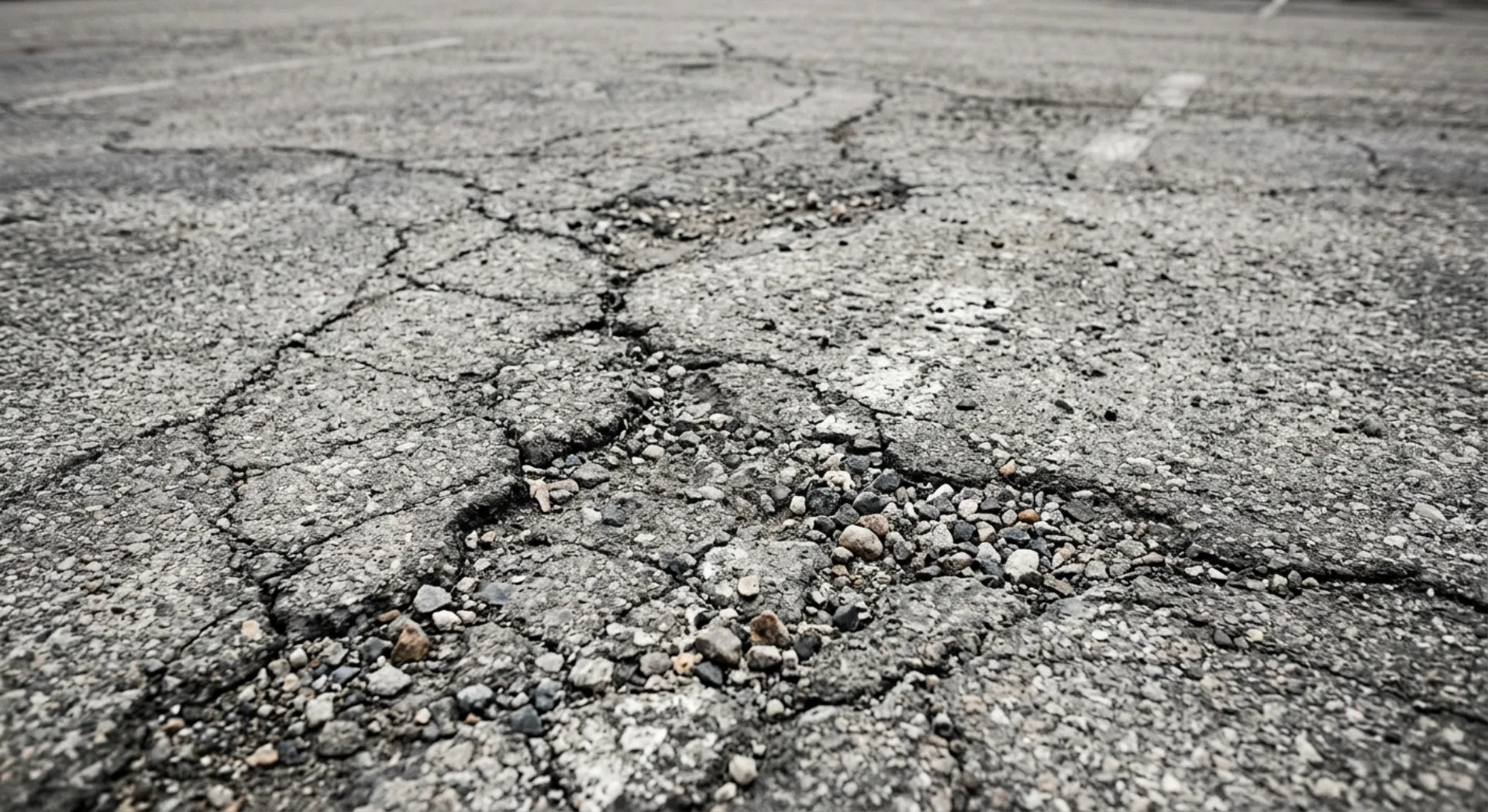
Hairline cracks—thin cracks less than a quarter-inch wide—are the first structural warning sign. These cracks are often called "surface checking" or "raveling" and typically appear as a network of fine lines across the pavement surface.
In the Pacific Northwest, these small cracks are particularly dangerous because of our rainfall patterns. Seattle averages over 150 days of measurable precipitation per year. Every time it rains, water seeps into those hairline cracks, penetrates the base, and weakens the foundation from below.
During winter cold snaps—which Seattle experiences several times per season—that water freezes, expands, and forces the cracks wider. This freeze-thaw cycle accelerates damage exponentially.
When to act: Hairline cracks are the perfect indicator that sealcoating should be scheduled within the next few months. Crack filling followed by sealcoating at this stage provides maximum protection.
What happens if you wait: Fine cracks widen into cracks that require hot-pour crack sealing (more expensive than simple crack filling). Within 2–3 years of inaction, interconnected cracking develops into alligator patterns that can only be fixed with removal and replacement of the affected area.
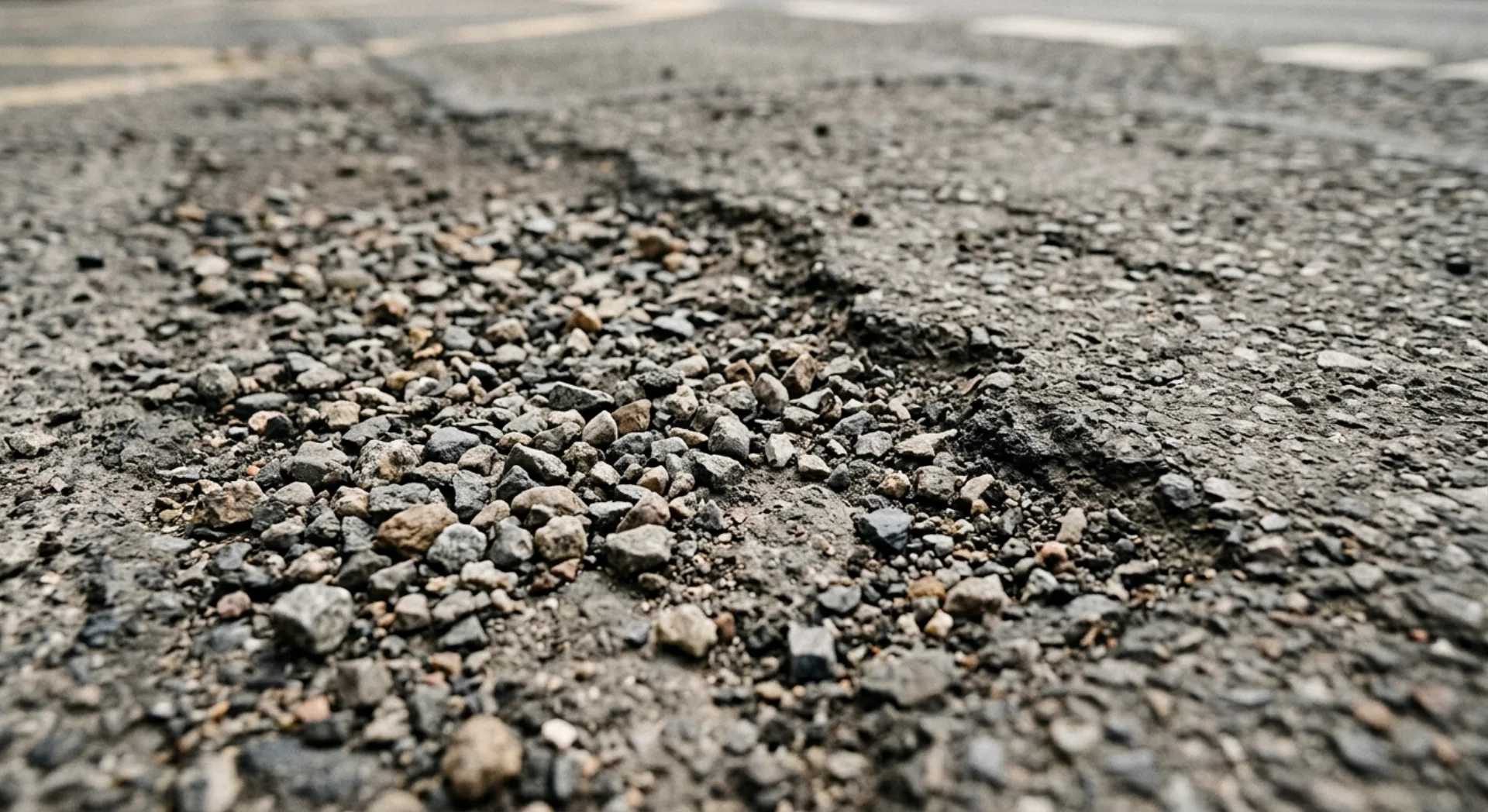
Sign 3: You Can See Loose Aggregate on the Surface
Run your hand across the pavement surface—or just look closely. If you see small stones and sand granules sitting loose on top of the asphalt, the binder has deteriorated enough that it's no longer holding the aggregate in place. This is called raveling.
Raveling often starts at the edges of the parking lot and in areas with turning traffic, where the shearing forces from tires are greatest. You might also notice it around speed bumps, near entrances and exits, and in drive lanes where vehicles accelerate or brake.
Beyond surface deterioration, those loose stones can damage vehicles (particularly paint), create slip hazards for pedestrians, and clog drainage systems.
When to act: Moderate raveling is still sealcoatable, but the contractor may need to sweep and clean the surface thoroughly before application, and may recommend a heavier application or two coats in severely raveled areas.
What happens if you wait: Severe raveling exposes the base aggregate beneath the asphalt surface course. At that point, sealcoating alone isn't sufficient—you'll need an asphalt overlay (1.5–2 inches of new asphalt on top) at three to five times the cost of sealcoating. Learn more about all the strategies to extend the life of your commercial parking lot.
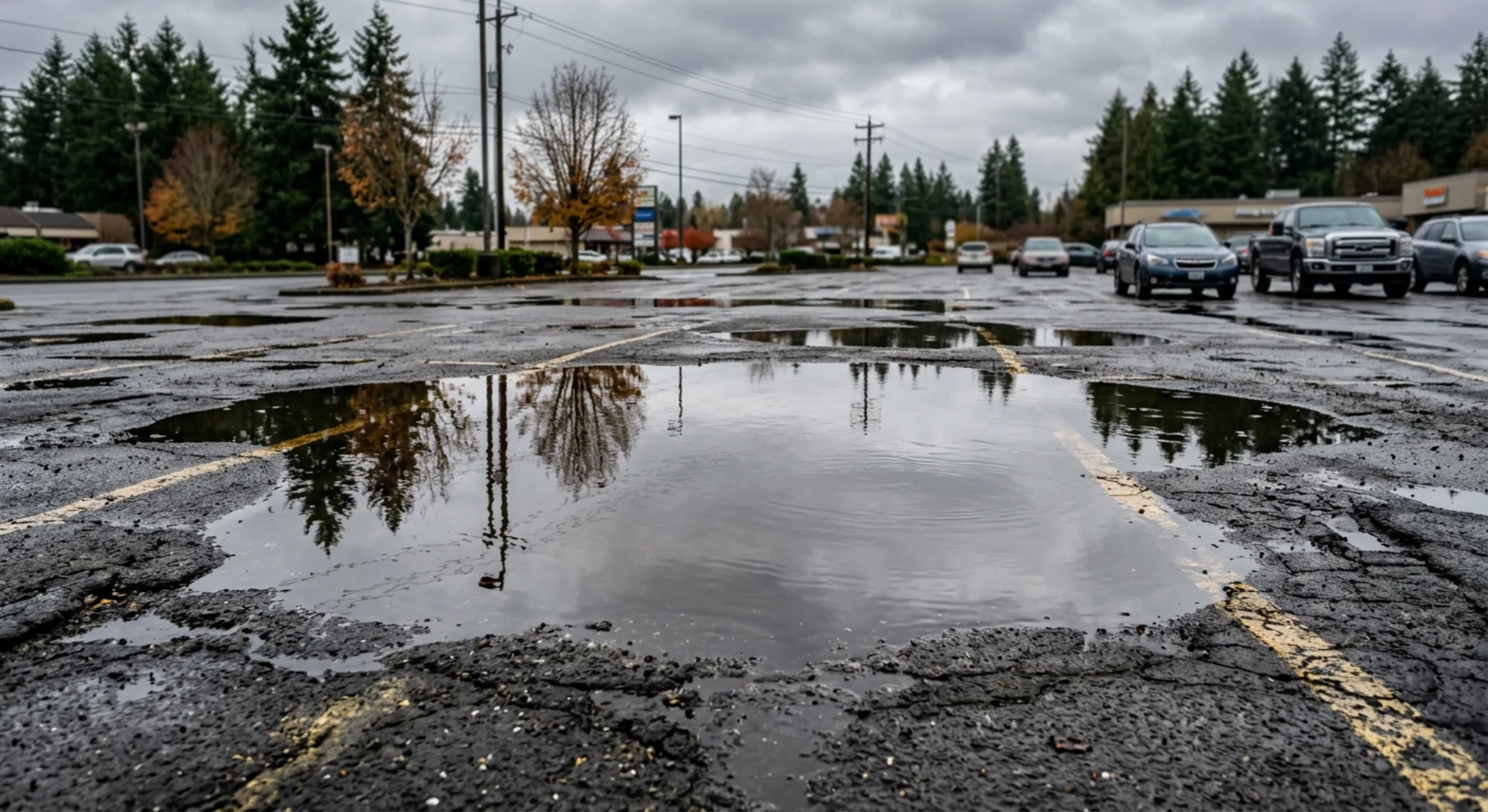
Sign 4: Water Is Pooling in Low Spots
After a rain event, walk your parking lot and note where water is collecting. Small puddles that drain within an hour or two are normal on any pavement. Standing water that persists for hours or days indicates a problem.
Persistent pooling can result from several causes: the original pavement may have settled unevenly, heavy traffic may have created depressions in the asphalt, or the drainage system may be partially blocked. Regardless of the cause, standing water is asphalt's worst enemy.
Water that sits on asphalt penetrates the surface through micro-cracks and pores, softens the binder, and weakens the base material beneath. In commercial lots that see daily traffic, vehicles driving through standing water create hydraulic pressure that pumps water deeper into the pavement structure, accelerating base failure.
When to act: If pooling is minor (less than half an inch deep in a small area), sealcoating combined with proper drainage maintenance can help. For deeper depressions, infrared asphalt repair or localized removal and repaving may be needed before sealcoating to ensure a flat, drainable surface.
What happens if you wait: Base failure becomes inevitable. Once the base material is saturated and weakened, the asphalt above it will crack, deform, and eventually develop potholes. Full-depth removal and replacement of the affected area is the only fix—and that costs 10–15 times what a timely sealcoat would have cost.
Sign 5: Your Last Sealcoat Was More Than 3 Years Ago
Even if your parking lot looks reasonably good, if it hasn't been sealcoated in over three years, you're overdue. In the Pacific Northwest climate, the combination of UV exposure during summer, constant moisture during the rainy season, and occasional freeze-thaw cycles breaks down sealant faster than in drier climates.
The general recommendation for the Seattle area is to sealcoat every 2 to 3 years for commercial properties with moderate to heavy traffic, and every 3 to 4 years for lighter-use residential applications.
Some factors that shorten the interval:
- Heavy traffic volume (retail centers, restaurants, medical offices)
- Frequent truck or delivery vehicle traffic (heavier loads wear sealant faster)
- Properties near the coast (salt air accelerates oxidation)
- Lots with significant shade (moisture stays on the surface longer)
When to act: If you're within the recommended interval, schedule your next sealcoat proactively. The best time in the Pacific Northwest is late May through September, when temperatures are warm enough for proper curing and dry weather windows are more reliable.
What happens if you wait: Every year past the recommended interval, your sealant continues to wear away, leaving raw asphalt exposed to the elements. The cumulative effect is a shorter overall pavement lifespan and more frequent need for repairs.
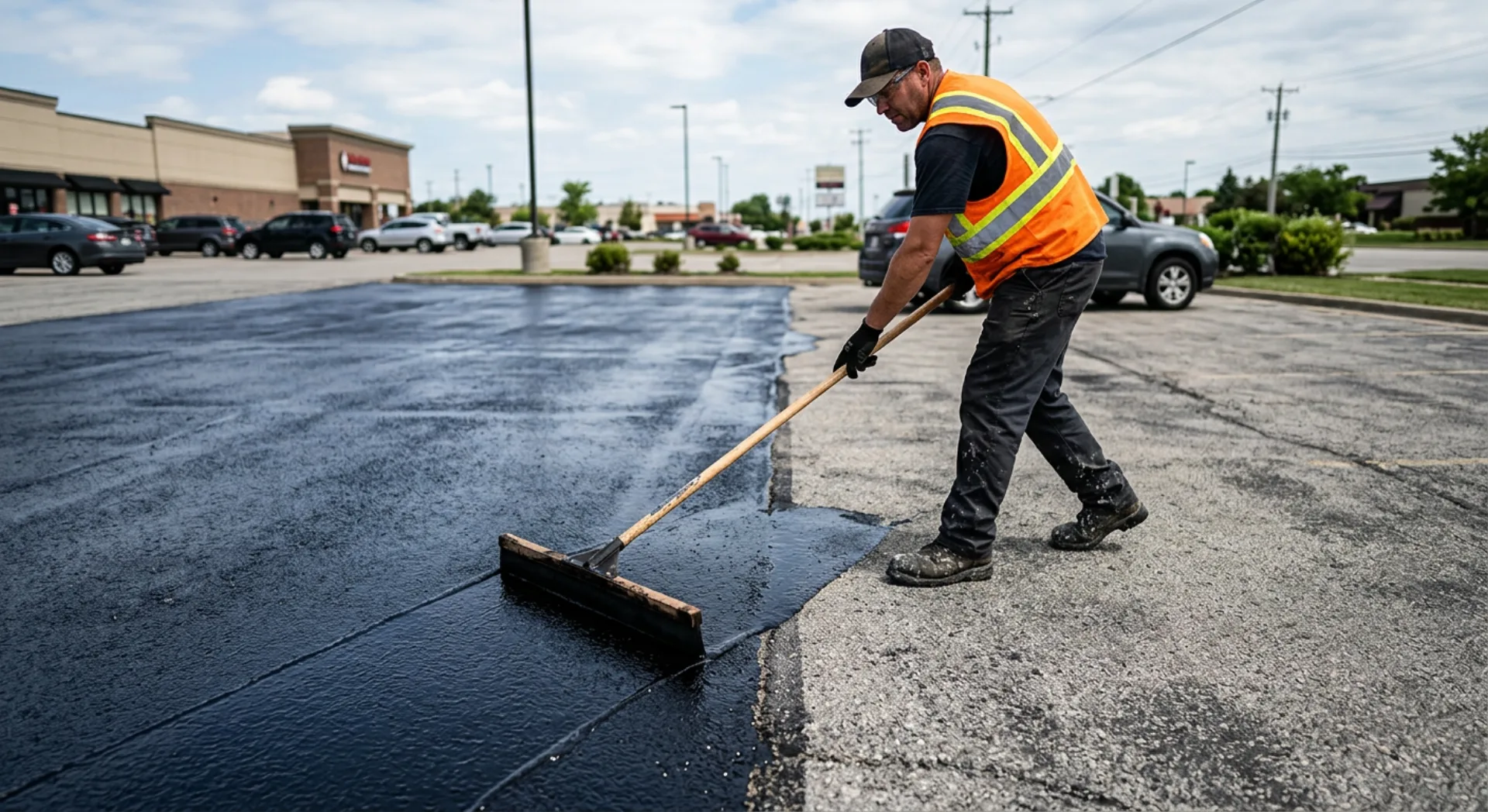
The Real Cost of Delaying Sealcoating
Here's a practical cost comparison that illustrates why proactive maintenance pays off. Consider a 10,000-square-foot commercial parking lot in the Seattle area:
Proactive maintenance approach (sealcoating every 3 years over 20 years):
- Regular sealcoating applications keep the surface protected
- Minor crack sealing prevents water infiltration
- Expected pavement life: 20–25 years
Deferred maintenance approach (no sealcoating, repairs only when problems become severe):
- Major crack sealing needed within 5 years
- Partial overlay typically required around year 10
- Full replacement often necessary by year 15
The math is clear: regular sealcoating costs a fraction of what reactive repairs and early replacement cost over the same period. Property owners who invest in proactive maintenance typically see a return of roughly 3:1 to 4:1 on their maintenance investment. Contact us for a free assessment and maintenance plan tailored to your property.
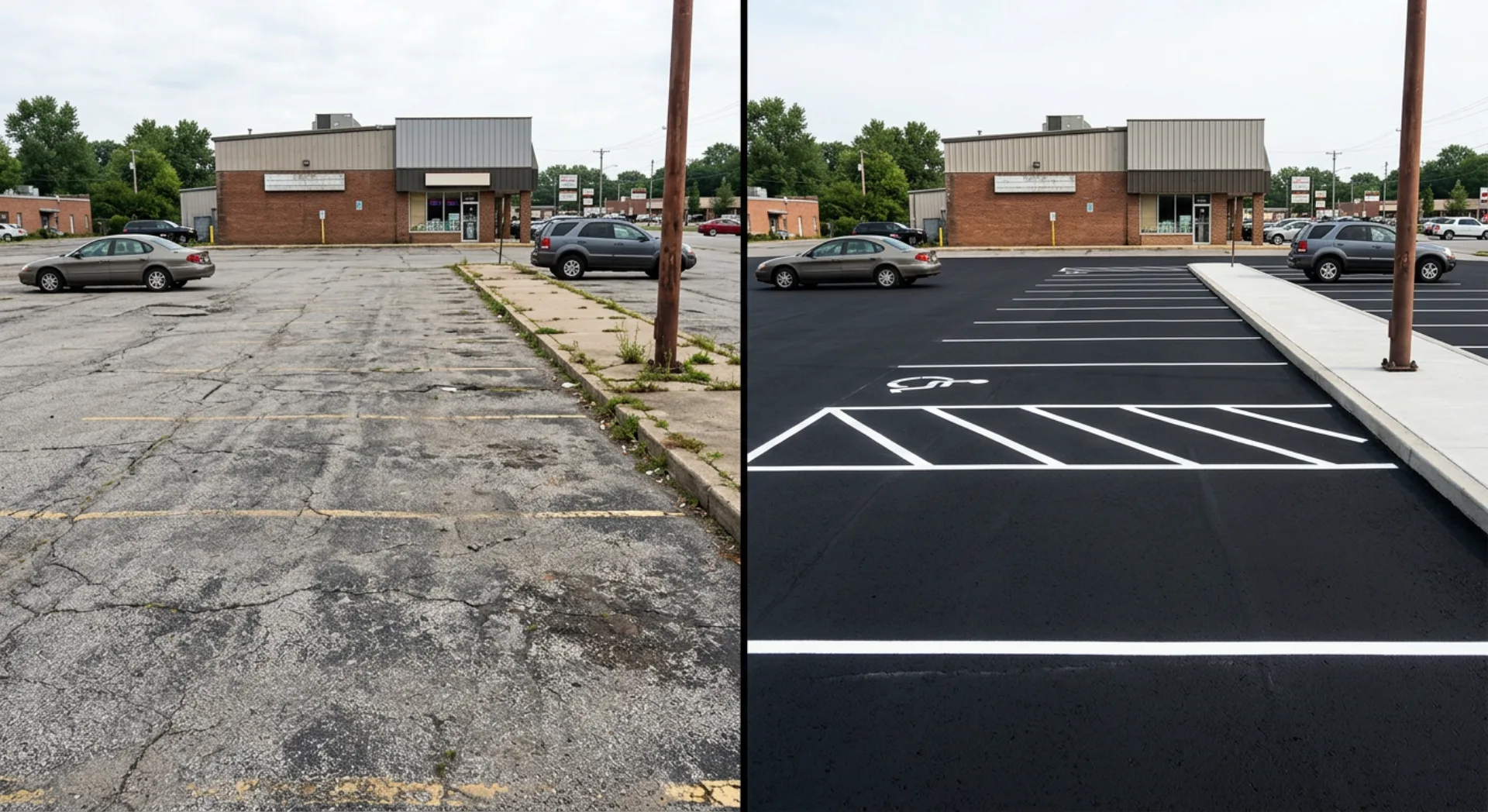
Best Practices for Sealcoating in the Pacific Northwest
Timing Your Application
The optimal sealcoating window in western Washington is June through September. The product needs at least 24 hours of dry weather above 50°F to cure properly. Many contractors won't apply sealant if rain is forecast within 48 hours, which is wise given the PNW's unpredictable shoulder-season weather.
Preparation Matters
A quality sealcoating job starts with thorough preparation:
- Power sweeping to remove all dirt, debris, and loose aggregate
- Oil spot treatment to ensure adhesion in areas with petroleum stains
- Crack filling for any cracks wider than a quarter inch
- Edge clearing along curbs and landscape borders
Application Method
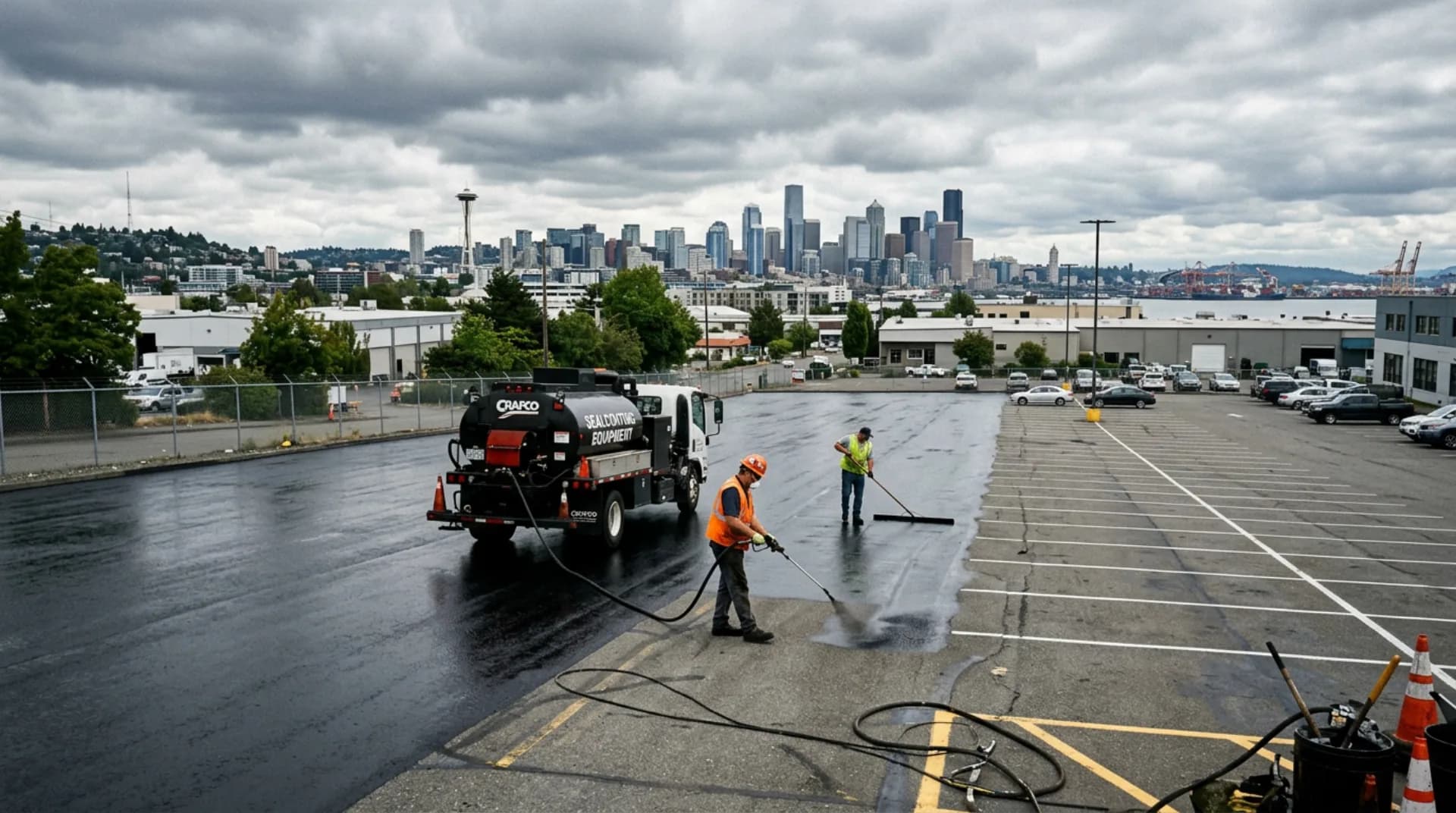
For parking lots, commercial spray application with an asphalt squeegee finish provides the most uniform coverage. Two thin coats are superior to one thick coat—the first coat penetrates and seals the surface, while the second coat builds a wear-resistant barrier.
Curing and Striping
Allow 24–48 hours of cure time before opening the lot to traffic, depending on temperature and humidity. Fresh sealant is vulnerable to scuffing from turning tires, so barricade the lot properly during curing. Line striping should be done after the final coat has cured, typically 48–72 hours after application.
Frequently Asked Questions
How much does sealcoating cost per square foot in Seattle?
Sealcoating costs vary based on lot size, surface condition, number of coats required, and accessibility. Contact a professional contractor for a detailed quote based on your specific property.
Can you sealcoat asphalt in the rain?
No. Sealant needs dry conditions to bond and cure properly. Any moisture on the surface prevents adhesion, and rain during the 24-hour curing window will wash away or dilute the sealant. This is why timing is critical in the Pacific Northwest.
How soon after paving should I sealcoat?
New asphalt should cure for at least 6–12 months before the first sealcoating. The oils in fresh asphalt need time to oxidize slightly so the sealant can bond properly. Sealcoating too early can actually trap excess oils and soften the surface.
Does sealcoating fill cracks?
Sealcoating can bridge hairline cracks less than an eighth of an inch wide, but it is not a crack repair product. Larger cracks should be filled with hot-pour rubber crack sealant before the sealcoat is applied. This two-step approach provides the most durable result.
Protect Your Investment
Your parking lot represents a significant investment in your property. Regular sealcoating is the most affordable way to protect that investment and avoid costly emergency repairs down the road. At Jireh Asphalt & Concrete, we provide professional sealcoating services for commercial and residential properties throughout King County, Snohomish County, and the greater Seattle area. Contact us for a free assessment of your pavement condition and a no-obligation maintenance plan.