If you own or manage commercial property in Washington State, ADA compliance isn't optional — it's the law. The Americans with Disabilities Act (ADA) sets strict requirements for parking lots, sidewalks, curb ramps, and accessible routes that every business, landlord, and property manager must follow.
Yet many property owners across King County and Snohomish County don't realize their parking lot or sidewalk is out of compliance until they receive a demand letter from an attorney. ADA-related lawsuits in Washington have increased significantly over the past five years, and settlements can be extremely costly — far more than the upgrades would have cost in the first place.
This guide breaks down exactly what Washington State property owners need to know about ADA compliance for their paved surfaces, including current requirements, common violations, costs to fix them, and how to protect your business.
Key Takeaways
- ADA lawsuits are increasing — Washington State has seen a significant rise in ADA-related demand letters and lawsuits; proactive compliance is far cheaper than reactive settlements
- Space counts depend on lot size — The number of required accessible parking spaces scales with total capacity, and at least one must be van-accessible
- Slopes and surfaces matter — Accessible routes, curb ramps, and parking spaces must meet strict slope maximums (2% cross-slope, 5% running slope for ramps)
- Common violations are easy to fix — Faded markings, missing signage, blocked access aisles, and non-compliant curb ramps are the most frequent issues and the most straightforward to correct
- Repaving is the ideal time to upgrade — Rolling ADA improvements into a sealcoating, overlay, or full replacement project minimizes cost and disruption
What the ADA Requires for Parking Lots
Accessible Parking Space Requirements
The number of accessible parking spaces your lot needs depends on total capacity:
| Total Spaces | Required Accessible Spaces | Van-Accessible Spaces |
|---|---|---|
| 1–25 | 1 | 1 |
| 26–50 | 2 | 1 |
| 51–75 | 3 | 1 |
| 76–100 | 4 | 1 |
| 101–150 | 5 | 1 |
| 151–200 | 6 | 1 |
| 201–300 | 7 | 1 |
| 301–400 | 8 | 2 |
| 401–500 | 9 | 2 |
For lots with more than 500 spaces, 2% of total spaces must be accessible plus one for each 100 over 500.
Dimensions and Markings
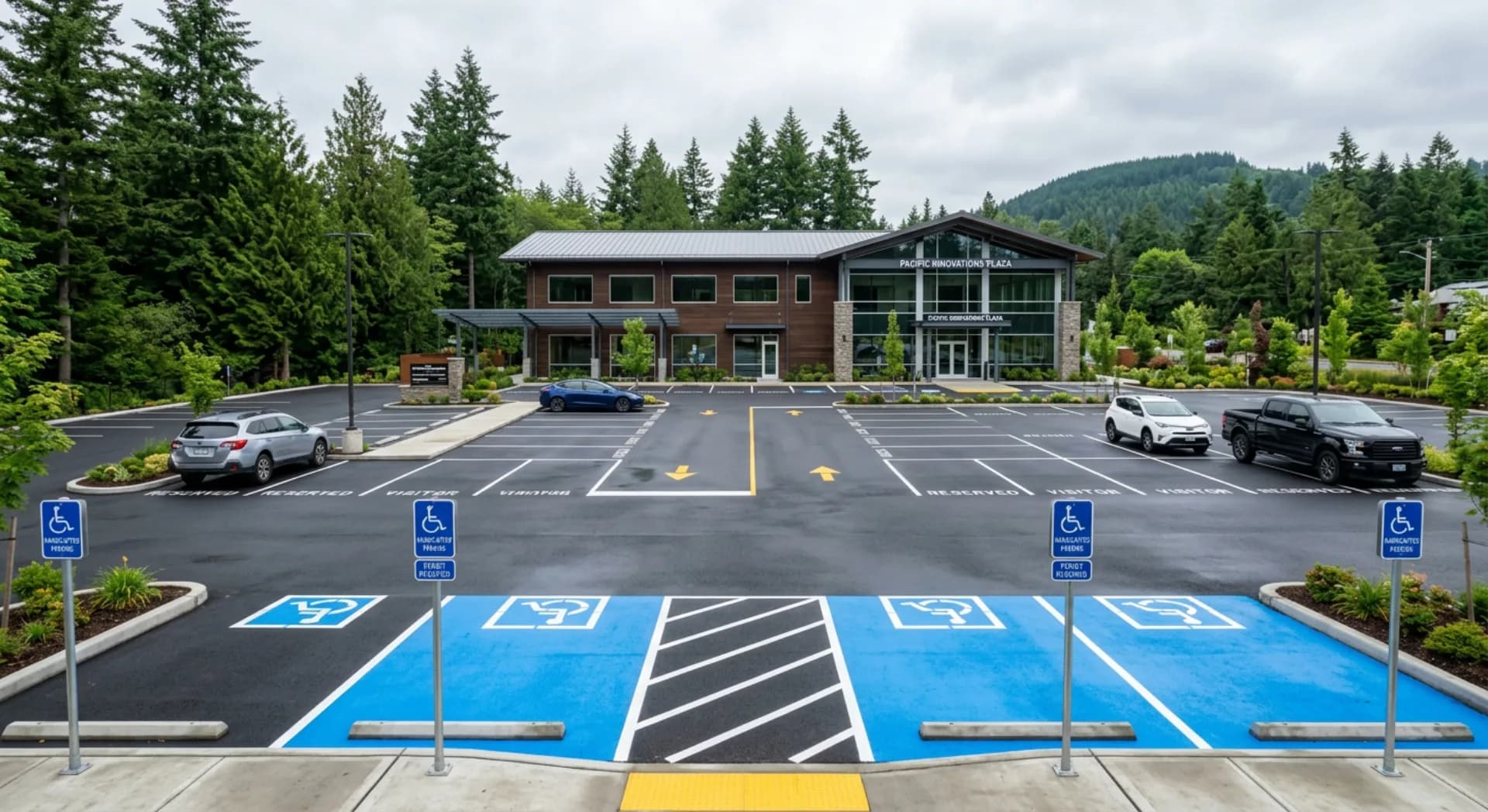
Standard accessible parking spaces must be:
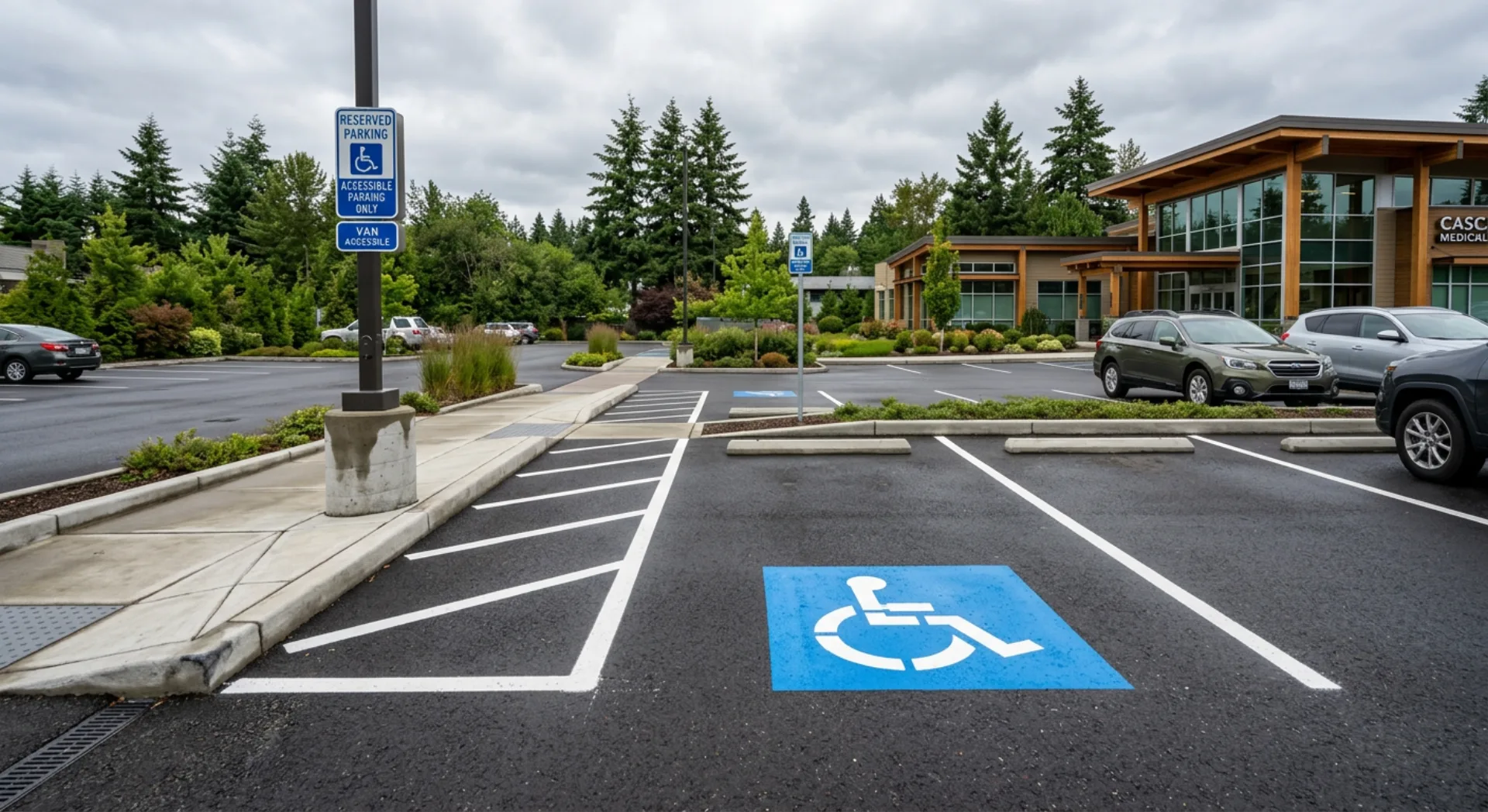
- 8 feet wide minimum with a 5-foot access aisle
- Van-accessible spaces: 8 feet wide with an 8-foot access aisle (or 11 feet wide with a 5-foot aisle)
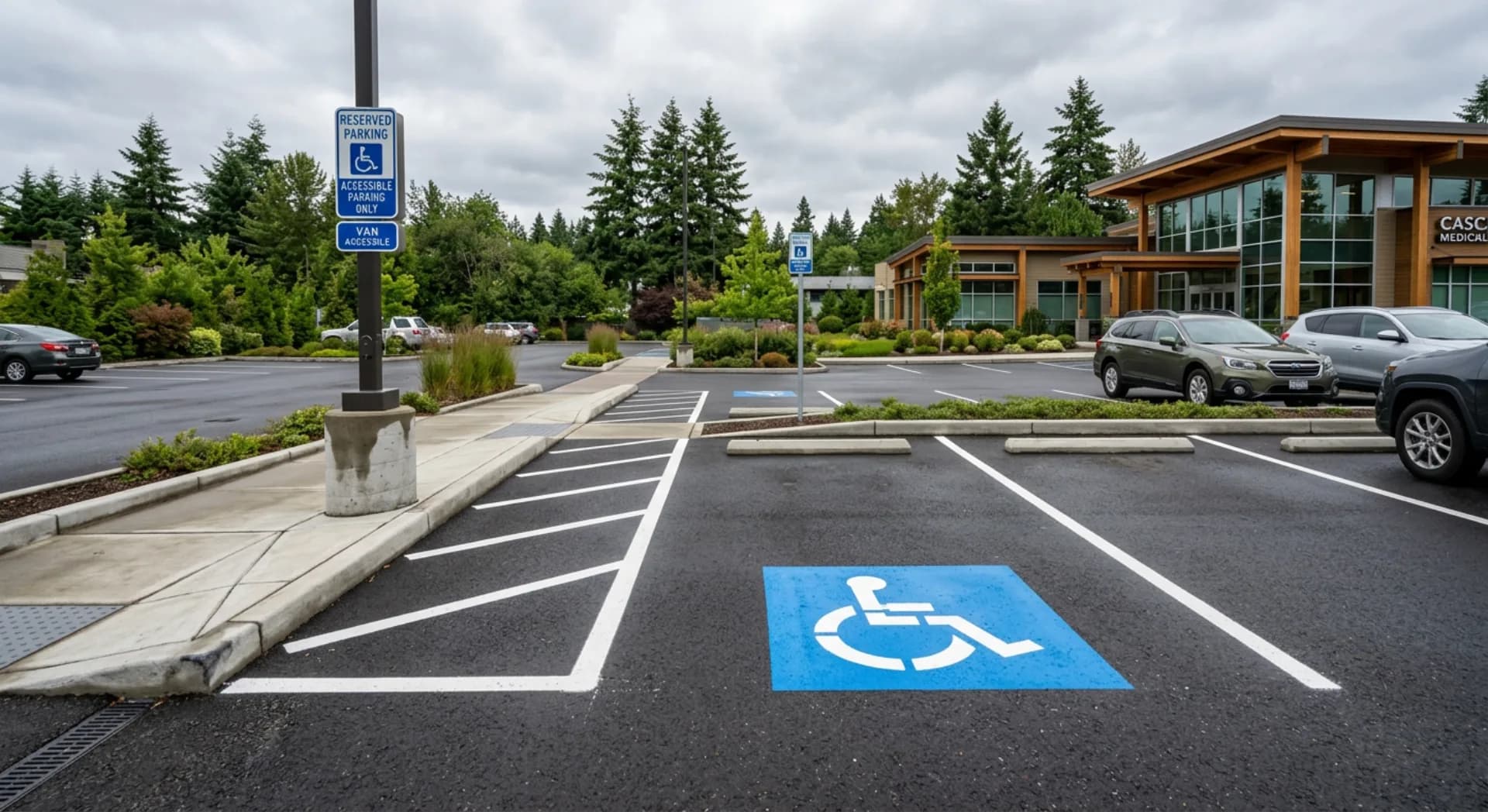
- Marked with the International Symbol of Accessibility on the pavement and on signage
- Signs must be 60 inches minimum from the ground to the bottom of the sign
- Van-accessible spaces must have an additional "Van Accessible" sign
Location Requirements
Accessible spaces must be:
- On the shortest accessible route to the building entrance
- On a firm, stable, and slip-resistant surface
- With a maximum slope of 2% in all directions (1:50)
- Connected to the entrance by an accessible route free of steps, steep slopes, and barriers
This last point is where many Washington properties fail. The parking space itself may be compliant, but the path from the space to the front door has a broken sidewalk, a missing curb ramp, or a slope that exceeds ADA limits. Proper parking lot striping and line marking is essential for maintaining ADA-compliant accessible spaces.
Sidewalk and Pathway Requirements
Accessible Route Standards
Every commercial property needs at least one accessible route connecting:
- Parking areas to building entrances
- Public sidewalks to building entrances
- Between buildings on the same site
These routes must meet specific standards:
- Minimum width: 36 inches (44 inches preferred, 60 inches for two-way wheelchair traffic)
- Maximum running slope: 5% (1:20) — anything steeper requires handrails and is classified as a ramp
- Maximum cross slope: 2% (1:50)
- Surface: firm, stable, slip-resistant, and free of abrupt level changes greater than ¼ inch
Curb Ramps
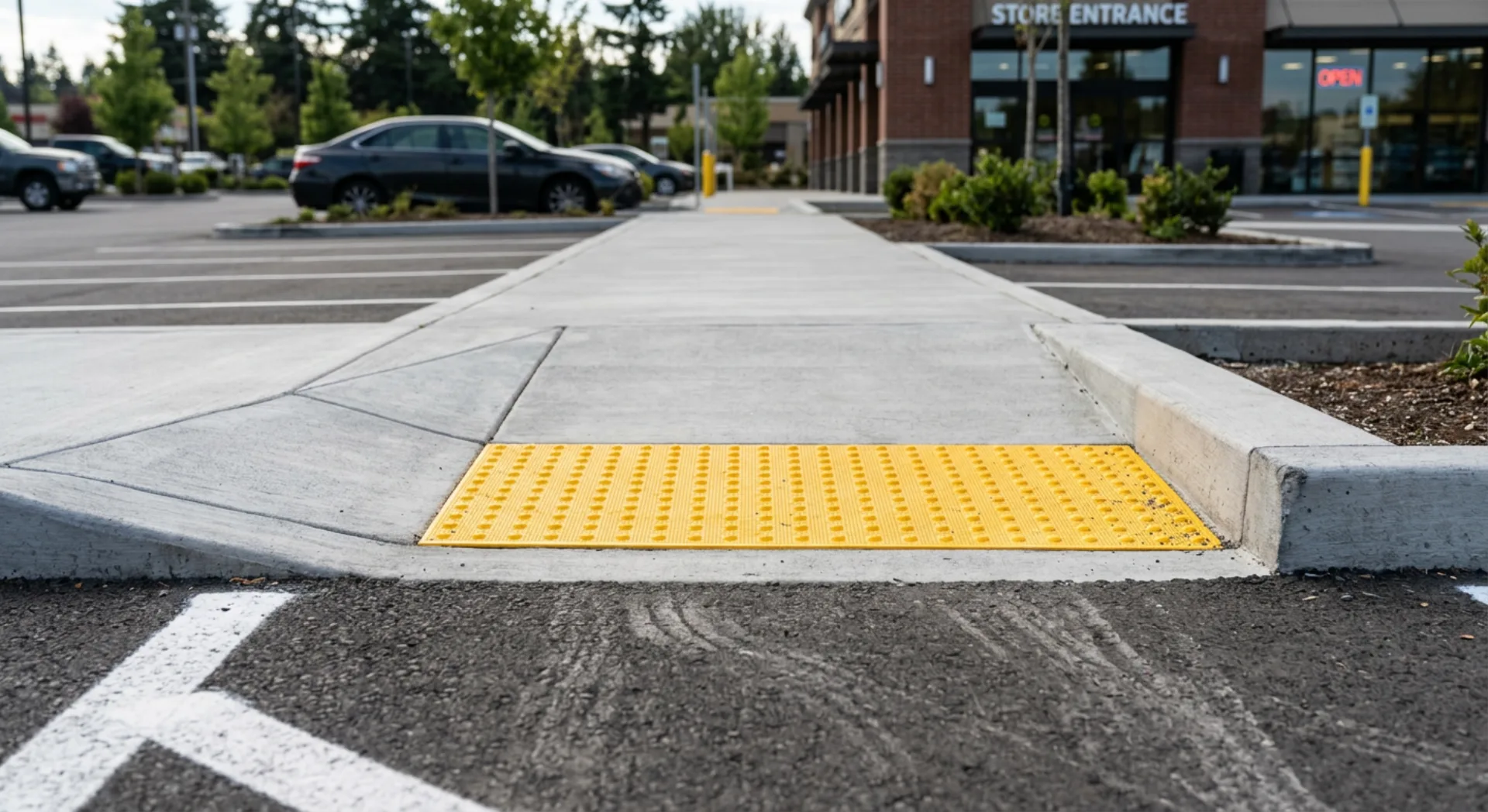
Curb ramps are one of the most commonly deficient elements in Pacific Northwest parking lots. Every transition from a parking lot or street to a sidewalk requires a curb ramp with:
- Maximum slope: 8.33% (1:12)
- Minimum width: 36 inches (exclusive of flares)
- Detectable warning surface (truncated domes) at the bottom
- Landing at the top: 36 inches deep minimum, with a slope no greater than 2%
Common Sidewalk Violations in King & Snohomish County
Washington's wet climate creates specific challenges for ADA compliance:
- Tree root upheaval — roots push concrete panels up, creating trip hazards and level changes exceeding ¼ inch
- Frost heave and settling — freeze-thaw cycles shift slabs out of alignment
- Cracked and spalled concrete — moisture penetration followed by freezing breaks the surface
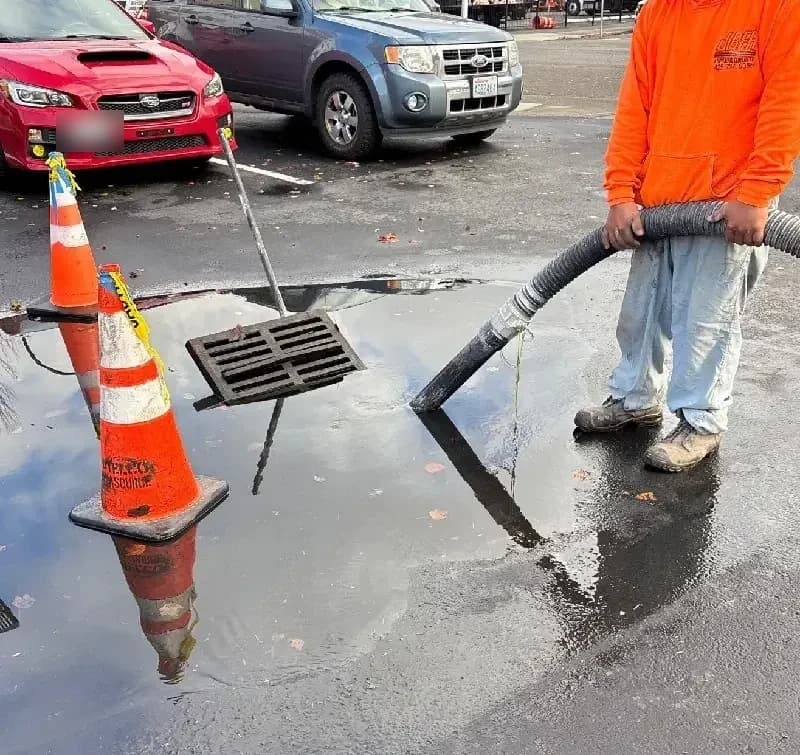
- Standing water — poor drainage creates puddles that block accessible routes
- Moss and algae growth — reduces slip resistance below ADA standards
Any of these conditions can make your property non-compliant and expose you to legal action.
Washington State Additional Requirements
Washington doesn't just follow federal ADA standards — the state has its own accessibility code (WAC 51-50) that in some cases is more stringent than the federal ADA.
Key Washington-specific requirements:
- Washington State Building Code may require more accessible parking spaces than the ADA minimum for certain occupancy types
- Cities like Everett, Seattle, and Bellevue have their own right-of-way standards that may exceed ADA
- Restriping or resurfacing a parking lot often triggers a requirement to bring the entire lot up to current ADA standards
- Major alterations require that at least 20% of the alteration cost be spent on accessibility improvements
This is a critical point many property owners miss: routine maintenance like sealcoating or overlay can trigger ADA upgrade requirements. Before you repave your parking lot, you need to assess what ADA improvements will be required as part of the project. If your lot is due for sealcoating, plan your ADA upgrades at the same time to save on mobilization costs.
The Real Cost of Non-Compliance
Legal Exposure
ADA lawsuits in Washington State are serious business:
- Demand letters can result in significant settlement costs
- Filed lawsuits are substantially more expensive to resolve
- Serial plaintiffs target multiple properties and file dozens of cases
- Attorney's fees are recoverable by the plaintiff — meaning you pay their lawyer too
- Washington's Law Against Discrimination (RCW 49.60) provides additional state-level claims
The Everett, Lynnwood, and Seattle metro areas have seen a notable increase in ADA demand letters targeting small and mid-sized commercial properties.
Business Impact
Beyond legal costs:
- Insurance may not cover ADA claims — many general liability policies exclude ADA violations
- Loss of customers — inaccessible businesses lose an estimated 20% of potential customers
- Reputation damage — ADA complaints become public record
- Difficulty selling or leasing — buyers and tenants increasingly require ADA compliance documentation
How to Make Your Property ADA Compliant
Step 1: Conduct an ADA Self-Assessment
Walk your property with a tape measure, level, and the ADA checklist. Check:
- ☐ Correct number of accessible parking spaces
- ☐ Proper dimensions and access aisles
- ☐ Signage at correct height with proper symbols
- ☐ Slopes within limits (2% for parking, 5% for routes, 8.33% for ramps)
- ☐ Curb ramps at every transition with detectable warnings
- ☐ No trip hazards or level changes greater than ¼ inch
- ☐ Surfaces are firm, stable, and slip-resistant
- ☐ Accessible route connects parking to entrance
- ☐ No obstructions in the accessible route (signs, planters, bike racks)
Step 2: Prioritize Repairs
The Department of Justice recommends this priority order:
- Accessible approach and entrance — can people get to and into the building?
- Access to goods and services — can people navigate inside?
- Restrooms — are they accessible?
- Remaining areas — everything else
For exterior paving work, priorities 1 and 2 are where Jireh Asphalt & Concrete focuses.
Step 3: Hire a Qualified Contractor
ADA paving work requires precision that general contractors often can't deliver. You need a contractor who:
- Understands ADA slope requirements and can achieve them consistently
- Has experience with detectable warning surface installation
- Knows Washington State accessibility codes (not just federal ADA)
- Can properly grade and drain accessible parking areas
- Provides documentation of compliance after completion
Step 4: Document Everything
After upgrades, keep records of:
- Before and after photos
- Measurements confirming compliance
- Contractor certifications
- Receipts and permits
- A dated accessibility assessment
This documentation is your best defense if someone files a complaint.
Cost of ADA Parking Lot & Sidewalk Upgrades in Washington
Common ADA upgrades for commercial properties include:
- Restriping accessible spaces with proper dimensions and markings
- Installing ADA signage at the correct height and location
- Concrete curb ramps with proper slope and detectable warning surfaces
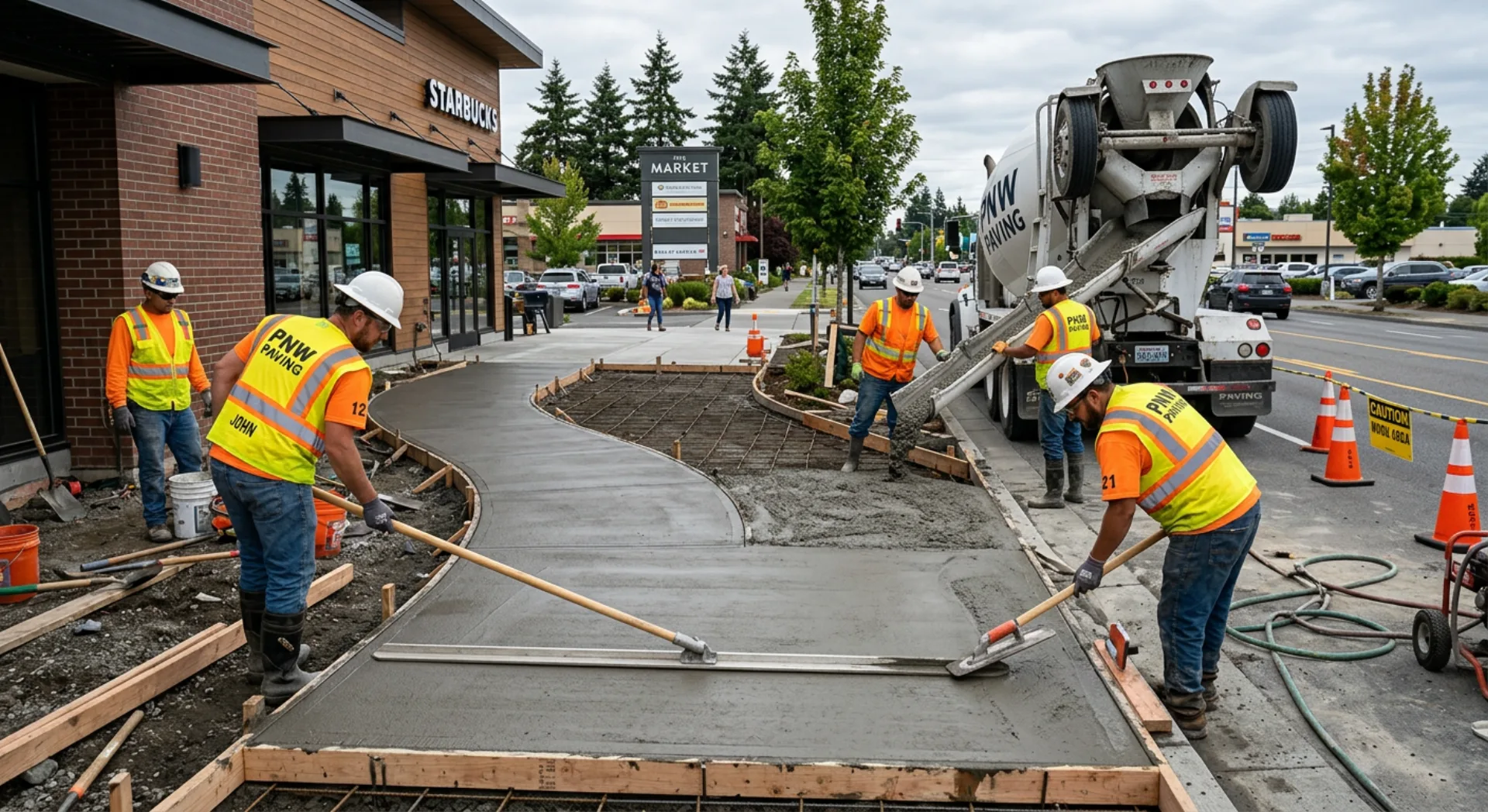
- Sidewalk panel replacement to eliminate trip hazards
- Asphalt grinding for slope correction on non-compliant surfaces
- Full accessible route construction connecting parking to building entrances
- Van-accessible space conversions with adequate loading zones
For most small commercial properties, a full ADA parking lot upgrade costs a fraction of what a single lawsuit would — making proactive compliance the smart financial choice. Contact us for a free ADA assessment of your property.
Pervious Paving: An ADA-Friendly Solution for Washington
One solution gaining popularity in the Pacific Northwest is pervious (permeable) paving. This material allows water to drain through the surface rather than pooling, which addresses two common ADA compliance issues simultaneously:
- Eliminates standing water on accessible routes
- Reduces ice formation in winter (water drains instead of freezing on the surface)
Pervious concrete and permeable asphalt can be used for accessible parking spaces and pathways while meeting all ADA surface requirements. As a bonus, many Washington municipalities offer stormwater fee credits for properties with permeable paving, which can offset the higher installation cost.
Jireh Asphalt & Concrete installs both pervious concrete and permeable asphalt for commercial properties throughout Everett, Seattle, and surrounding areas.
Frequently Asked Questions
Does my small business really need ADA-compliant parking?
Yes. The ADA applies to virtually all businesses open to the public, regardless of size. Even a small retail shop with a 10-space parking lot needs one accessible space with proper signage, striping, and an accessible route to the entrance.
I'm just resurfacing my parking lot — do I need to add ADA features?
In most cases, yes. Under both federal ADA standards and Washington State code, resurfacing or restriping a parking lot is considered an "alteration" that triggers a requirement to bring the lot up to current accessibility standards. Your paving contractor should factor this into the project scope and bid.
How do I know if my sidewalk slope is too steep?
You can check with a digital level or a 48-inch level and a tape measure. The running slope (the direction of travel) cannot exceed 5% (about ⅝ inch per foot). The cross slope (perpendicular to travel) cannot exceed 2% (about ¼ inch per foot). If your slopes exceed these limits, grinding or replacement is needed.
What are truncated domes and where do I need them?
Truncated domes are the raised bumps you see on curb ramps — they're called "detectable warning surfaces." They alert people with visual impairments that they're transitioning from a pedestrian area to a vehicular area. They're required at every curb ramp, at transit platforms, and at other hazardous vehicular areas adjacent to pedestrian routes.
Can I be sued even if my building was compliant when it was built?
Yes. ADA compliance is an ongoing obligation. If your surfaces have deteriorated — cracked concrete, faded striping, damaged signs, shifted panels — you can be found non-compliant even if the original construction met standards. Regular maintenance is essential.
How often should I inspect my property for ADA compliance?
We recommend a thorough inspection at least twice a year — once in spring after winter damage and once in fall before the wet season. Additionally, inspect after any severe weather event, construction activity, or landscaping work near accessible routes.
Protect Your Property — Get an ADA Assessment
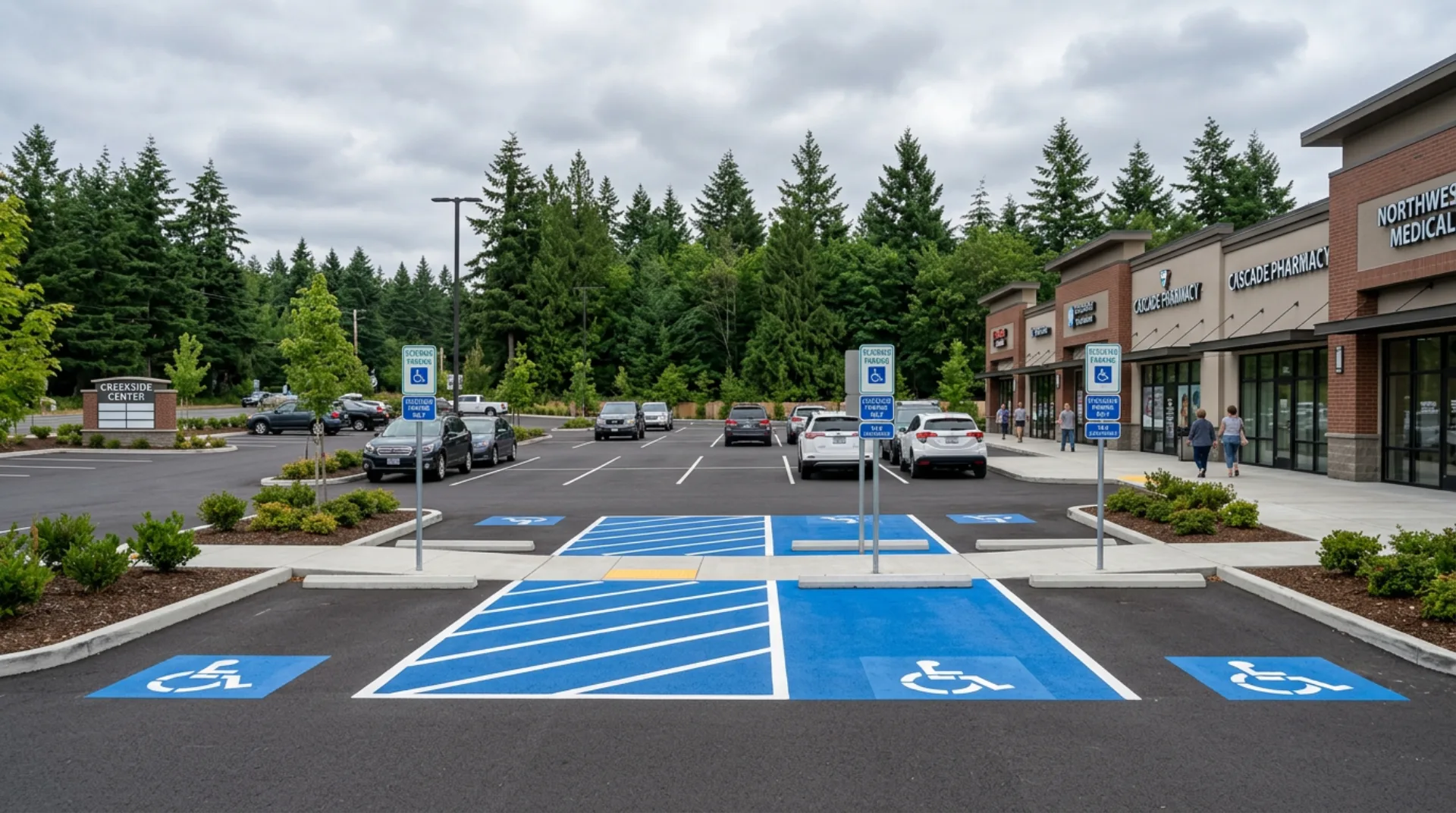
Don't wait for a demand letter to find out your parking lot or sidewalk is out of compliance. Jireh Asphalt & Concrete provides ADA compliance assessments and upgrade services for commercial properties throughout Everett, Lynnwood, Marysville, Lake Stevens, Mukilteo, Shoreline, Bothell, and all of King County and Snohomish County.
Whether you need a single curb ramp, a full parking lot restripe, or a complete accessible route installation, our crew has the equipment, experience, and knowledge of Washington State accessibility codes to get it done right.
Call Jireh Asphalt & Concrete today at (425) 624-JIREH for a free ADA parking lot assessment.