Catch basin maintenance in Snohomish County should be driven by the facility’s approved operation plan, the County’s current maintenance standards, and observed conditions such as blocked pipes, accumulated sediment, damaged covers, or impaired flow—not by a one-size-fits-all calendar.
Reviewed by: Jireh Construction Services editorial team
Last updated: August 10, 2026
The County’s July 2026 Drainage Manual is the current reference for unincorporated Snohomish County. Properties inside Everett or another city may also be subject to that city’s requirements, so first confirm the authority for the site address.
What is a catch basin and what should it do?
A catch basin is an underground stormwater structure that receives or routes runoff through connected pipes. Most include a sump below the lowest pipe where sediment and debris can collect before entering the downstream system.
The Snohomish County Drainage Manual, Volume VI describes catch basins with grated or solid covers and explains that their form and function vary by location. Because designs differ, inspection should compare the actual structure with its plans and maintenance standard.
Which conditions call for attention?
| Visible or documented condition | Why it matters | Appropriate next step |
|---|---|---|
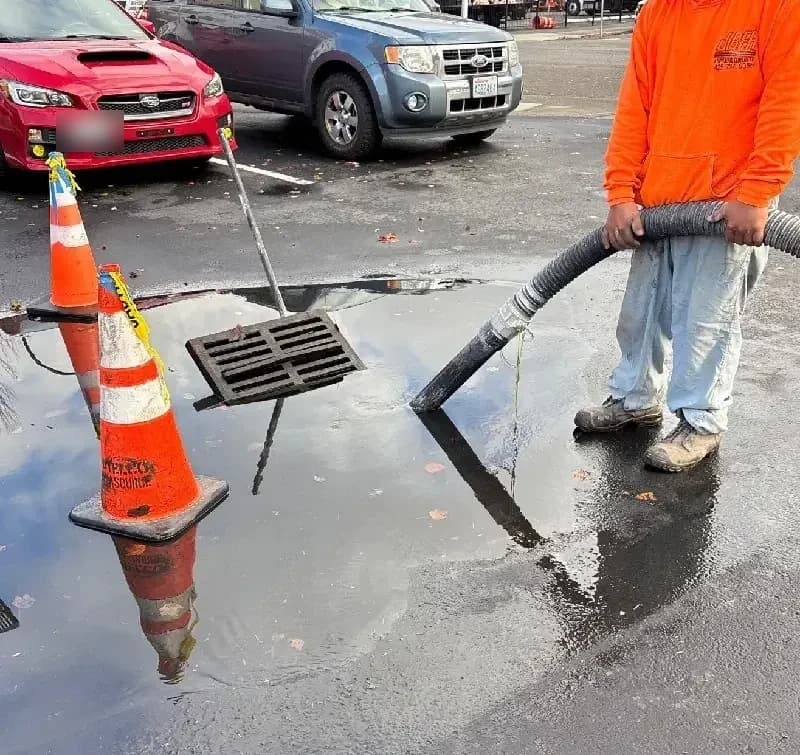
| Debris covers the grate or water bypasses the inlet | Inflow may be restricted | Safely clear surface debris and inspect inside the structure |
| Sediment or debris blocks more than one-third of an inlet or outlet pipe height | County Volume VI identifies this as a maintenance trigger | Arrange removal and verify that connected pipes are open |
| Cover or grate is missing, broken, or out of place | It creates a safety and access problem | Secure the area and repair or replace to the applicable standard |
| Soil enters through cracks or around pipe penetrations | Structure or pipe connection may be failing | Evaluate repair, regrouting, or replacement |
| Basin is settled or misaligned | Flow, access, and surface safety can be affected | Compare with design elevations and repair as required |
| Water remains high after the storm has passed | Outlet blockage or downstream restriction may exist | Inspect the outlet and connected system, not only the grate |
| Oil sheen, odor, or an unusual discharge is present | It may be a spill or water-quality issue | Avoid spreading it and contact the appropriate authority |
These are decision points, not instructions to enter the basin. Volume VI cautions that catch basins may be confined spaces where harmful gases or chemicals can accumulate.
How often should a catch basin be inspected?
Use the frequency in the approved operation and maintenance plan, recorded site documents, permit conditions, or direction from the responsible jurisdiction. Increase observation when site conditions change.
Useful inspection moments include:
- Before the wet season or another period of expected heavy runoff.
- After a major storm or reported flooding.
- After nearby construction, sweeping, landscaping, or pavement work.
- When leaves, sediment, trash, or tracked material accumulate quickly.
- When water drains more slowly or follows a new path.
- At the interval established by the facility’s own plan or agency notice.
Avoid substituting a generic “twice per year” statement for the facility standard. A low-sediment residential basin and a busy commercial site can have different loading and inspection needs.
What does Snohomish County require from facility owners?
Snohomish County’s Urban Drainage program states that owners are responsible for maintaining storm drainage facilities so they continue to function properly. The County inspects public and private facilities and can require owners to correct identified deficiencies.
The County’s Drainage Manual page identifies Volume VI as the current stormwater-facility maintenance reference effective July 1, 2026. The exact duty depends on the facility, ownership documents, permit history, approved plans, and site jurisdiction.
For a project that may modify a drainage structure or connect new work, review permit assistance before treating maintenance and alteration as the same scope.
What should a catch basin inspection document?
An inspection record should make the next decision easy. Capture:
- Asset identity: site, basin label, map location, and ownership if known.
- Date and conditions: weather, recent storm, and water level.
- Access: cover, grate, vegetation, parked vehicles, and workspace.
- Structure: settlement, cracks, corrosion, pipe penetrations, and ladder condition where visible.
- Material: sediment, trash, vegetation, oil, or other contamination.
- Flow path: inlet and outlet condition, observed blockage, and downstream concerns.
- Action: surface clearing, cleaning, repair referral, spill response, or follow-up inspection.
- Evidence: photographs taken from a safe location and service or disposal documentation when applicable.
Keep records with the facility’s plans and prior maintenance history. Trends—such as the same pipe repeatedly blocking—can reveal a system issue that a single cleaning does not resolve.
What happens during professional cleaning?
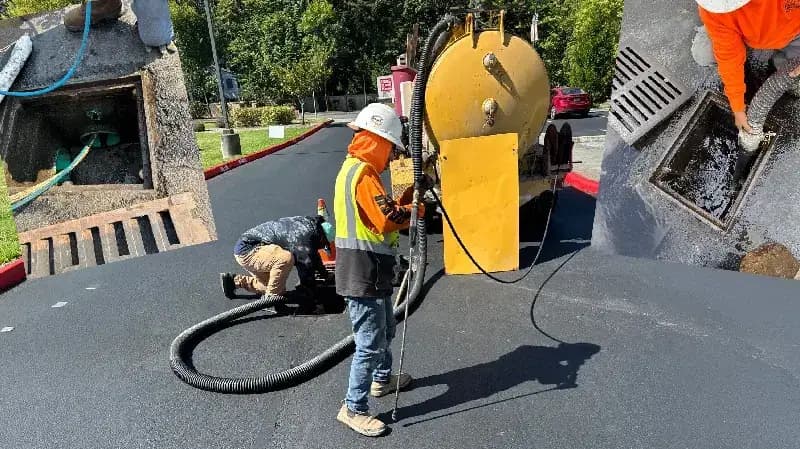
The exact process depends on access, structure type, material, and connected piping. A typical service scope may include:
- Confirming basin locations and safe equipment access.
- Establishing site controls around traffic and pedestrians.
- Inspecting the grate, cover, sump, walls, and visible pipe openings.
- Removing liquid, sediment, and debris with suitable vacuum equipment.
- Washing where appropriate while containing recovered material.
- Checking inlet and outlet openings after removal.
- Reinstalling covers and leaving the surface secure.
- Documenting material removed, observed defects, and follow-up needs.
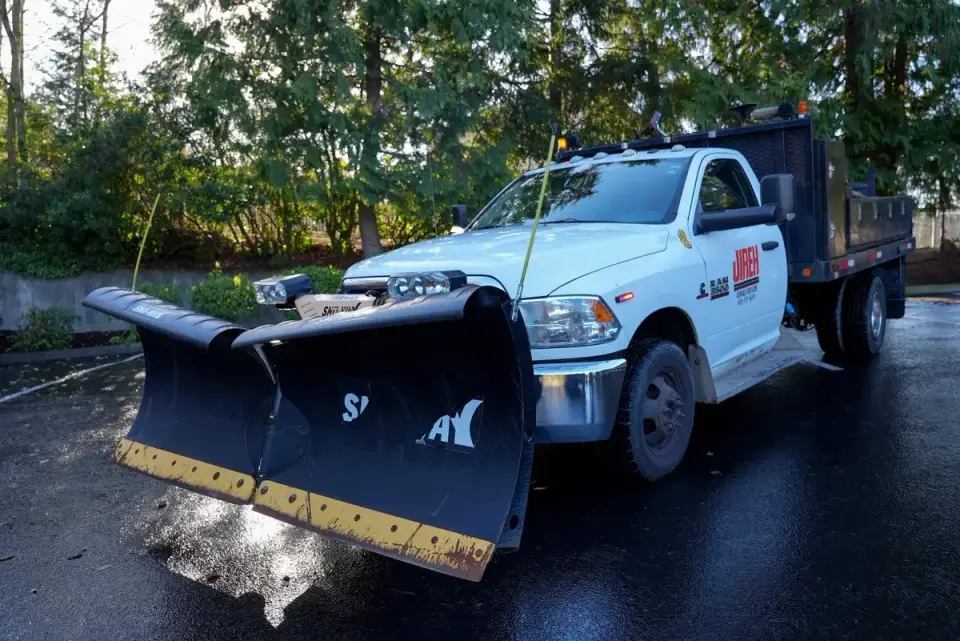
Volume VI notes that a combination power-washing and vacuum truck—often called a vactor truck—is common cleaning equipment. A cleaning scope does not automatically include structural repair, pipe rehabilitation, or redesign; those should be stated separately.
See Jireh’s catch basin cleaning service for inspection and cleaning estimate options.
Which safety and environmental limits matter?
Do not enter an unclassified basin
Snohomish County’s manual warns that a catch basin may be a confined space with hazardous gases or chemicals. Entry and internal work should be limited to people trained, equipped, and authorized for the applicable hazards.
Do not wash captured material downstream
Sediment, oil, trash, and wash water removed from a basin should remain contained and be handled according to the material, facility plan, and applicable disposal requirements. Moving a blockage downstream is not cleaning the system.
Treat unusual contamination differently
An oil sheen, chemical odor, colored discharge, or active spill can require a response beyond routine maintenance. Stop work that could spread the material and contact the appropriate site manager or agency.
Keep public and private systems distinct
Do not open, alter, or service infrastructure without confirming ownership and access authority. For a County roadway drainage problem, use Snohomish County’s reporting channels rather than assuming it is a private maintenance item.
How does pavement condition affect a catch basin?
Settlement around the frame can create a low point, trip edge, or reverse slope. Broken asphalt can also send loose aggregate into the sump and connected pipes.
When paving and drainage work overlap, coordinate rim elevations, surface grades, access, and cleaning before final placement. Jireh’s asphalt service can evaluate pavement transitions that are part of a broader drainage scope.
Frequently asked questions
Does a slow drain always mean the catch basin is full?
No. The restriction could be at the grate, in the sump, at an inlet or outlet, in a downstream pipe, or elsewhere in the stormwater system. Inspect the flow path before limiting the scope to vacuuming the basin.
Can property staff remove leaves from a grate?
Surface debris may be removable when it can be done safely and without entering traffic or opening the structure. Internal inspection, lifting heavy covers, vacuum work, contamination, or confined-space hazards require a different safety plan.
Is cleaning the same as repairing a catch basin?
No. Cleaning removes accumulated material. Cracked walls, failed pipe penetrations, missing grates, settlement, misalignment, or unsafe access can require repair or replacement under the applicable standard.
What if I do not know who owns the basin?
Check site plans, recorded maintenance documents, facility maps, and the responsible city or County. Snohomish County provides a drainage inventory map, but the County notes that map data is illustrative and not an official legal determination.
What is the next practical step?
Locate and label each basin, gather its operation and maintenance documents, photograph visible conditions after rain, and note any recurring blockage or high-water pattern. Then request a scope that separates inspection, cleaning, pipe work, structural repair, traffic control, and disposal assumptions.
Request a catch basin estimate for a site-specific inspection and cleaning plan.