If you live in King or Snohomish County, there's a good chance your home—or one on your street—still has a gravel driveway. While gravel gets the job done, Washington's rainy climate can turn it into a muddy, rutted headache. Upgrading to asphalt or concrete is one of the most impactful improvements you can make to your property, boosting curb appeal, functionality, and long-term value.
Here's what you need to know before making the switch.
Key Takeaways
- Gravel driveways struggle in PNW rain — Erosion, ruts, mud tracking, and constant replenishment make gravel increasingly costly and frustrating over time
- Asphalt offers flexibility and speed — Best for freeze-thaw resistance, fast installation (1-2 days), and a dark surface that melts snow and ice naturally
- Concrete delivers longevity and design options — Lasts 30+ years with minimal maintenance, available in stamped, colored, and exposed aggregate finishes
- Existing gravel can save money — Compacted gravel often serves as part of the base layer for the new surface, reducing excavation and material costs
- Plan for permits and drainage — Most Washington municipalities require stormwater management and may require permits for driveway construction or modification
Why Gravel Driveways Struggle in the Pacific Northwest
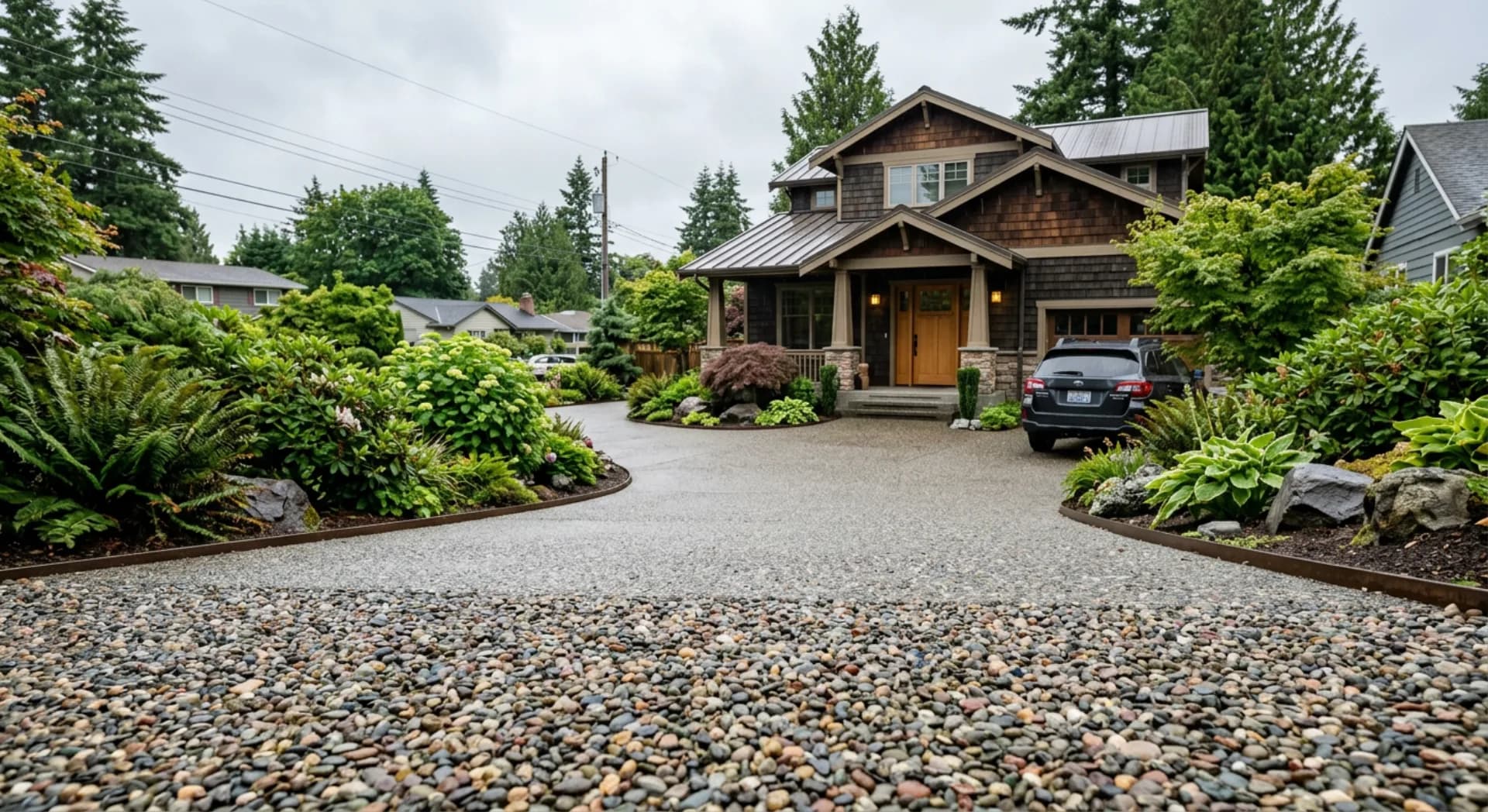
Gravel driveways are affordable to install, but they come with real trade-offs—especially in a region that averages over 37 inches of rain per year.
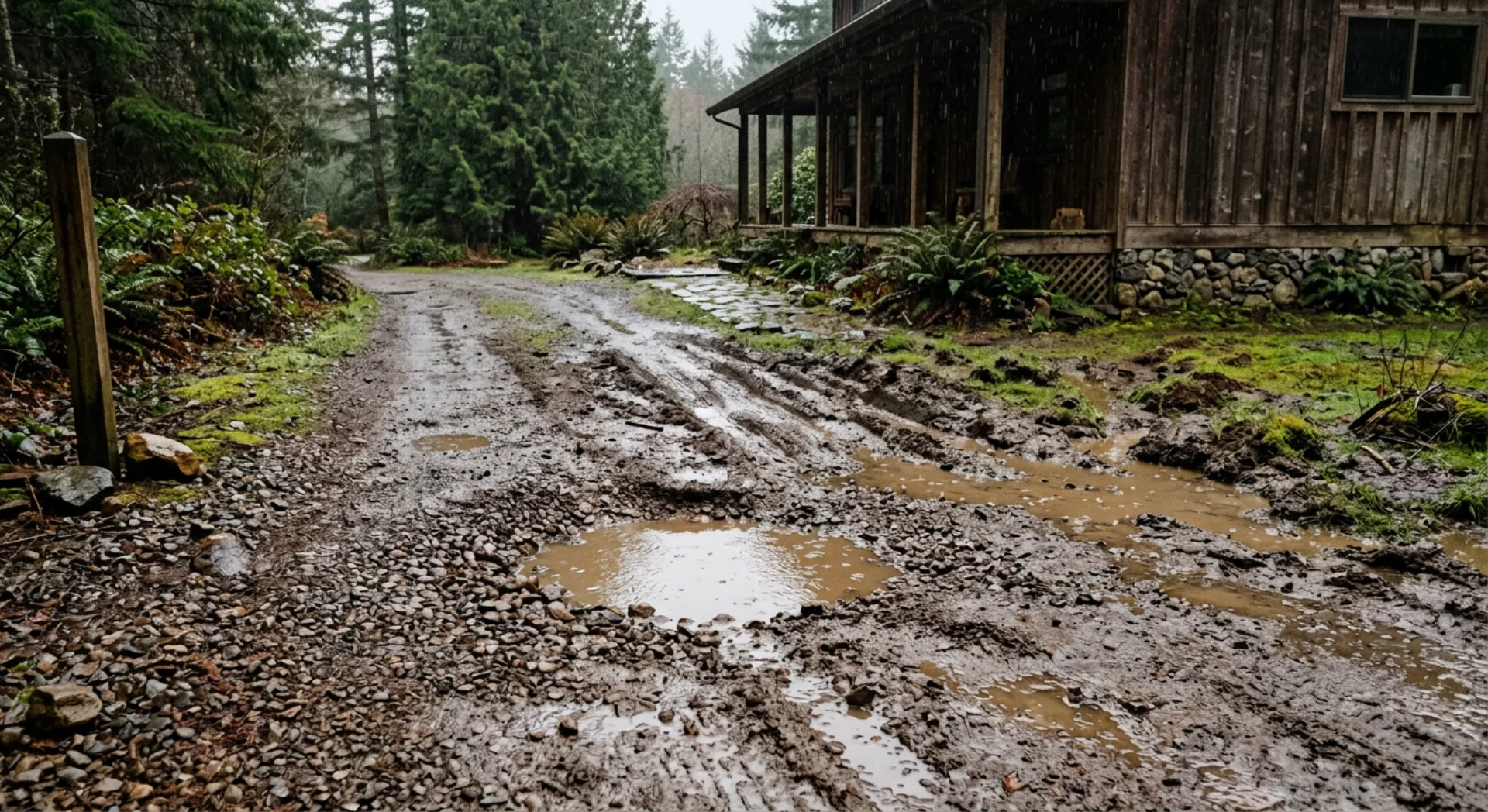
Common issues Washington homeowners face with gravel:
- Erosion and displacement. Heavy rains wash gravel off the surface and into your yard, garden beds, or storm drains. You end up replenishing material every year.
- Ruts and potholes. Vehicle traffic compresses gravel unevenly, creating low spots that collect standing water.
- Mud and tracking. Gravel sits on top of native soil. When that soil gets saturated—which happens often in western Washington—mud works its way through the gravel and gets tracked into your home and vehicles.
- Weed growth. Without a solid barrier, weeds push through gravel relentlessly.
- Limited accessibility. Gravel surfaces are difficult to shovel snow from, hard on wheelchairs and strollers, and rough on low-clearance vehicles.
If you're spending time and money maintaining gravel every season, a paved driveway often makes more sense over the long run.
Asphalt vs. Concrete: Choosing the Right Upgrade
Both asphalt and concrete are excellent replacements for gravel. The right choice depends on your priorities, property layout, and aesthetic preferences.
Asphalt Driveways
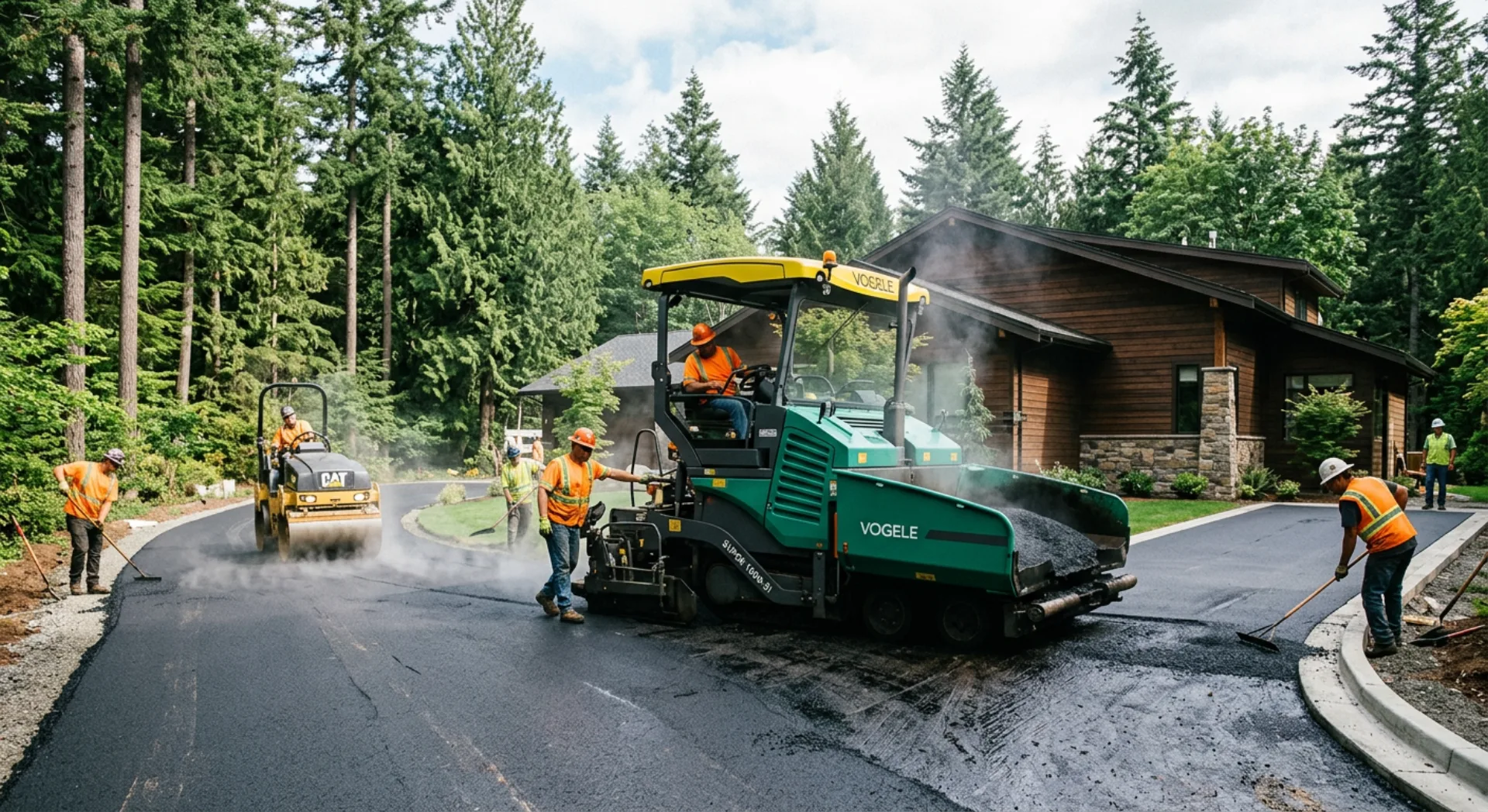
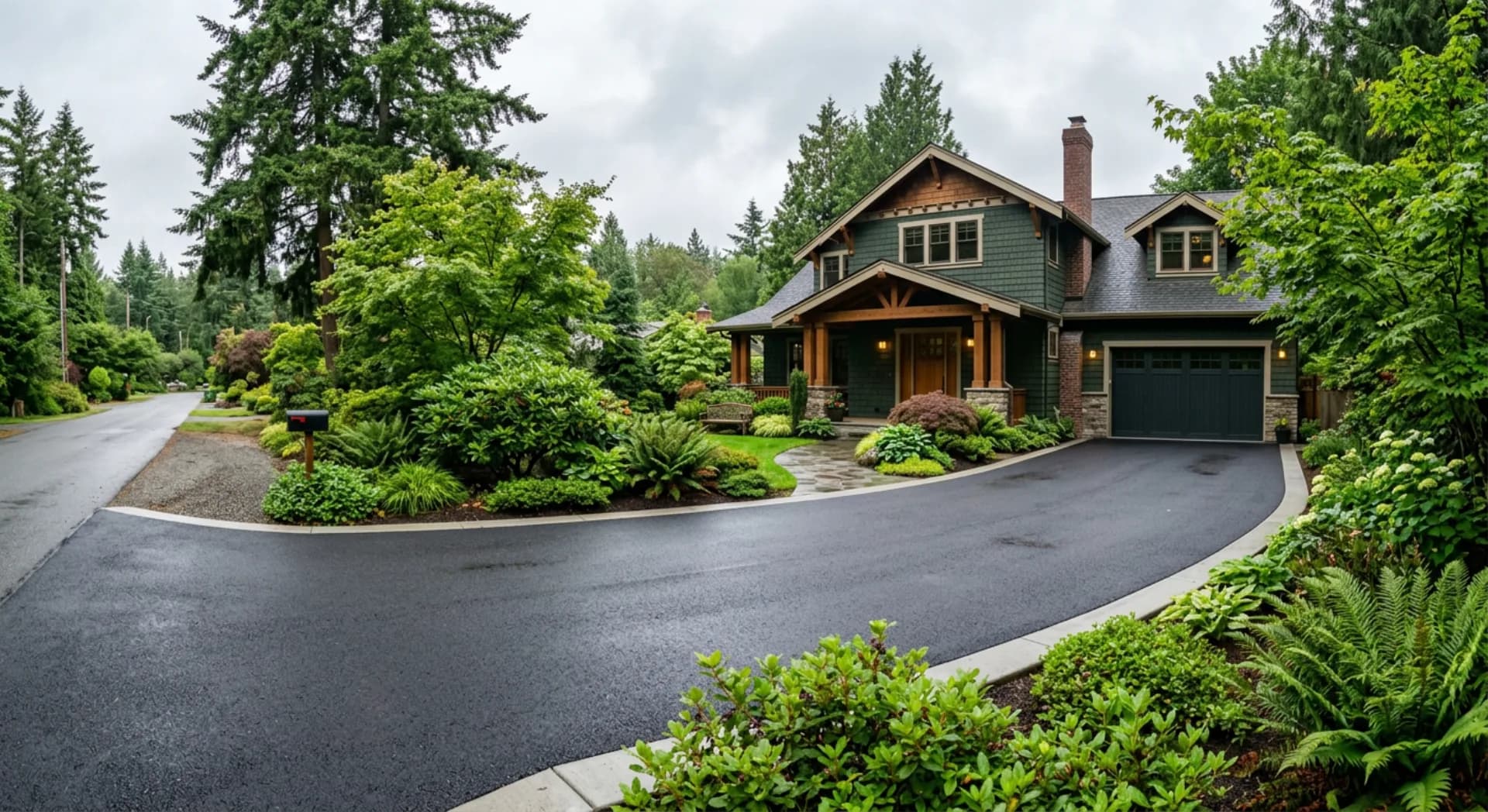
Asphalt is one of the most popular driveway materials in the Pacific Northwest, and for good reason:
- Flexible surface. Asphalt has some give, which makes it more resistant to cracking from Washington's freeze-thaw cycles compared to rigid surfaces.
- Fast installation. Most residential asphalt driveways can be completed and ready for use within a couple of days.
- Dark color melts snow and ice. The black surface absorbs heat, helping winter precipitation clear faster—a real advantage during Snohomish County's cold snaps.
- Easy to repair. Small cracks and imperfections can be patched or sealcoated without replacing the entire surface.
Asphalt does require periodic sealcoating (typically every 3–5 years) to maintain its appearance and protect against UV damage and water penetration. For a detailed side-by-side comparison, see our concrete vs asphalt driveway guide.
Concrete Driveways
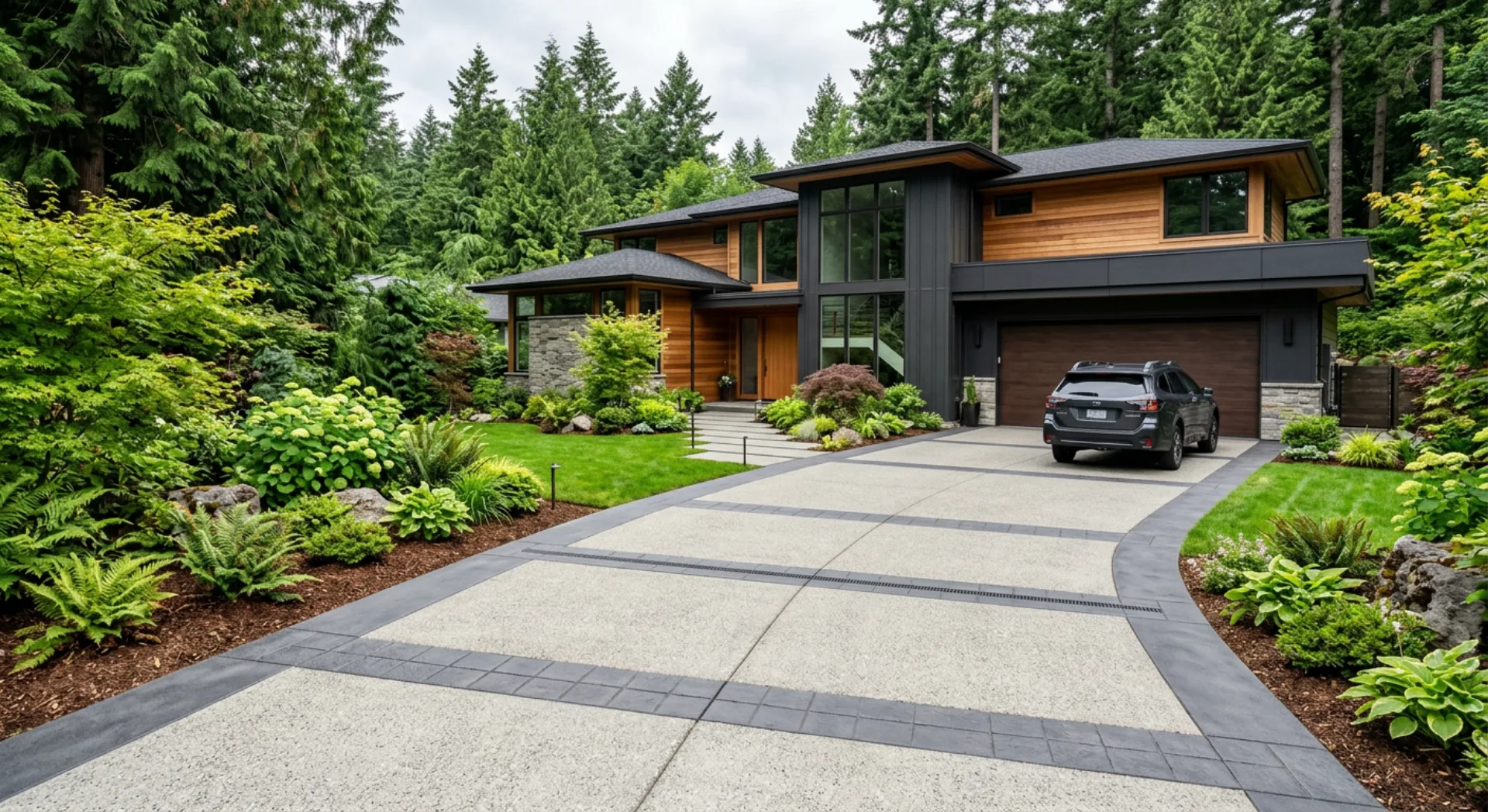
Concrete offers a different set of advantages:
- Longevity. A properly installed concrete driveway can last 30+ years with minimal maintenance.
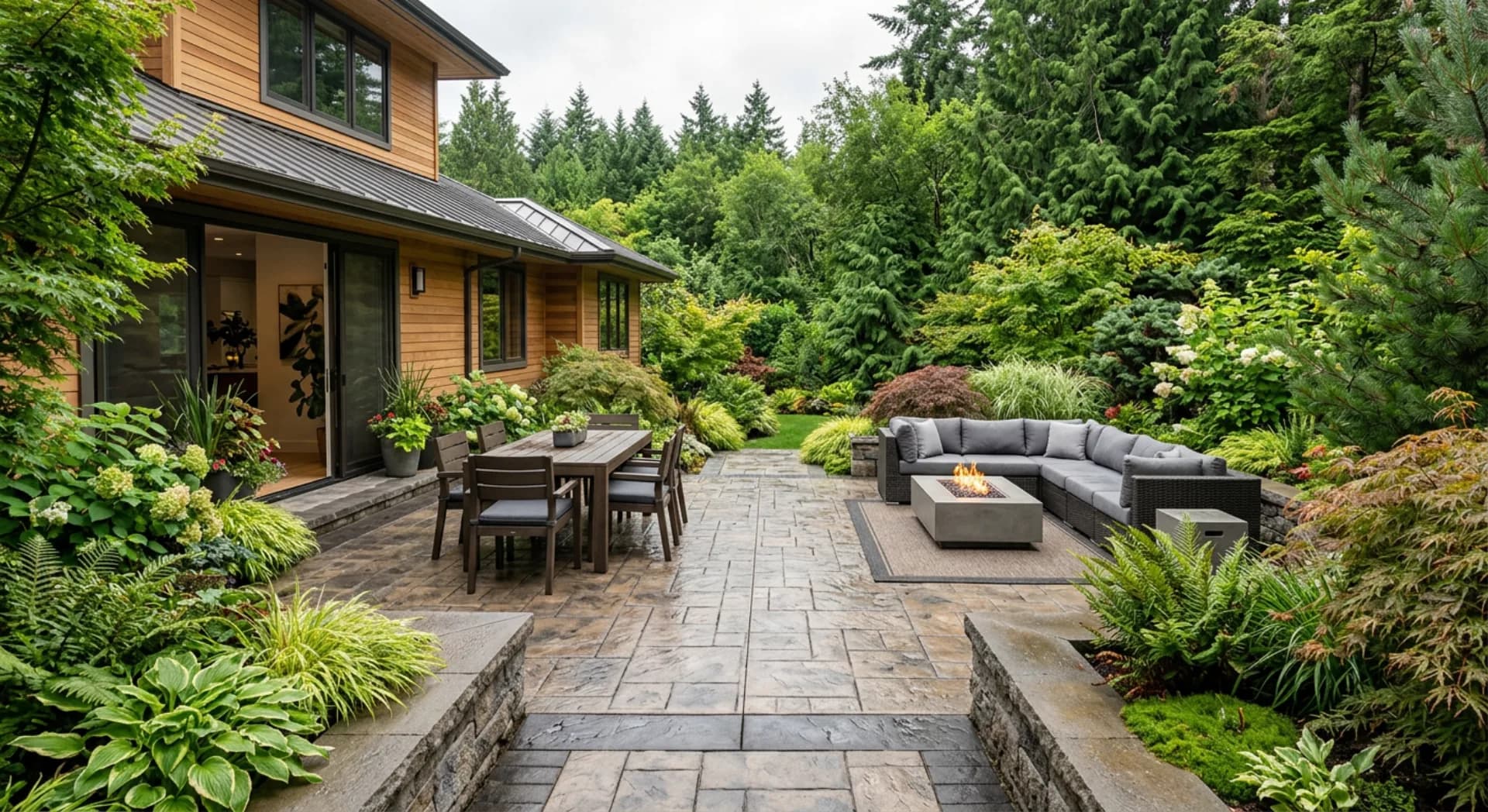
- Design versatility. Stamped patterns, exposed aggregate, colored concrete, and decorative borders give you options that gravel and asphalt simply can't match.
- Low maintenance. Concrete doesn't need sealcoating. Occasional cleaning and joint sealing are usually all that's required.
- Bright, clean appearance. The lighter surface improves visibility at night and creates a polished look that complements modern and traditional homes alike.
Concrete is more susceptible to cracking from ground movement and heavy freeze-thaw cycles, so proper subgrade preparation and control joints are critical—especially in our region.
What the Upgrade Process Looks Like
Whether you choose asphalt or concrete, upgrading from gravel follows a similar sequence:
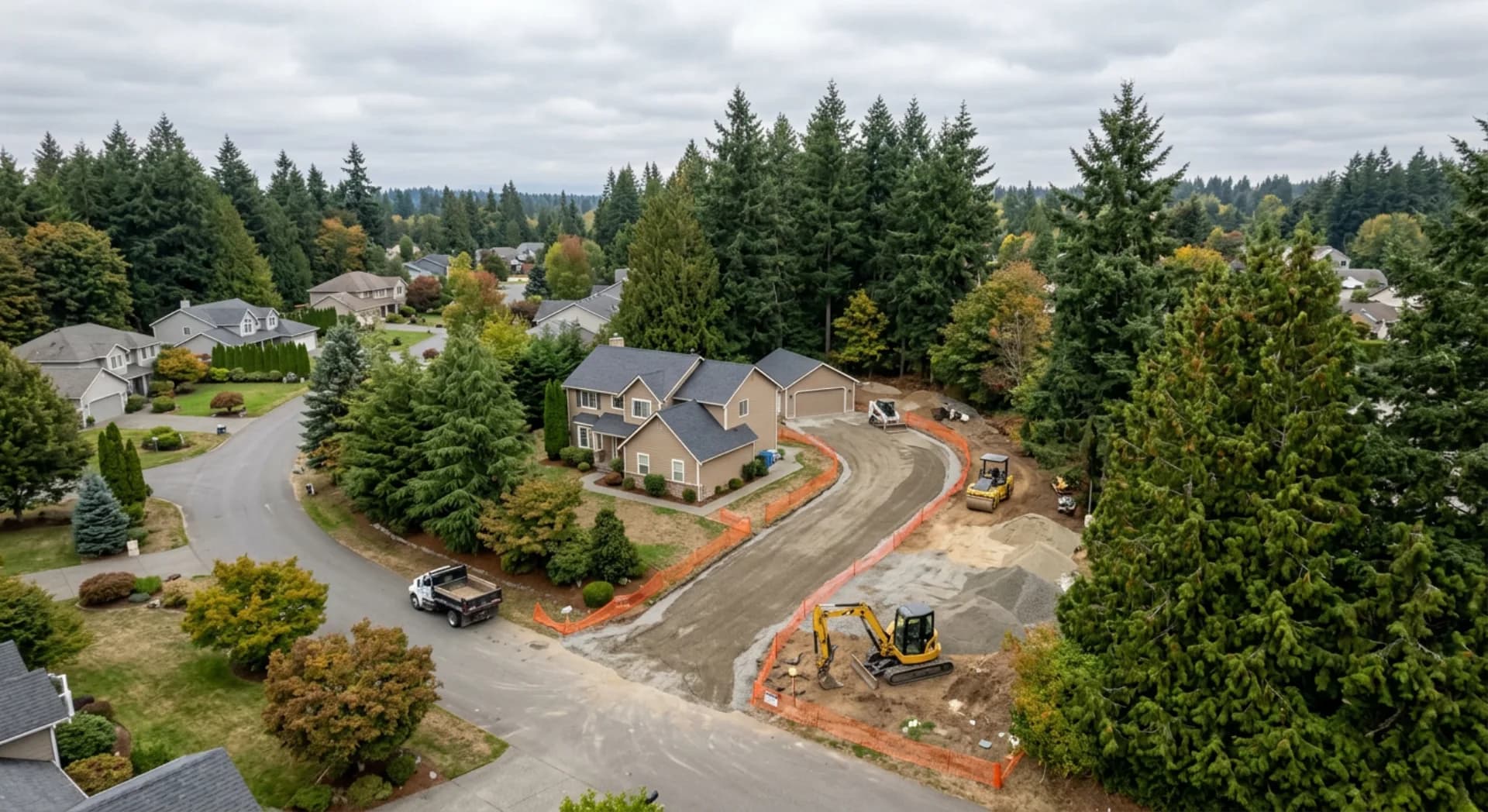
1. Site assessment and grading. The existing gravel is evaluated. In many cases, compacted gravel can serve as part of the base layer, saving material and labor. The site is graded to ensure proper water runoff away from your home and garage.
2. Base preparation. A solid base is everything. Crushed rock is added and compacted in layers to create a stable foundation. In areas with poor drainage or soft native soil, additional excavation or geotextile fabric may be needed.
3. Edge forming. For concrete, forms are built to define the driveway shape. For asphalt, the edges are established during the compaction process.
4. Material placement. Asphalt is laid hot and compacted with rollers. Concrete is poured, screeded, and finished by hand or with power tools. Both processes require experienced crews to get right.
5. Curing and finishing. Asphalt is typically ready for light traffic within 24–48 hours. Concrete needs about 7 days before vehicle use, with full curing taking up to 28 days.
Key Considerations for Washington Properties
A few factors are especially important for driveways in King and Snohomish County:
- Drainage requirements. Many municipalities have stormwater regulations. Your contractor should design the driveway to direct water appropriately—toward permeable areas, swales, or approved drainage systems.
- Permits. Depending on the scope and your city's rules, you may need a permit for driveway construction or modification. A reputable contractor handles this for you.
- Tree roots. The Pacific Northwest's mature trees are beautiful, but their root systems can wreak havoc on driveways. Proper subgrade work and strategic placement help avoid future problems.
- Seasonal timing. The best time to pave in Washington is late spring through early fall when temperatures are warm and rain is less frequent. Planning ahead means you'll be ready when the season opens. Our guide on how to prepare your property for asphalt paving walks you through every step.
Cost and Timeline
Understanding the financial commitment and schedule helps you plan effectively. Here's what to expect for gravel-to-paved driveway conversions in King and Snohomish County.
Asphalt Driveway Costs
A standard asphalt driveway upgrade from gravel runs $4 to $8 per square foot installed, depending on the existing gravel condition, base preparation required, and driveway size. For a typical two-car driveway (600 to 800 square feet), budget approximately $2,400 to $6,400. This includes gravel evaluation, base preparation, asphalt placement, and compaction.
Concrete Driveway Costs
Concrete upgrades range from $8 to $14 per square foot for standard broom-finish work. Decorative options like stamped or exposed aggregate concrete run $12 to $22 per square foot. The same 600-to-800-square-foot driveway costs approximately $4,800 to $11,200 for standard concrete, with decorative finishes adding $2,000 to $6,000 more.
What Affects the Price
Several factors can push your project toward the higher end of these ranges:
- Poor subgrade conditions — If the existing soil is soft clay or poorly draining, additional excavation and geotextile fabric add $1 to $3 per square foot
- Steep grades — Sloped driveways require additional forming, drainage planning, and potentially retaining structures
- Driveway length and width — Longer driveways cost more overall but may have a lower per-square-foot cost due to economies of scale
- Removal of existing gravel — In some cases, the existing gravel can stay as part of the base. In others, it needs to be removed and replaced with properly graded base material
- Permits and utility work — Permit fees in most King and Snohomish County cities run $100 to $500. If utility connections or stormwater infrastructure is required, add accordingly
Timeline Expectations
From initial consultation to finished driveway, expect the following general timeline:
- Consultation and estimate: 1 to 2 weeks (scheduling dependent)
- Permitting (if required): 2 to 6 weeks depending on municipality
- Base preparation: 1 to 2 days for most residential driveways
- Paving/pouring: 1 day for asphalt; 1 to 2 days for concrete
- Curing: Asphalt is drivable in 24-48 hours. Concrete requires 7 days before vehicle traffic and 28 days for full cure
Plan to start the process in early spring to get on a contractor's schedule for the prime paving season (May through September). Waiting until summer often means longer lead times as contractors book up.
Frequently Asked Questions
Is it cheaper to pave over existing gravel or remove it first?
In many cases, compacted gravel can serve as part of the base layer for asphalt or concrete, saving $1 to $3 per square foot in excavation and material costs. However, the gravel must be well-compacted, properly graded, and free of organic material. A contractor will evaluate whether your existing gravel is suitable during the site assessment.
How long does an asphalt driveway last compared to concrete?
Asphalt driveways in the Pacific Northwest typically last 15 to 20 years with regular maintenance (sealcoating every 3-5 years, prompt crack repair). Concrete driveways last 25 to 30+ years with minimal maintenance. Both far outlast gravel, which requires annual replenishment and constant upkeep.
Do I need a permit to pave my driveway in Washington?
Permit requirements vary by city and county. Many jurisdictions in King and Snohomish County require permits for new driveway construction or significant changes to existing driveways, particularly if stormwater drainage is affected. Your paving contractor should handle permit research and applications as part of the project.
Will paving my gravel driveway increase my property value?
Yes. A paved driveway is one of the highest-ROI exterior improvements you can make. Real estate professionals estimate that upgrading from gravel to asphalt or concrete adds $5,000 to $15,000 in perceived property value, depending on the home's price range and neighborhood standards. The improvement also makes homes easier to sell.
Can you pave a gravel driveway in winter?
Asphalt requires warm, dry conditions (above 50°F) for proper compaction and bonding, making winter installation impractical in the Pacific Northwest. Concrete can be poured in cooler conditions with proper precautions, but most contractors recommend waiting for the May-through-September window for the best results and most predictable scheduling.
Is It Time to Upgrade Your Driveway?
If your gravel driveway has become more hassle than it's worth—constant raking, seasonal topping off, puddles after every rain—a paved surface will transform how your property looks and functions.
At Jireh Asphalt & Concrete, we help homeowners across Everett, Marysville, Lake Stevens, Lynnwood, and throughout King and Snohomish County make the switch from gravel to a driveway that lasts. We handle everything from subgrade preparation to final finish, and we'll help you choose the right material for your property and budget.
Ready to upgrade? Contact us for a free estimate and let's talk about your driveway project.