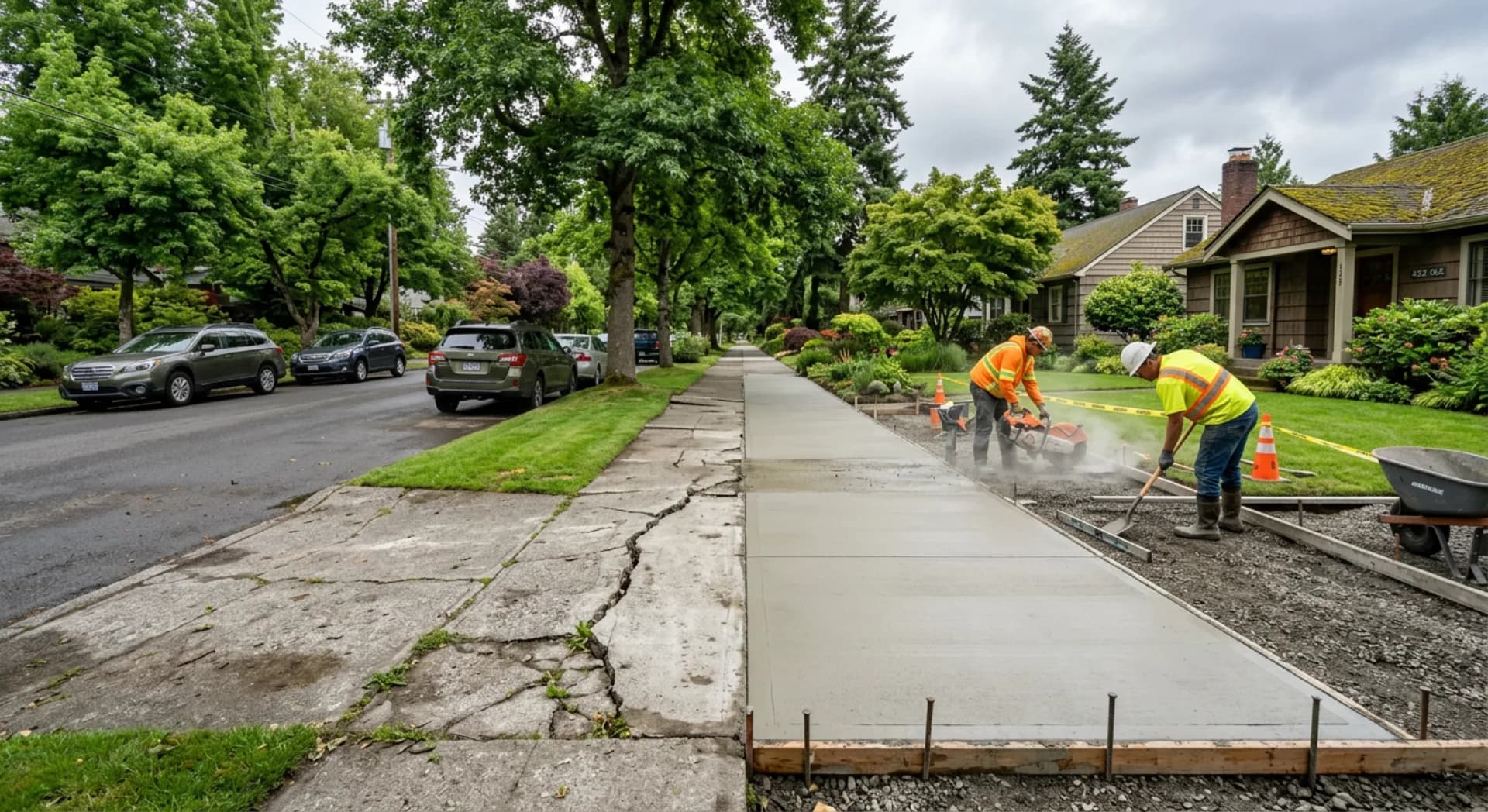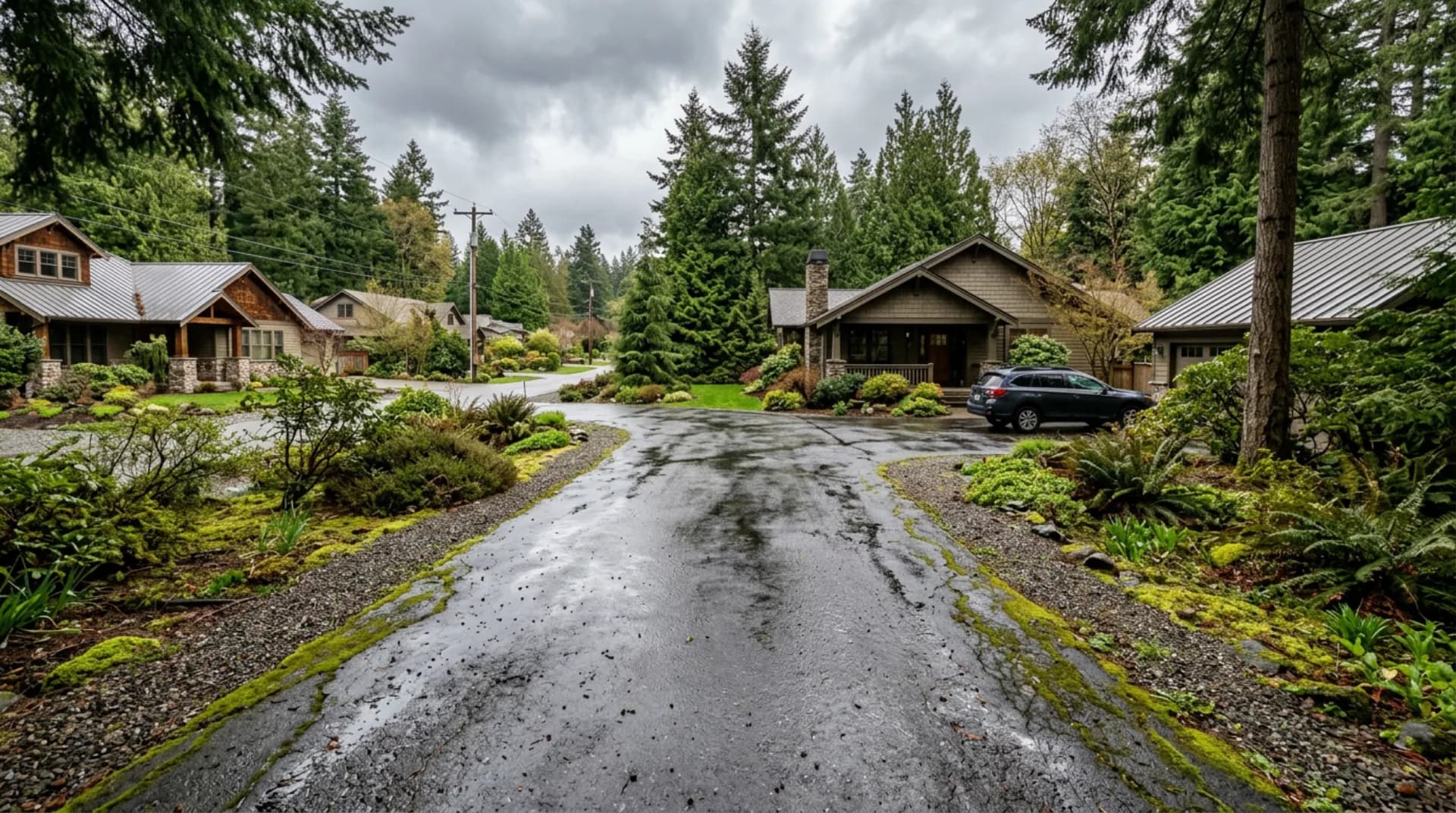
Winter in the Pacific Northwest isn't gentle on your pavement. Between months of steady rain, occasional freeze-thaw cycles, and debris accumulation, your driveway or parking lot has been taking a beating since November. Now that spring is arriving in Seattle and the greater Puget Sound area, it's the perfect time to assess the damage and take action before small problems turn into expensive headaches.
This guide walks you through a step-by-step spring maintenance checklist for both asphalt and concrete surfaces — whether you own a single-family home in Snohomish County or manage a commercial property in King County.
Key Takeaways
- Inspect early in spring — Walk your entire driveway or parking lot looking for new cracks, potholes, heaving, and drainage issues that developed over winter
- Seal cracks before they spread — Small cracks from freeze-thaw cycles become major damage in one more season if left unaddressed
- Clean thoroughly first — Remove moss, algae, debris, and organic buildup that trap moisture and accelerate surface deterioration
- Schedule summer repairs now — Contractors book up fast for the May-September paving season; early spring is the time to get estimates and reserve your spot
- Drainage issues won't fix themselves — If water pooled during winter, address grading or drainage infrastructure before the next rainy season
Why Spring Maintenance Matters in the Pacific Northwest
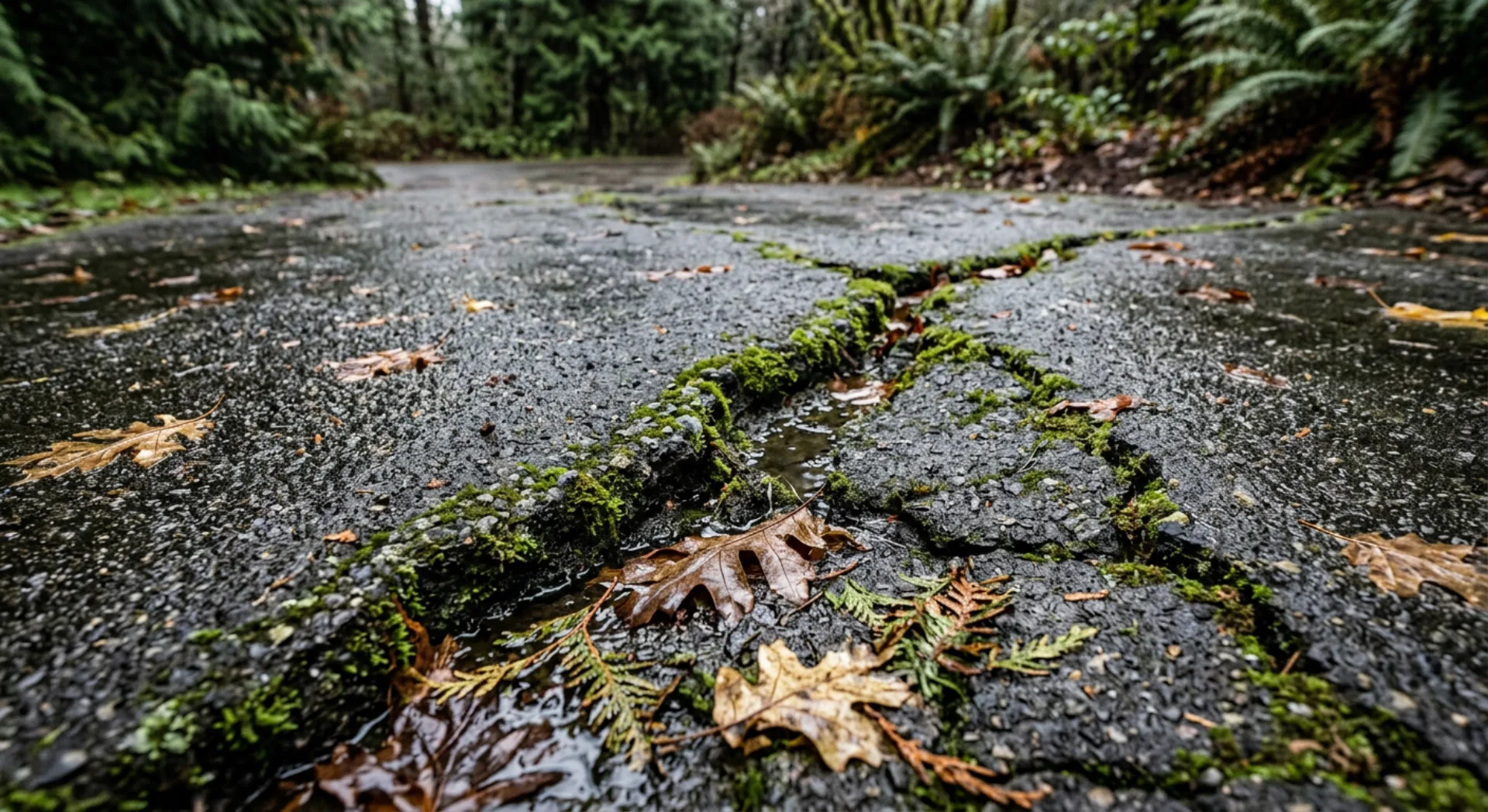
Seattle's climate creates a unique set of challenges for paved surfaces. While we don't experience the extreme cold of the Midwest, our combination of constant moisture, mild freeze-thaw cycles, and organic debris creates conditions that slowly degrade pavement over time.
Here's what happens during a typical PNW winter:
- Water infiltration: Rain seeps into hairline cracks and sits beneath the surface
- Freeze-thaw expansion: Even brief cold snaps cause trapped water to expand, widening cracks
- Root pressure: Tree roots continue growing and pushing against pavement edges
- Moss and algae growth: Persistent moisture encourages biological growth that traps even more water
- Debris accumulation: Leaves, pine needles, and organic matter create acidic deposits
Catching these issues in early spring — before the damage compounds through another wet season — can save homeowners and property managers significantly in avoided repairs.
The Complete Spring Inspection Checklist
1. Clear All Debris and Organic Growth
Before you can assess your pavement's condition, you need to see it clearly. Start with a thorough cleaning:
- Sweep or blow all leaves, pine needles, and dirt from the entire surface
- Remove moss and algae with a stiff brush or pressure washer (use 2,500–3,000 PSI for concrete, 2,000–2,500 PSI for asphalt)
- Clear catch basins and drains — blocked drainage is the #1 cause of pavement failure in our area
- Trim back vegetation that's encroaching on pavement edges
Pay special attention to shaded areas and north-facing surfaces where moss tends to accumulate. In Everett and north Snohomish County, moss buildup is particularly aggressive due to the tree canopy.
2. Inspect for Cracks and Damage
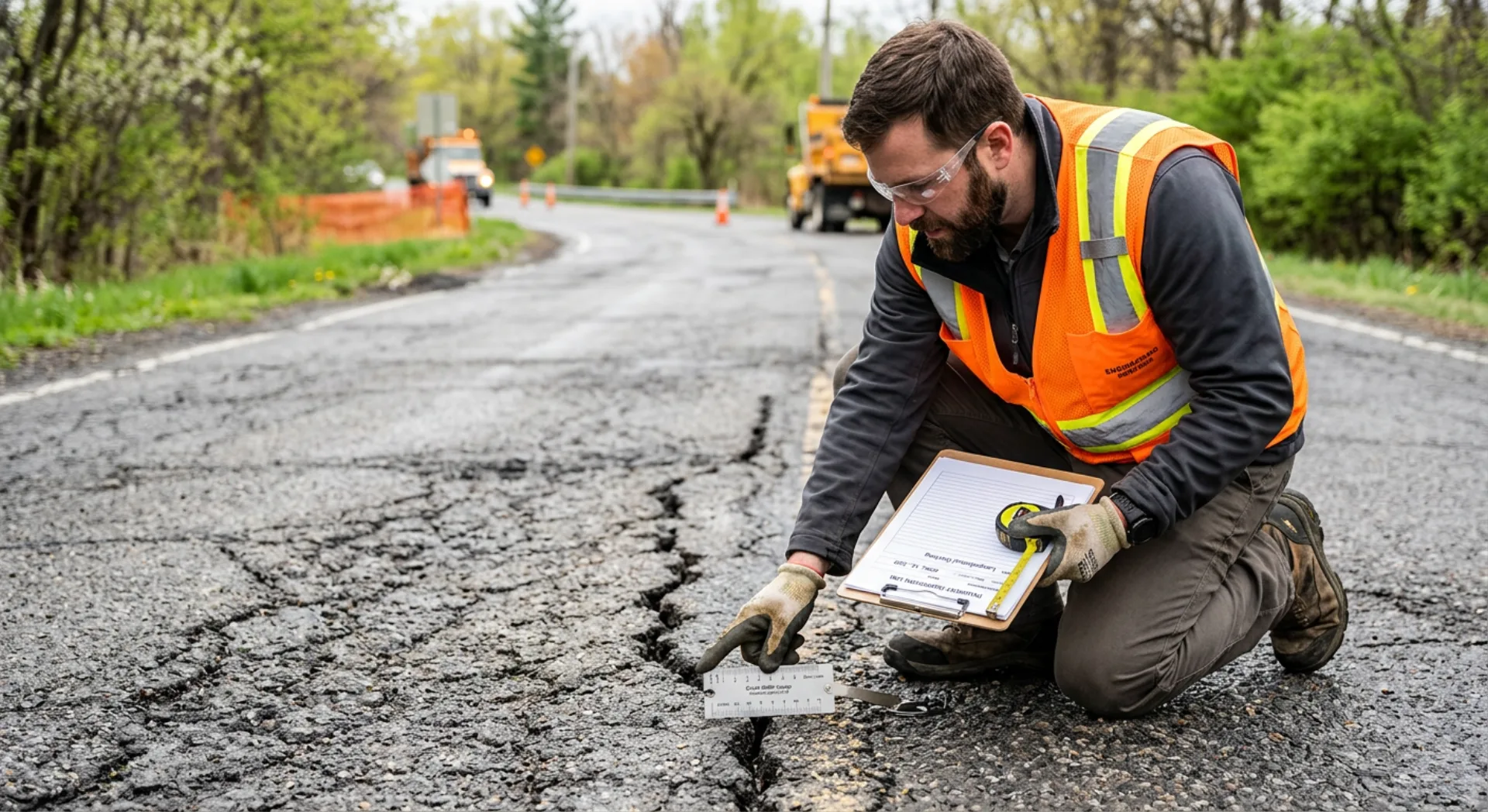
Walk the entire surface slowly and look for these common issues:
For asphalt driveways and parking lots:
- Alligator cracking (interconnected cracks resembling alligator skin) — indicates structural failure below the surface
- Linear cracks longer than 2 feet — these will continue spreading if not sealed
- Potholes or depressions — even small ones grow quickly with spring rain
- Edge deterioration — crumbling along the sides where the pavement meets soil or grass
- Fading or oxidation — gray, brittle-looking asphalt that's lost its flexibility
For concrete driveways and sidewalks:
- Spalling (flaking or chipping on the surface) — often caused by deicing salts
- Heaving or settling — uneven slabs that create trip hazards (see our guide on concrete sidewalk repair vs replacement)
- Joint separation — gaps widening between concrete slabs
- Scaling — surface peeling caused by moisture penetrating the top layer
Pro tip: Take photos of every issue you find and note the approximate size. This documentation helps contractors provide accurate estimates and lets you track whether damage is progressing over time.
3. Check Drainage Patterns
After the next rainfall, go outside and observe how water moves across your pavement:
- Does water pool anywhere? Standing water for more than 30 minutes after rain stops indicates a drainage problem
- Is water flowing toward your foundation? This is both a pavement and a structural concern
- Are catch basins draining properly? Slow drainage usually means accumulated debris in the basin
- Do you see erosion along pavement edges where water is running off?
In King County and Snohomish County, proper drainage isn't just about pavement longevity — it's about compliance. Our drainage solutions guide covers everything from French drains to permeable paving. Many municipalities require effective stormwater management on commercial properties, and a poorly draining parking lot can trigger code violations.
4. Assess Your Sealcoating (Asphalt Only)
If your asphalt driveway or parking lot was last sealcoated more than two years ago, spring is the ideal time to schedule a fresh application. Look for these signs:
- The surface has turned from black to a uniform gray
- You can see individual aggregate stones clearly
- Water no longer beads on the surface — it soaks in immediately
- Small cracks are appearing across the surface
Sealcoating in late spring or early summer (once temperatures consistently stay above 50°F) provides maximum protection heading into the next wet season. In the Seattle area, this typically means May through September is the ideal window. Learn the 5 signs your parking lot needs sealcoating so you know exactly when to act.
Prioritizing Repairs: What to Fix Now vs. What Can Wait
Not all damage needs immediate attention. Here's how to prioritize:
Fix Immediately (Prevents Escalation)
- Potholes of any size
- Cracks wider than ¼ inch
- Drainage problems directing water toward buildings
- Trip hazards on walkways (liability risk)
- Heaved concrete slabs
Schedule for Spring/Summer
- Sealcoating for oxidized asphalt
- Crack sealing for hairline to ¼-inch cracks
- Cosmetic edge repairs
- Restriping faded parking lot lines
- ADA compliance updates (ramp slopes, signage)
Monitor and Plan For
- Alligator cracking in limited areas (may need full-depth repair later)
- Minor settling that isn't creating trip hazards
- Surface staining or discoloration
DIY vs. Professional Repair: Know the Line
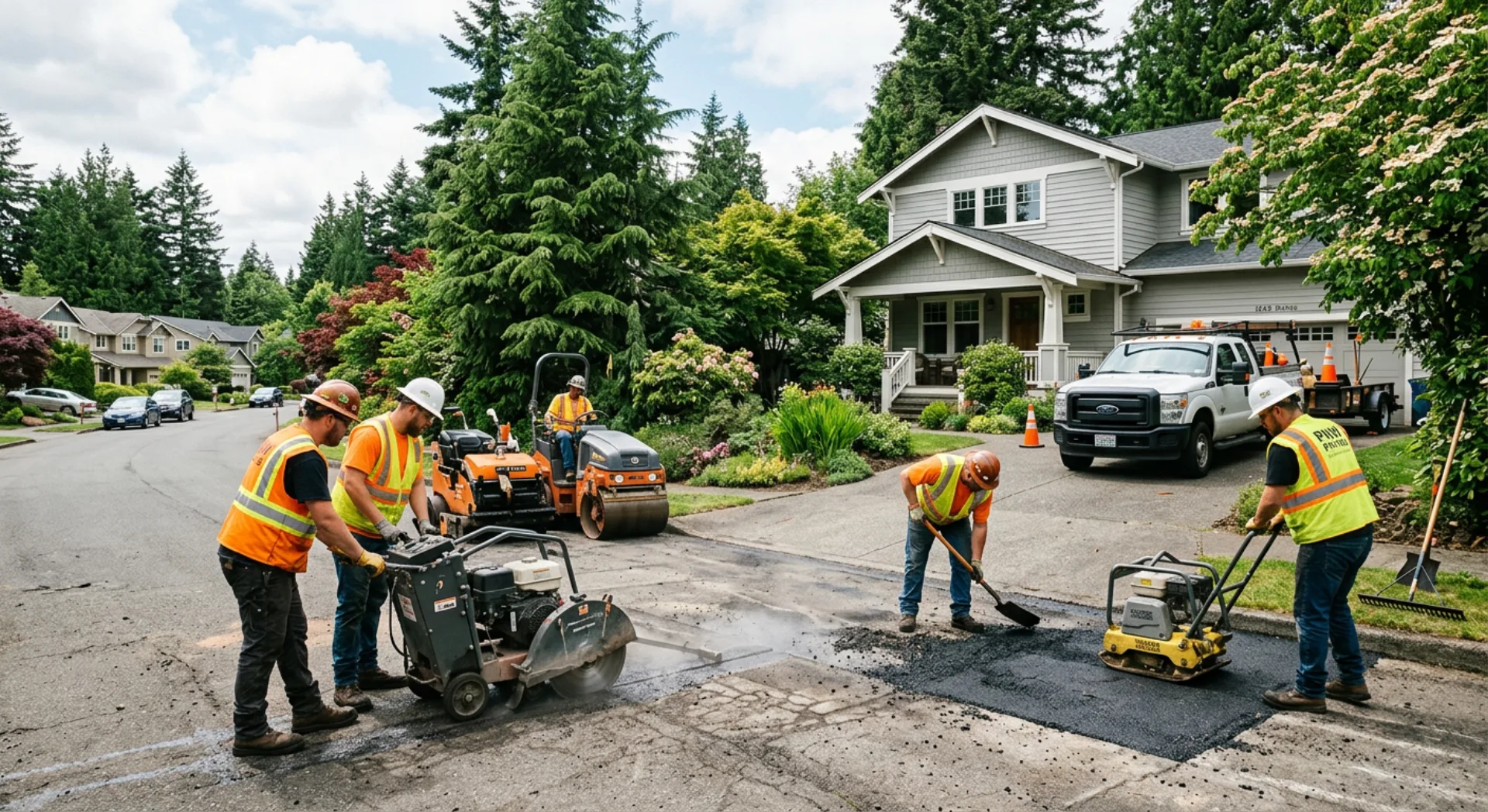
Some spring maintenance tasks are perfectly suitable for homeowners to tackle:
Good DIY tasks:
- Debris clearing and pressure washing
- Filling individual small cracks with retail crack filler
- Cleaning catch basins
- Pulling weeds from pavement joints
Call a professional for:
- Any crack wider than ½ inch
- Alligator cracking or structural damage
- Pothole repair (cold patch from the hardware store is a temporary fix at best)
- Sealcoating (professional application lasts 2–3x longer than DIY)
- Concrete slab leveling or replacement
- Drainage correction
- ADA compliance work
The most common mistake we see at Jireh Asphalt & Concrete is homeowners applying cold patch to potholes year after year instead of addressing the underlying base failure. Repeated cold patch applications quickly become more expensive than a professional repair that actually solves the problem.
Special Considerations for Commercial Properties
If you manage a commercial parking lot in the Seattle metro area, spring maintenance comes with additional considerations:
ADA Compliance
Winter damage can push previously compliant surfaces out of spec. Check that:
- Accessible parking spaces are clearly marked and properly sloped (max 2% in any direction)
- Curb ramps haven't shifted or deteriorated
- Path-of-travel surfaces are smooth and free of trip hazards exceeding ¼ inch
Liability
Washington state property owners have a duty to maintain safe conditions for visitors. Documenting your spring inspection and promptly addressing hazards creates a record of reasonable care.
Stormwater Management
King County and Snohomish County both require commercial properties to manage stormwater runoff effectively. Spring is the time to service your catch basins, check for proper drainage, and ensure your system is functioning before the next rainy season. Catch basin cleaning is something many property managers overlook until they receive a notice.
Budget Planning
Most commercial paving projects in our area are best scheduled between May and October. Getting estimates in March and April lets you plan budgets and secure preferred scheduling slots before contractors' calendars fill up.
Month-by-Month Spring Action Plan
| Month | Action |
|---|---|
| March | Initial inspection, debris clearing, photo documentation, request estimates |
| April | Crack sealing, drainage corrections, catch basin cleaning |
| May | Sealcoating (when temps stay above 50°F), striping, ADA updates |
| June | Major repairs (overlay, patching), new installations |
FAQ
How much does spring driveway maintenance cost in Seattle?
Basic maintenance costs — cleaning, crack sealing, and minor repairs — are very affordable for a residential driveway compared to the cost of major repairs down the road. Contact a professional contractor for a quote specific to your property and its condition.
Can I sealcoat my driveway myself in the Pacific Northwest?
You can, but professional sealcoating consistently outperforms DIY in our climate. Professional-grade sealant is thicker, more durable, and applied with commercial equipment that ensures even coverage. In Seattle's wet conditions, proper application technique is critical — sealant applied too thick or in damp conditions will peel within months. Professional sealcoating lasts 2–3 years in our climate and provides much better protection than DIY alternatives.
When is the best time to repair an asphalt driveway in Washington state?
The ideal window is late spring through early fall (May–October) when temperatures are consistently above 50°F and rain is less frequent. Asphalt repair materials need warm, dry conditions to cure properly. However, crack sealing can be done in early spring as long as the surface is dry. If you have urgent damage like potholes, temporary repairs can be made year-round, with a permanent fix scheduled for warmer months.
How do I know if my driveway needs repair or full replacement?
If damage covers less than 25–30% of the surface and the base underneath is still solid, repairs and resurfacing (overlay) are usually the cost-effective choice. If you're seeing widespread alligator cracking, significant settling, or multiple failed areas, full replacement may actually cost less in the long run. A professional assessment can determine whether your base layer is intact — that's the deciding factor.
Protect Your Investment This Spring
Your driveway or parking lot is one of your property's most visible — and most used — features. A few hours of attention this spring can add years to its lifespan and prevent the kind of damage that requires full replacement.
At Jireh Asphalt & Concrete, we help homeowners and property managers across Everett, Seattle, King County, and Snohomish County with everything from spring crack sealing to complete driveway and parking lot restoration. We know PNW conditions because we work in them every day.
Ready to get your pavement in shape for spring? Contact us for a free estimate — we'll assess your surface, prioritize what needs attention, and give you a clear plan with honest pricing.