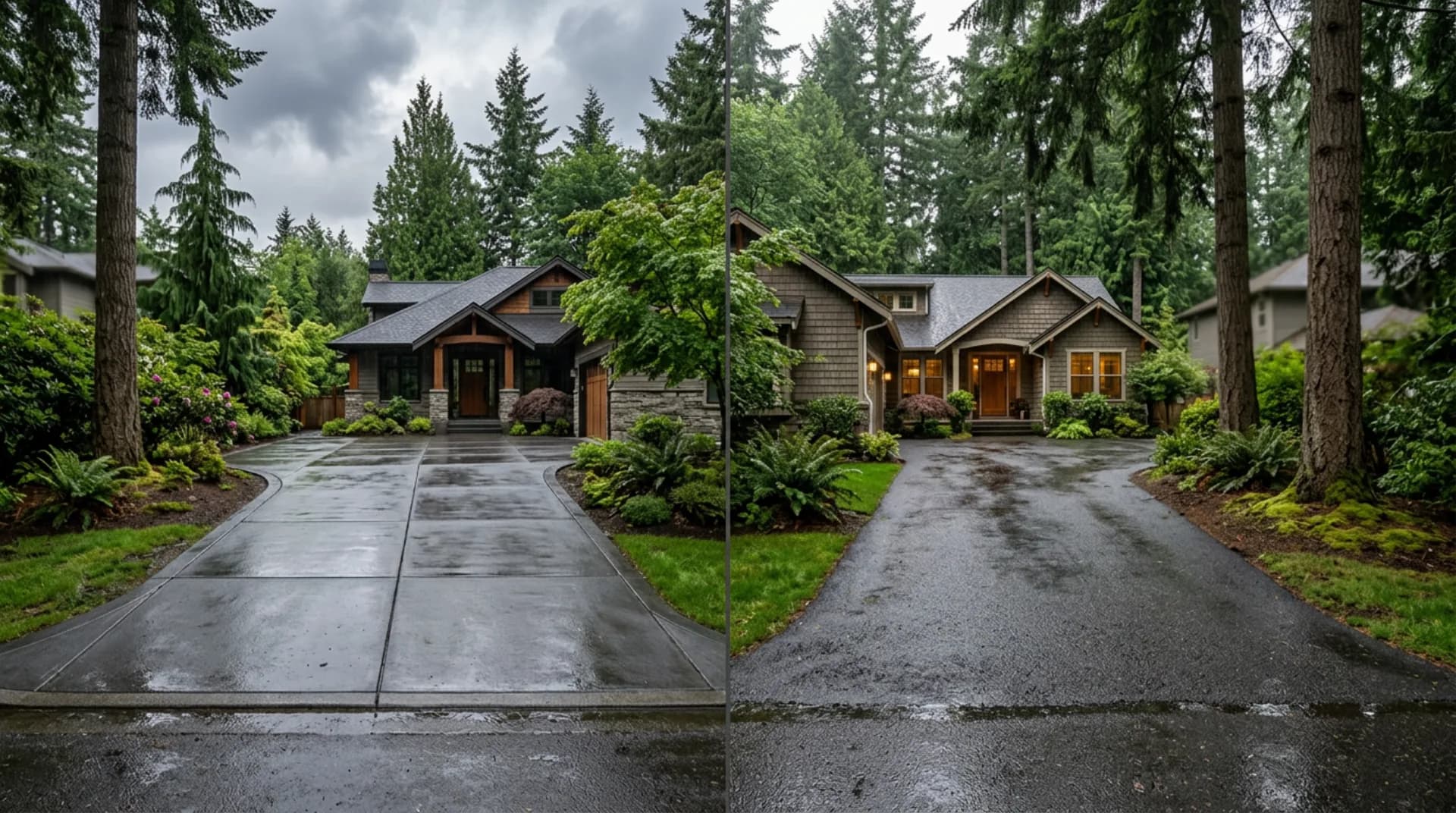
If you're building a new driveway or replacing an aging one in western Washington, the concrete versus asphalt decision is one of the most consequential choices you'll make. Both materials are proven performers, but the Pacific Northwest climate—with its persistent rain, occasional freezing temperatures, and acidic soil conditions—creates specific challenges that favor each material in different ways.
This guide compares both options honestly, with real cost data and maintenance expectations for homeowners in King County, Snohomish County, and the greater Seattle area.
Key Takeaways
- Asphalt handles freeze-thaw better — Its flexible surface resists cracking from temperature swings common in Western Washington winters
- Concrete lasts longer with less maintenance — Expect 25-30+ years from concrete versus 15-20 years from asphalt, with less routine upkeep
- Asphalt costs less upfront — Typically $4-8/sq ft installed versus $8-14/sq ft for concrete, though lifetime costs may be comparable
- Concrete offers more design options — Stamped, colored, and exposed aggregate finishes give concrete a clear aesthetic advantage
- Climate should drive your decision — PNW rain demands proper drainage for both materials; asphalt's dark color melts snow faster, while concrete's lighter surface stays cooler in summer
Climate Considerations for Washington State
Before comparing materials, it's worth understanding what PNW weather does to pavement. Western Washington presents three primary challenges:
Persistent moisture. Seattle averages 37 inches of rain per year, spread across roughly 150 days of measurable precipitation. From October through April, your driveway is wet more often than it's dry. Any material you choose must handle constant water exposure without deteriorating.
Freeze-thaw cycles. While Seattle doesn't experience the extreme winters of the Midwest or Northeast, temperatures do drop below freezing multiple times each winter. The greater concern is the rapid cycling—temperatures can swing from 25°F at night to 45°F during the day, causing water trapped in pavement to freeze, expand, crack, thaw, and repeat. Higher-elevation areas like Snohomish, Issaquah, and Sammamish see more freeze-thaw events than Seattle proper.
Tree roots and soil movement. The Puget Sound lowlands sit on a mix of glacial till, clay, and sandy loam. Many properties have large conifers whose root systems extend well beyond the tree canopy. Root intrusion and seasonal soil moisture changes can cause the ground beneath your driveway to shift subtly over time.
Asphalt Driveways: Pros and Cons for PNW
Advantages
Flexibility. Asphalt is a flexible pavement—it can absorb minor ground movement without cracking. In an area with active tree roots and expansive clay soils, this flexibility is a meaningful advantage. Small shifts in the subgrade that would crack rigid concrete often go unnoticed in an asphalt surface.
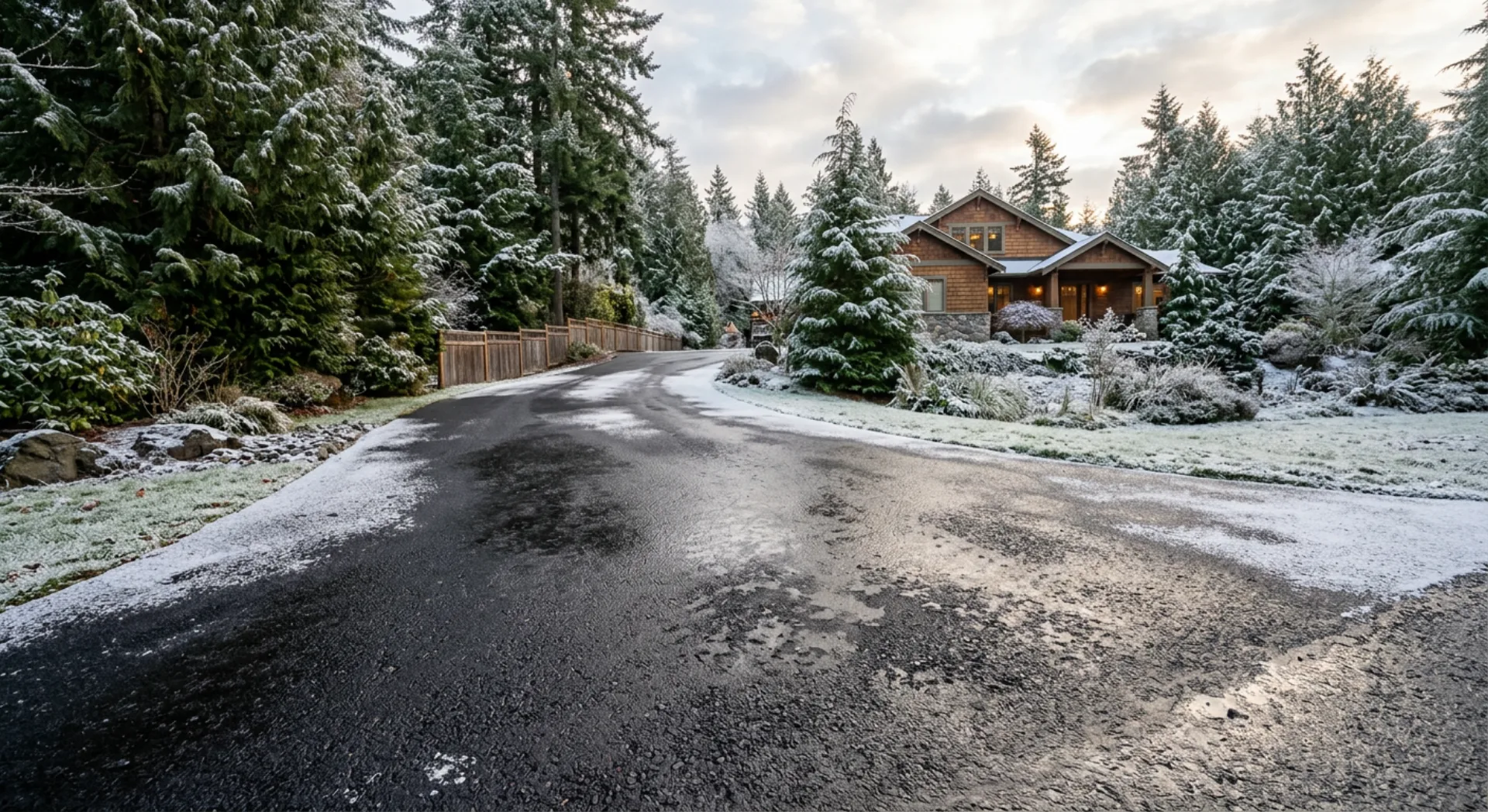
Cold-weather performance. Asphalt's dark color absorbs solar heat, which helps melt light frost and ice faster than concrete. During mild freezing events—common in Seattle where temperatures hover just below freezing—an asphalt driveway may clear itself of ice while a concrete driveway remains slippery.
Lower initial cost. For a standard two-car driveway, asphalt installation in the Seattle area is typically 25–35% less expensive than concrete. This makes it an attractive option for budget-conscious homeowners.
Easier and cheaper to repair. When asphalt does develop problems, repairs are straightforward and relatively inexpensive. If you're considering asphalt, our guide on how to prepare your property for asphalt paving covers what to expect. A pothole can be filled, a sunken area can be leveled with an overlay, and sections can be cut out and replaced without affecting the rest of the driveway. Matching the existing surface is simple since all asphalt looks similar.
Recyclability. Old asphalt is one of the most recycled materials in the construction industry. When your driveway eventually reaches end of life, the material can be milled up and reused in new asphalt mixes or as base aggregate, reducing waste and environmental impact.
Disadvantages
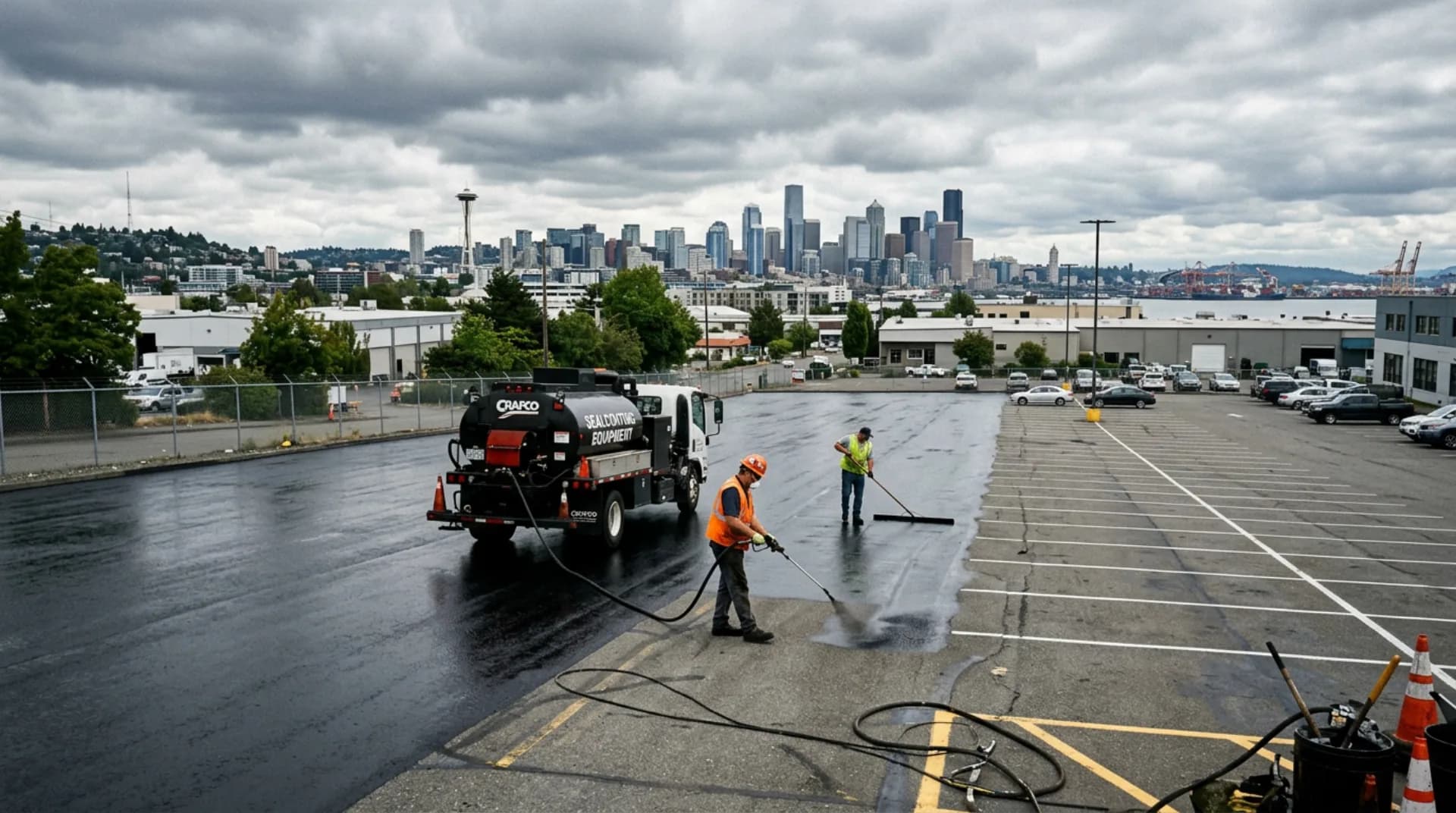
Requires regular maintenance. Asphalt driveways in the PNW should be sealcoated every 3–5 years to protect against moisture and UV degradation. Cracks should be sealed as they appear to prevent water infiltration. Total maintenance cost over the life of the driveway is significant.
Shorter lifespan. A well-maintained asphalt driveway in western Washington typically lasts 15–20 years before needing major repair or replacement. Without maintenance, that drops to 10–15 years.
Softens in extreme heat. While rare in Seattle, unusually hot summer days (above 90°F) can soften asphalt enough to show marks from kickstands, trailer jacks, or heavy point loads. This has become slightly more relevant as PNW summers have trended warmer in recent years.
Limited aesthetic options. Asphalt is asphalt—it's black when new, gray when old, and there's limited ability to customize its appearance. Decorative borders and color coatings exist but add significant cost.
Concrete Driveways: Pros and Cons for PNW
Advantages
Longevity. A properly installed concrete driveway can last 25–40 years in western Washington with minimal maintenance. The upfront investment is higher, but the cost per year of service is often comparable to or lower than asphalt.
Low maintenance. Concrete doesn't require sealcoating or regular surface treatments. Occasional cleaning with a pressure washer and sealing of any cracks that develop is typically all that's needed. Joint sealing every 5–10 years helps prevent water intrusion at control joints.
Load bearing capacity. Concrete handles heavy loads better than asphalt without deforming. If you park an RV, boat trailer, or heavy work truck on your driveway, concrete won't develop ruts or depressions over time the way asphalt can.
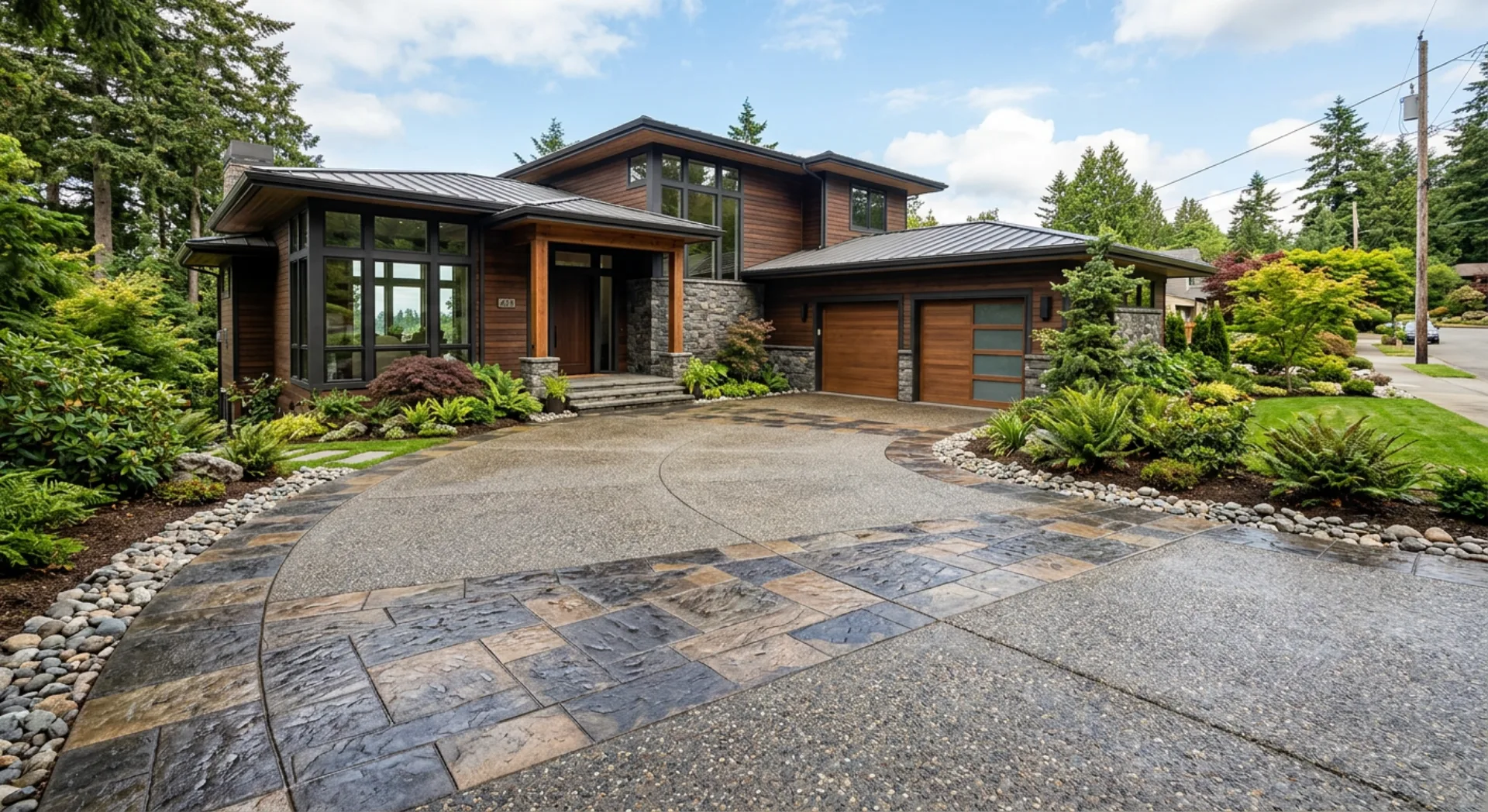
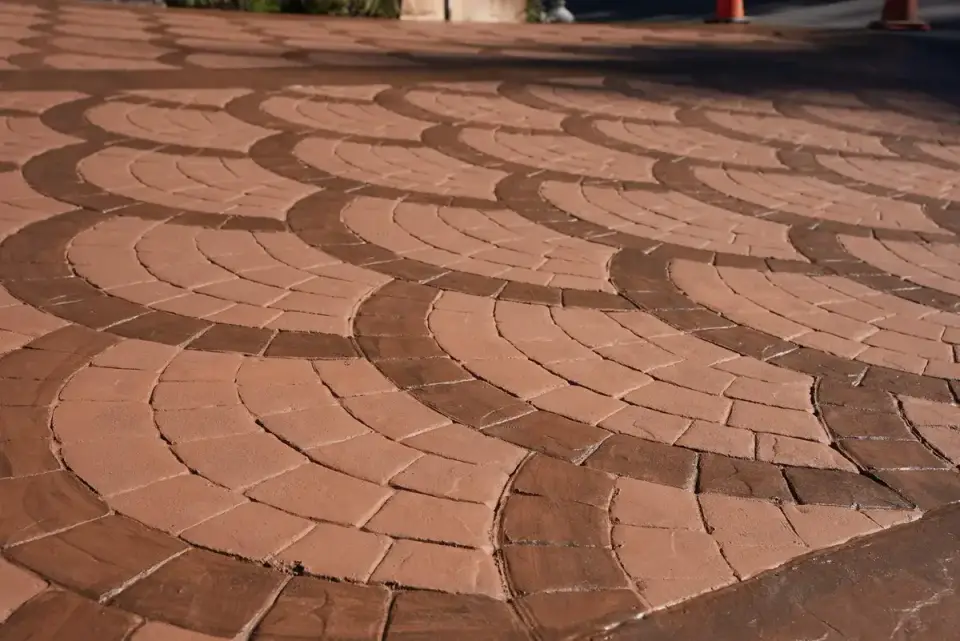
Design versatility. Concrete can be stamped, colored, stained, exposed-aggregate finished, or broom-finished to achieve a wide range of appearances. Explore all the options in our concrete flatwork design guide. For homeowners who view their driveway as part of their home's curb appeal, concrete offers far more aesthetic options.
Reflectivity. Concrete's lighter color reflects more light, which can improve nighttime visibility and reduce the need for driveway lighting. It also absorbs less heat, which is a minor consideration for the urban heat island effect.
Disadvantages
Rigidity and cracking. Concrete is a rigid pavement that doesn't flex with ground movement. If tree roots push up from below, if the soil settles unevenly, or if the subgrade wasn't properly compacted during installation, concrete will crack. And unlike asphalt cracks, concrete cracks are harder and more expensive to repair and nearly impossible to make invisible.
Salt sensitivity. While not as relevant in Seattle as in regions that rely on road salt, some homeowners and municipalities do use de-icing salts during winter cold snaps. Chemical de-icers can cause concrete surface scaling and spalling, particularly in the first winter after installation. If you use de-icers, a penetrating concrete sealer is essential.
Higher repair costs. When concrete does fail, repairs are expensive and often visually obvious. A cracked or sunken concrete panel typically requires full removal and replacement of that section. Color matching new concrete to weathered existing concrete is extremely difficult, so repairs tend to stand out.
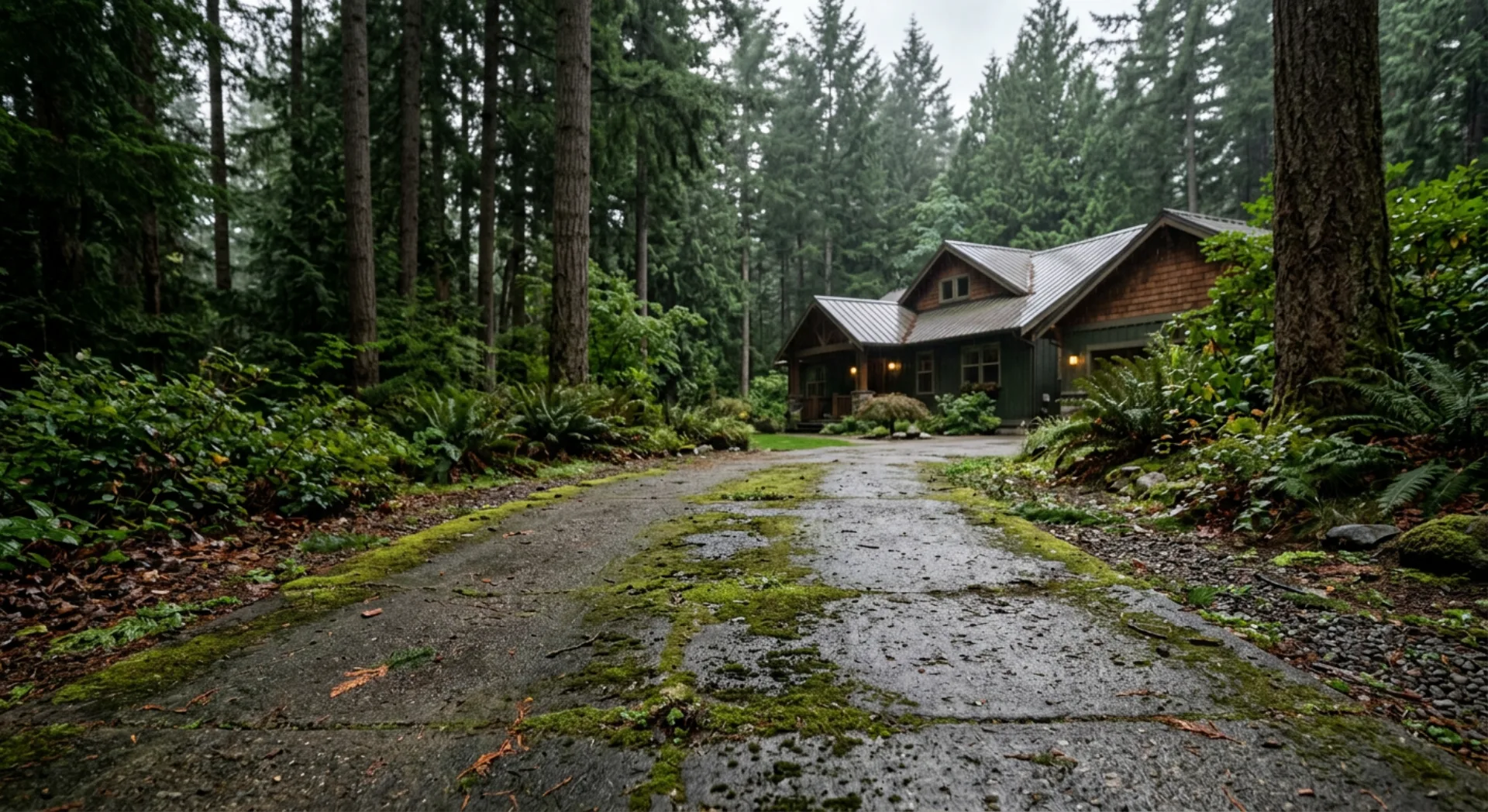
Staining. Concrete's light color shows stains from oil, rust, leaves, and moss more readily than asphalt. In the PNW, moss and algae growth on concrete driveways is common on north-facing or shaded surfaces and requires periodic cleaning.
Longer installation time. Concrete requires 7–28 days to reach full strength, during which the driveway should see limited or no traffic. Asphalt can typically support vehicle traffic within 2–3 days of installation.
Cost Comparison: 20-Year Total Cost of Ownership
For a standard 800-square-foot residential driveway in the Seattle area, here's what you can expect to spend over 20 years:
Asphalt
- Lower installation cost
- Sealcoating every 3–5 years adds ongoing expense
- Periodic crack sealing required
- May need an overlay or major repair at year 12–15
Concrete
- Higher installation cost
- Minimal ongoing maintenance (joint sealing every 5–10 years)
- Occasional pressure washing
- Minor repairs if cracks develop
While asphalt is cheaper to install, concrete's lower maintenance costs can make it the more economical choice over a 20-year period—particularly if the asphalt driveway needs an overlay or partial replacement before year 20.
However, if your budget is constrained today, asphalt's lower upfront cost allows you to get a functional, attractive driveway installed for less immediate cash outlay. Contact us for a free estimate comparing both options for your specific property.
The Pervious Option: An Alternative Worth Considering
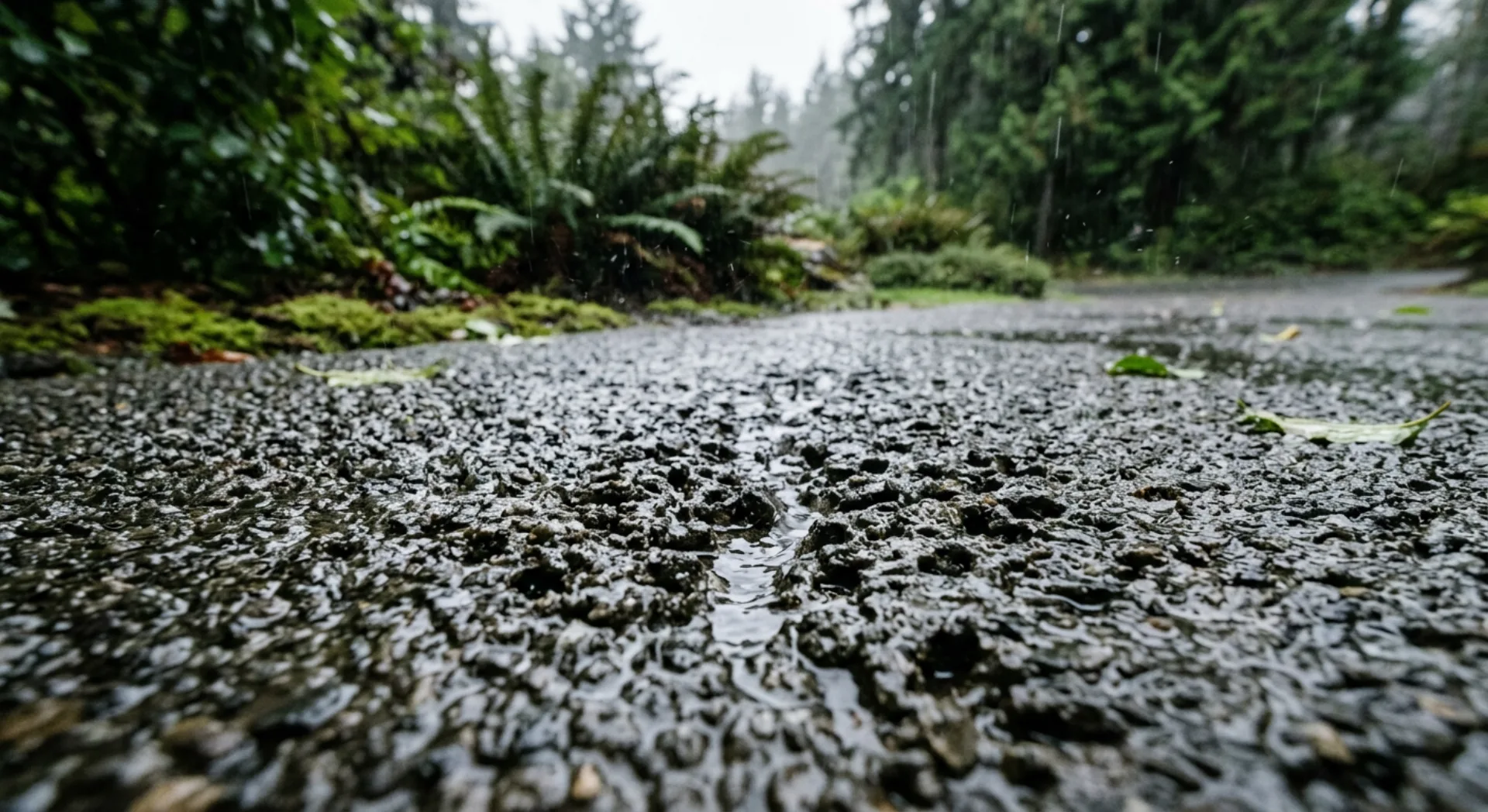
For environmentally conscious homeowners or properties with stormwater management requirements, pervious (permeable) pavement is an increasingly popular option in the Pacific Northwest. Both pervious concrete and porous asphalt are available.
Pervious concrete uses a special mix design that creates interconnected voids in the surface, allowing water to drain through the pavement into a prepared aggregate base below. It can reduce or eliminate the need for separate stormwater management systems.
Porous asphalt works on a similar principle with an open-graded asphalt mix over a stone reservoir base.
Both options are more expensive than their conventional counterparts—typically 30–50% more for materials and installation—but they can save money on stormwater infrastructure and may qualify for incentives or reduced utility fees in some jurisdictions. King County and the City of Seattle both have programs that encourage pervious pavement installation.
Which Should You Choose?
Here's a simplified decision guide based on the most common scenarios for PNW homeowners:
Choose asphalt if:
- Budget is your primary concern
- You have large trees near the driveway with active root systems
- You plan to sell the property within 10 years
- You prefer a simple, quick installation
- You're comfortable with periodic maintenance (sealcoating, crack sealing)
Choose concrete if:
- You want a long-lasting, low-maintenance driveway
- Curb appeal and design options are important to you
- You park heavy vehicles (RVs, boats, work trucks)
- Your subgrade is stable with no tree root concerns
- You plan to stay in the home long-term (10+ years)
Consider pervious options if:
- Your property has stormwater management requirements
- You're environmentally motivated
- Your budget allows for the higher upfront cost
- You want to reduce runoff and improve groundwater recharge
Frequently Asked Questions
Which lasts longer in Seattle weather, concrete or asphalt?
Concrete generally lasts longer—25 to 40 years versus 15 to 20 years for asphalt. However, asphalt's lifespan can be significantly extended with regular sealcoating and timely repairs. The "right" choice depends on whether you prefer lower upfront cost with ongoing maintenance (asphalt) or higher upfront investment with minimal maintenance (concrete).
Can I pave my driveway in winter in Washington?
Asphalt should not be placed when temperatures are below 50°F, which effectively rules out November through March in most of western Washington. Concrete can be poured in cooler temperatures (above 40°F) with precautions, but freezing conditions during the curing period can cause serious quality problems. Spring through early fall is the recommended window for both materials.
How do I prevent moss growth on my concrete driveway?
Moss and algae thrive on PNW concrete, especially in shaded areas. Regular pressure washing once or twice a year is the most effective solution. Applying a moss-prevention product after cleaning can extend the time between cleanings. Improving sunlight exposure by trimming overhanging branches also helps.
Is a heated driveway worth it in Seattle?
Radiant heating systems can be installed under both concrete and asphalt driveways to melt snow and ice. Given Seattle's mild winters, a heated driveway is generally considered a luxury rather than a necessity. The installation and ongoing energy costs are significant. It may make more sense in higher-elevation areas like Snoqualmie or North Bend that see regular snowfall.
Can I put asphalt over my old concrete driveway?
Yes, in some cases. If the concrete is structurally sound with no major heaving or settlement, an asphalt overlay can be placed on top. However, reflective cracking—where cracks in the concrete propagate up through the asphalt—is a common issue. Your contractor can assess whether this approach makes sense for your specific situation.
Make the Right Choice for Your Property
Whether you choose concrete, asphalt, or a pervious alternative, the quality of installation is the single biggest factor in how long your driveway will last and how well it will perform. Proper subgrade preparation, adequate drainage, and correct material thickness are far more important than the material choice itself.
At Jireh Asphalt & Concrete, we install both materials and can give you an honest recommendation based on your property's specific conditions, your budget, and your long-term plans. Contact us for a free on-site evaluation and estimate.