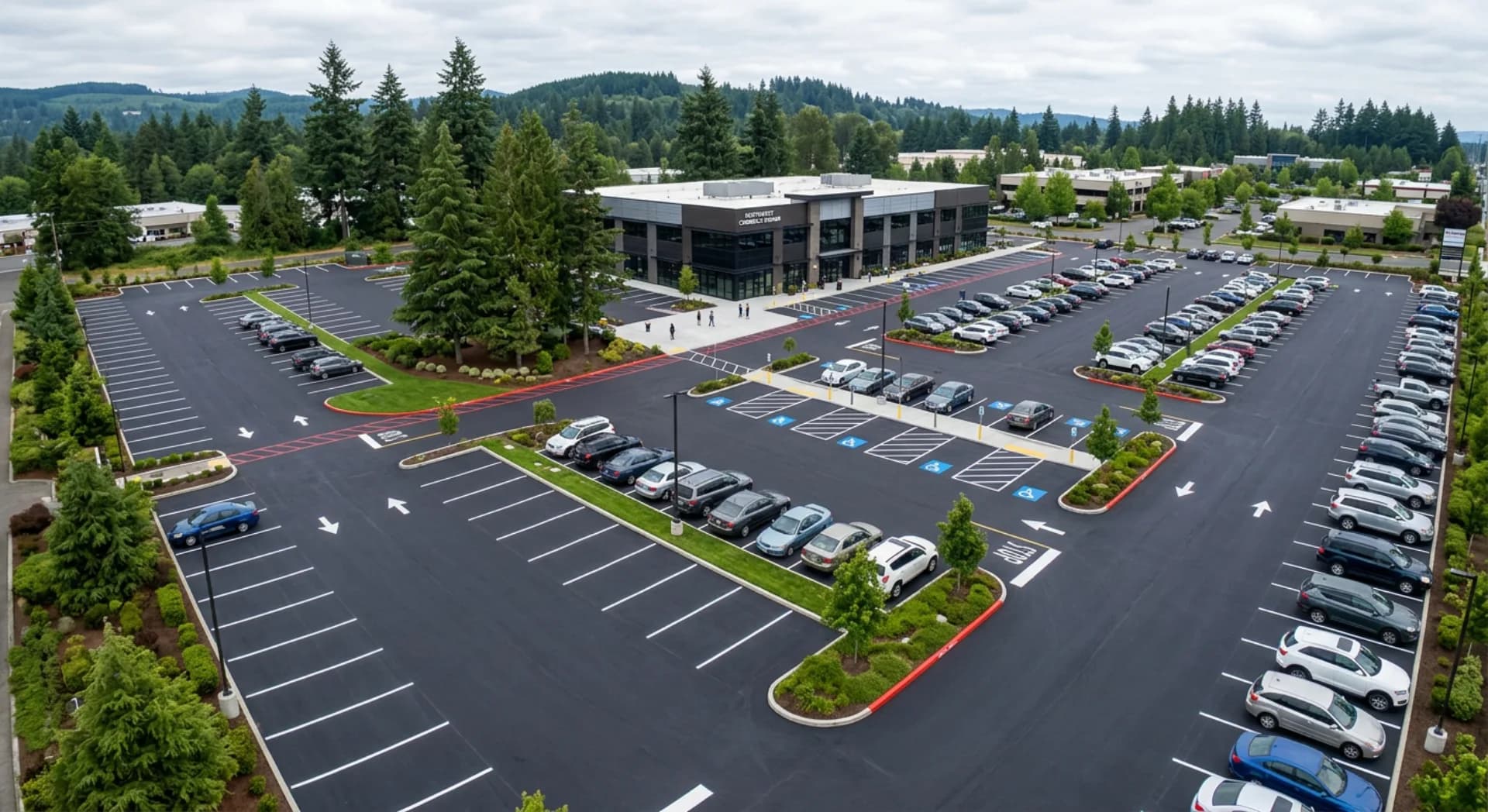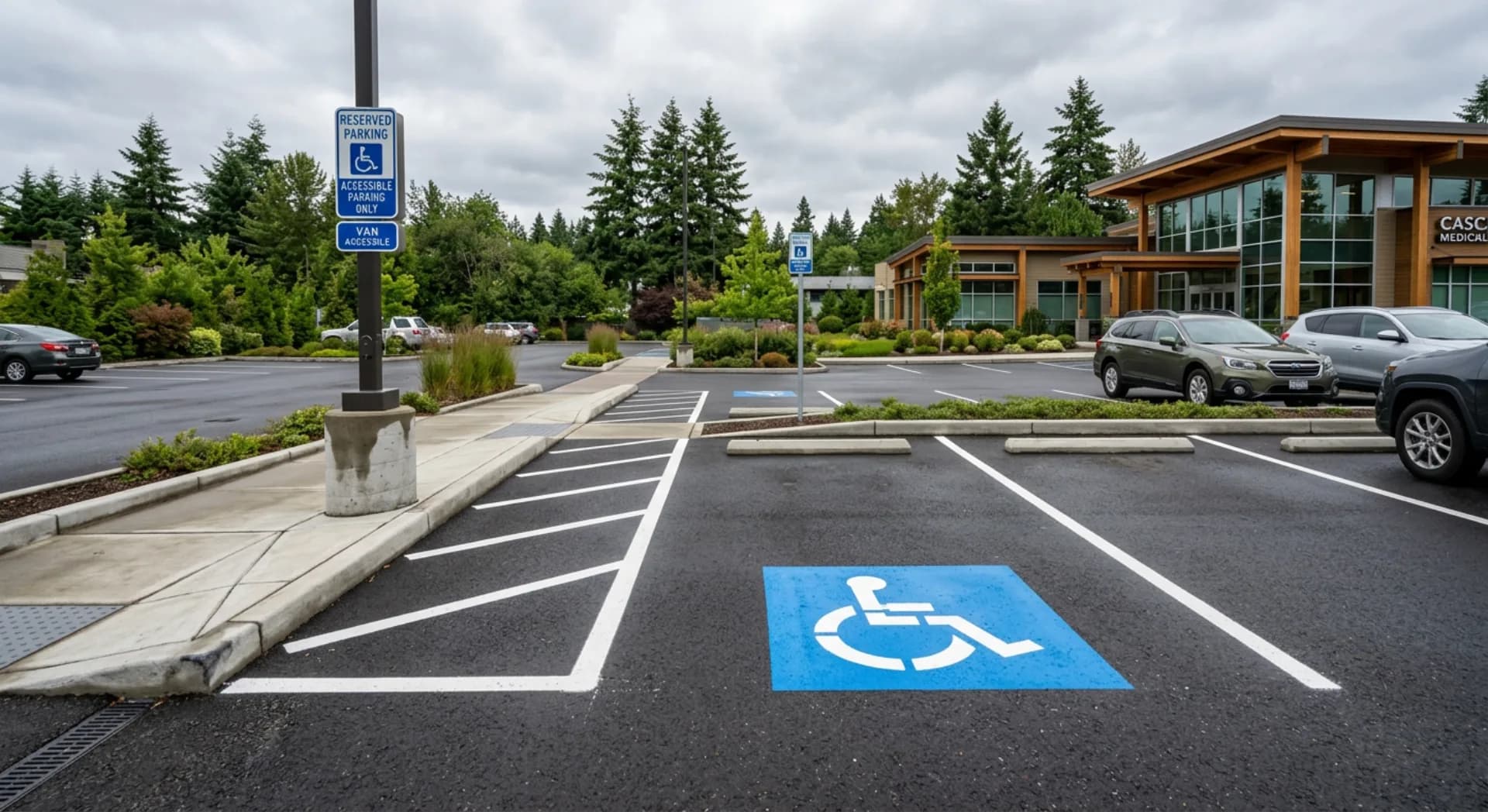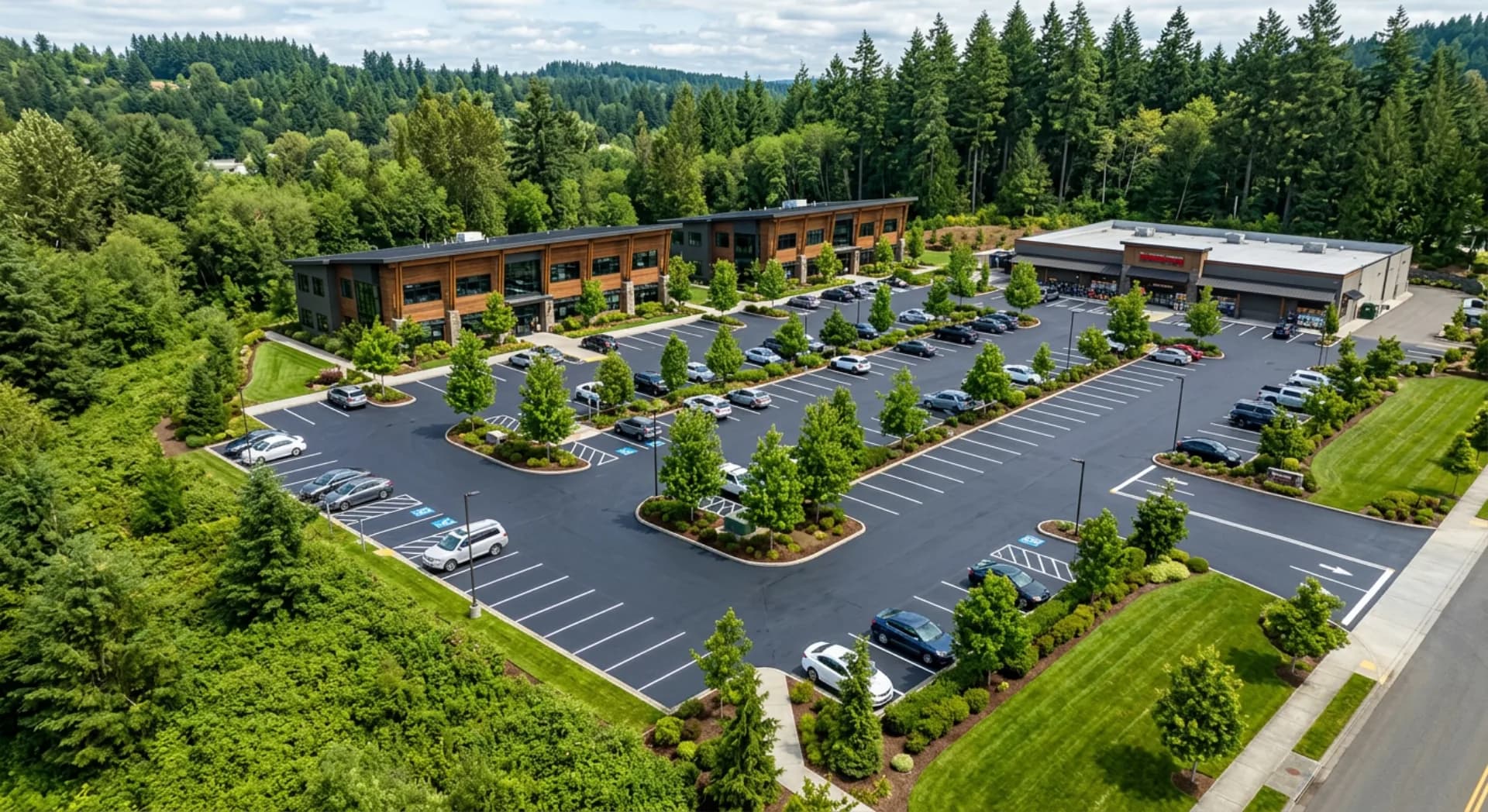
When your asphalt parking lot or driveway starts showing its age, you're faced with a critical decision: resurface with an overlay or tear it out and start fresh. Choosing the wrong option can mean wasted effort now or expensive problems later.
At Jireh Asphalt & Concrete, we help property owners across King and Snohomish County make the right call every day. Here's how to evaluate your situation like a pro.
Key Takeaways
- Overlay vs. replacement — An overlay adds a new asphalt layer on top of existing pavement; full replacement tears everything out and rebuilds from scratch
- Base condition is the deciding factor — If the sub-base is structurally sound, an overlay can save 40-60% compared to full replacement
- Pacific Northwest climate matters — Freeze-thaw cycles and persistent moisture make proper drainage evaluation critical before choosing either option
- Core sampling reveals the truth — A visual inspection alone isn't enough; cutting core samples shows what's happening beneath the surface
- Combination approaches work — Sometimes replacing the worst sections and overlaying the rest delivers the best value
What Is an Asphalt Overlay?
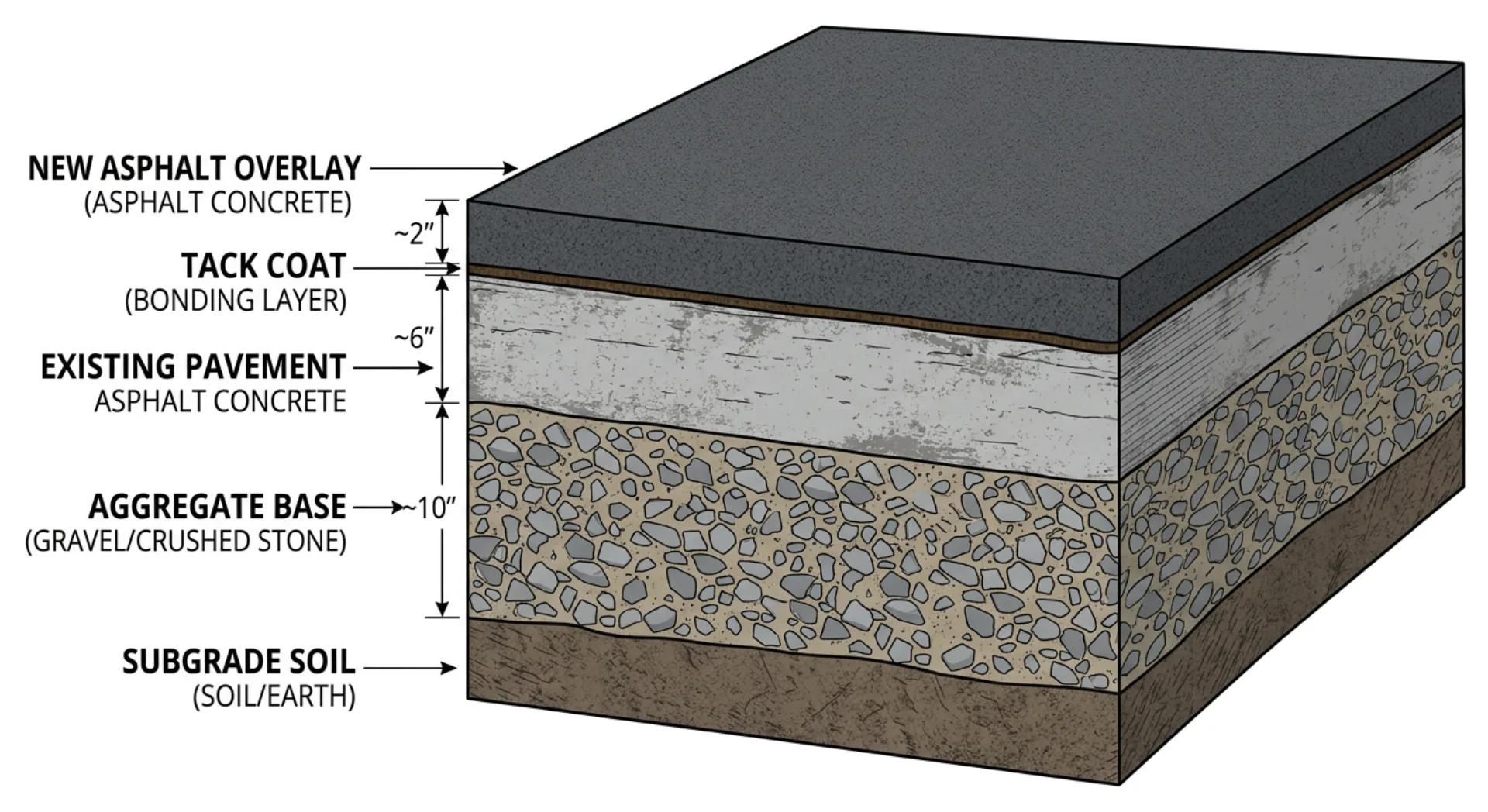
An asphalt overlay — sometimes called resurfacing — involves applying a new layer of hot-mix asphalt directly on top of the existing pavement. Think of it like refinishing a hardwood floor instead of ripping it out.
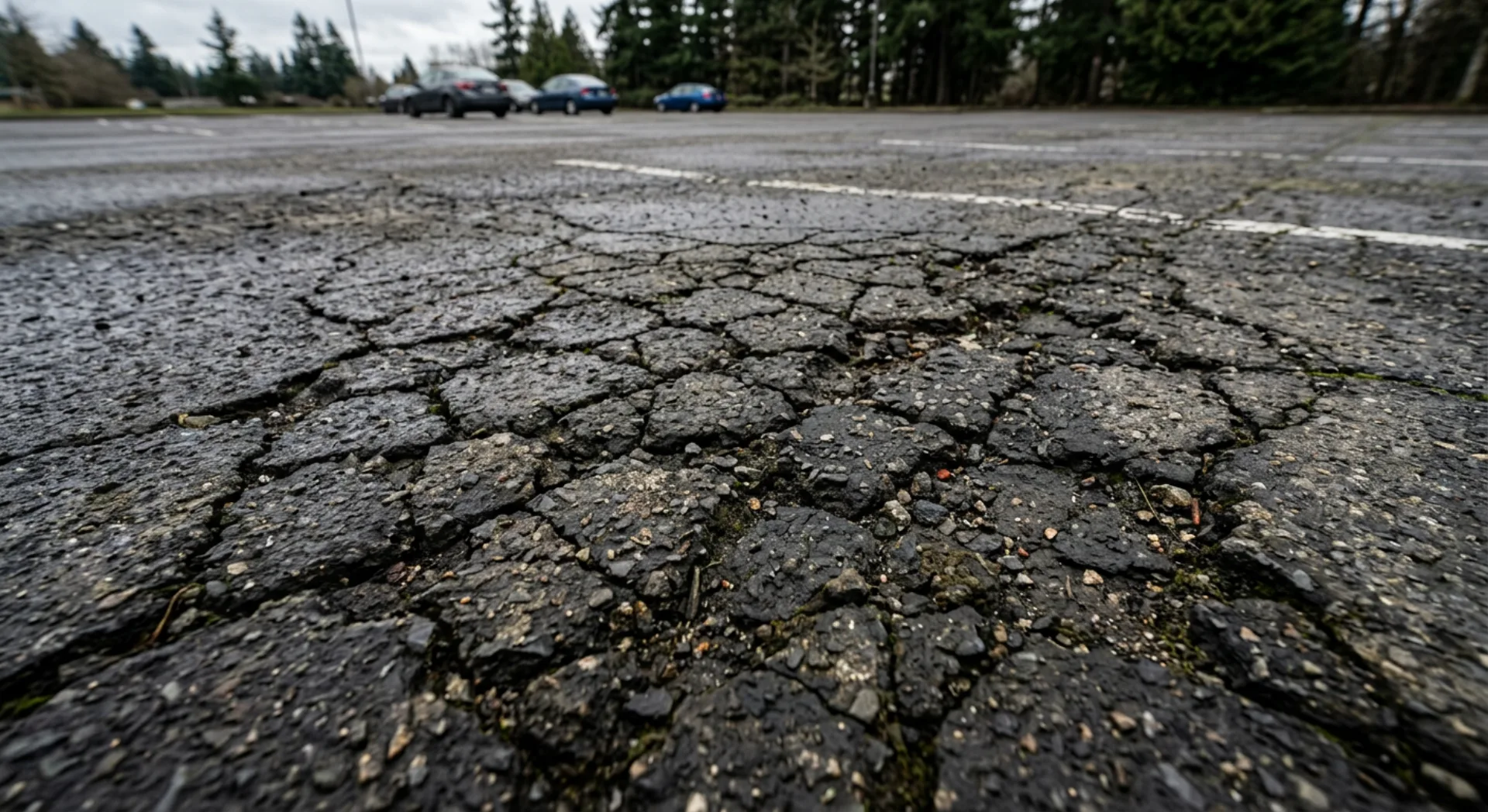
The existing surface is cleaned, minor cracks are filled, and a fresh layer (typically 1.5 to 3 inches) is paved on top. The result is a smooth, like-new surface that restores both function and curb appeal.
An overlay works best when:
- The base and sub-base are still structurally sound
- Surface damage is limited to the top layer (minor cracking, oxidation, shallow potholes)
- Drainage grades don't need significant changes
- The pavement hasn't been overlaid multiple times already
When Full Replacement Is the Better Choice
Sometimes the damage goes deeper than the surface. If the foundation underneath has failed, an overlay is just putting a bandage on a broken bone.
Full-depth replacement is recommended when:
- Alligator cracking covers large areas — This interconnected cracking pattern signals base failure, not just surface wear
- The pavement has deep structural rutting — Ruts deeper than an inch usually indicate sub-base problems
- Drainage issues exist — If water pools consistently, the grading needs to be rebuilt from scratch
- Multiple overlays already exist — Stacking too many layers creates height problems at curbs, drains, and building entrances
- The pavement is 20+ years old with minimal maintenance — At this point, the base has likely deteriorated beyond what a surface layer can fix
How Professionals Evaluate Your Pavement
A qualified paving contractor doesn't just eyeball the surface. Here's what a proper assessment includes:
Visual inspection identifies the type, severity, and extent of surface distress. Different crack patterns tell different stories — longitudinal cracks from joint failure vs. alligator cracks from base failure require very different solutions.
Core sampling is the gold standard. By cutting small cylindrical samples from the pavement, contractors can see exactly what's happening at every layer — the surface course, binder course, base, and sub-base. This reveals hidden moisture damage, layer separation, and base degradation that isn't visible from the surface.
Drainage assessment checks how water moves across and away from the pavement. Poor drainage is the single biggest killer of asphalt in the Pacific Northwest, where we receive significant rainfall from October through May.
The Pacific Northwest Factor
Washington's climate puts unique stress on asphalt surfaces. Here's what matters most in our region:
Freeze-thaw cycles — Western Washington's temperatures frequently hover right around freezing during winter months. Water seeps into cracks, freezes, expands, and widens the damage. This cycle can turn minor surface cracks into base-level problems within just a few seasons.
Persistent moisture — Our extended rainy season means water has months to work its way into pavement structures. Proper drainage isn't optional here — it's essential for any paving solution to last.
Tree root intrusion — The lush Pacific Northwest landscape means tree roots are a constant threat to pavement bases, especially in residential driveways and properties with mature landscaping.
Overlay Benefits for the Right Situation
When conditions are appropriate, an overlay delivers significant advantages:
- Faster completion — Most overlay projects take a fraction of the time compared to full replacement
- Less disruption — Businesses can often maintain partial access during resurfacing
- Environmental advantage — Reusing the existing base means less material going to landfills
- Extended pavement life — A properly done overlay can add 8 to 15 years of service life (learn more about how to extend your parking lot's lifespan)
Red Flags That Rule Out an Overlay
Be cautious if a contractor suggests an overlay when you're seeing these warning signs:
- Standing water that doesn't drain within 24 hours of rain
- Pavement that feels soft or spongy when you walk on it
- Large areas where the surface has broken into loose chunks
- Significant height differences between pavement sections
- Utility or drainage infrastructure that needs to be raised or lowered
Any of these conditions usually means the base has failed, and overlaying will only provide a temporary cosmetic fix.
Cost Comparison: Overlay vs. Full Replacement
Understanding the financial difference between these two options helps you budget realistically and avoid surprises.
Asphalt overlay typically costs $2.50 to $5.00 per square foot for residential driveways and $3.00 to $6.00 per square foot for commercial parking lots in the King and Snohomish County area. The lower cost reflects the reduced labor, materials, and disposal involved — you're adding a layer, not rebuilding the entire structure.
Full-depth replacement runs significantly higher, generally $5.00 to $10.00 per square foot for residential work and $6.00 to $12.00 per square foot for commercial projects. The higher price accounts for demolition, hauling away the old material, base reconstruction, compaction, and the new surface course.
For a typical 1,500-square-foot residential driveway, that's roughly $3,750 to $7,500 for an overlay versus $7,500 to $15,000 for a full replacement. For a 20,000-square-foot commercial parking lot, the difference becomes even more significant — potentially $60,000 to $120,000 in savings by choosing an overlay when conditions allow it.
However, cost alone shouldn't drive the decision. An overlay on a failed base is money wasted — you'll end up paying for the overlay now and the full replacement in two to three years when the problems resurface. Conversely, tearing out a parking lot that only needed resurfacing means you've overspent by tens of thousands of dollars.
Factors that affect pricing in Western Washington:
- Site access and staging — Tight residential lots or busy commercial properties may increase labor costs
- Milling requirements — If the existing surface needs to be milled down before overlaying (to maintain curb heights or drainage grades), that adds $0.50 to $1.50 per square foot
- Drainage corrections — If drainage work is needed alongside the overlay or replacement, budget for that separately
- Seasonal timing — Scheduling during the peak summer season (June through September) may mean longer lead times but optimal paving conditions
The bottom line: get a detailed written estimate that breaks down every line item, and make sure the contractor has inspected the base — not just the surface — before recommending one approach over the other.
Frequently Asked Questions
How long does an asphalt overlay last?
A properly installed asphalt overlay typically lasts 8 to 15 years, depending on traffic volume, drainage conditions, and maintenance. Regular sealcoating every 3 to 5 years and prompt crack sealing can push the lifespan toward the higher end of that range.
Can you overlay asphalt more than once?
You can apply a second overlay in some cases, but stacking multiple layers creates problems with curb heights, drainage grades, and overall pavement thickness. Most professionals recommend no more than two overlays before a full-depth replacement becomes necessary.
How thick should an asphalt overlay be?
Residential overlays are typically 1.5 to 2 inches thick, while commercial parking lots usually require 2 to 3 inches. The exact thickness depends on the existing pavement condition and the expected traffic load. Thinner overlays save money upfront but wear out faster under heavy use.
What time of year is best for asphalt overlay in Washington?
The ideal window is late spring through early fall — roughly May through September — when temperatures stay consistently above 50°F and rain is less frequent. Asphalt needs warm, dry conditions for proper compaction and bonding to the existing surface.
How soon can you drive on a new asphalt overlay?
Light vehicle traffic can typically resume within 24 to 48 hours after installation. However, the surface continues to cure and harden over the first 6 to 12 months. During this period, avoid parking in the same spot for extended periods and keep heavy equipment off the surface when possible.
Making the Right Decision for Your Property
The best approach starts with an honest assessment from a contractor who offers both services. Be wary of companies that only do overlays or only do full replacements — they'll naturally steer you toward what they sell.
If you're planning an overlay, make sure your property is properly prepared for the asphalt paving process before the crew arrives.
At Jireh Asphalt & Concrete, we evaluate every project on its merits and recommend the solution that makes the most sense for your property's condition, your timeline, and your goals. Sometimes that's a straightforward overlay. Sometimes it's a full rebuild. And sometimes it's a combination — replacing the worst sections and overlaying the rest.
Serving Everett, King County, and Snohomish County, our team is ready to inspect your pavement and give you a straight answer about what it needs. Contact us today for a free on-site evaluation.